

For most of Canada’s listening public, their country-man Stefan Gnyś – pronounced G'neesh – wasn’t a concern. The 300 copies of his 1969 single didn’t make it to shops. There was little promotion and limited radio play. Gnyś had paid RCA Limited Recording Services to press the seven-incher. Beyond this transaction, there was no record company involvement.
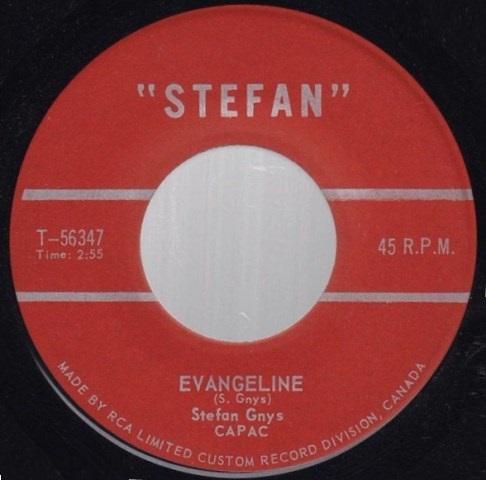
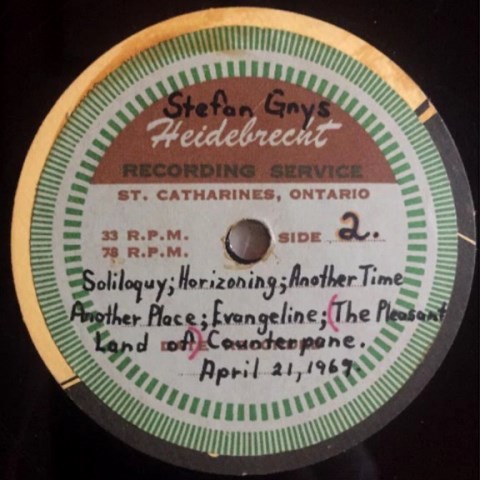
“Horizoning” and its B-side “Evangeline” were recorded on 21 April 1969 at St. Catherine, Ontario’s Heidebrecht Recording Services, a facility usually dedicated to recording radio jingles. Eight other tracks were recorded that day. John Heidebrecht, the studio’s boss, cut what was caught on tape onto an acetate disc (pictured bottom right). Twelve copies of the two-sided disc were made. Gnyś then had two of the tracks from the session pressed-up as 300 singles on a label named “Stefan” (pictured below left). Heidebrecht reused the master tape of the putative album for something else.
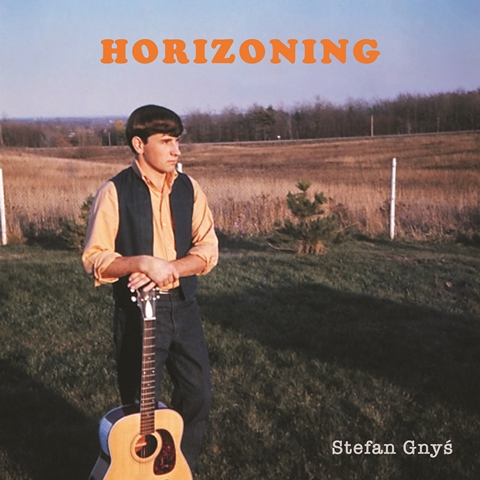 Private-pressing albums – manufactured to order by a band, singer-songwriter, manager and so on – are a collector’s staple. Records which typically didn’t reach shops and weren’t distributed always attract interest. Stefan Gnyś’ single – rather than an album – is a twist on a familiar theme. Equally well-known to collectors is music which only survives on acetates: aluminium discs coated in lacquer, into which a cutting lathe directly inscribes the groove with the music. Like other people in the radio world, Heidebrecht used acetates as they were a standard medium for broadcast playback.
The Stefan Gnyś story isn’t untypical and pushes multiple buttons: music that barely anyone has heard; a singer-songwriter doing their thing on their own, following their own path without music business involvement. Loosely, Gnyś and his lost album fall into the “loner folk” bag. After the one recording session and the single – of which local radio play generated some live bookings – Gnyś, then 24, went on to university, married, raised a family and worked as a teacher. A musical trail going cold is another perennial button-pusher.
 Now, the two acetates of the album still owned by Gnyś have become the audio source for a first-ever, vinyl-only issue of what’s titled Horizoning. Just over 55 years on from when it was recorded, his first and only studio session is heard in full. The sound quality of this attractively presented album is good, but the limitations of the source are apparent.
Gnyś had been writing songs in the 12 months up to the April 1969 booking at Heidebrecht’s studio. At the session, he was accompanied by his friend David Van Duzen on bass, guitar and vocals. Gnyś had also been to Europe in the preceding year – the inspiration for the songs “English Oaks” and “Horizoning.”
 Horizoning begins with its title track. Van Duzen choppily strums an electric guitar as Gnyś sings lead and plays guitar. His declamatory voice sings of those who “don’t give a damn and you don’t even care if you’re alone as long as you’re moving along….move along to a better horizon.” Tonally, what’s heard is downbeat. The sound is open yet compressed, evoking the feel of a small dank, dark room. The songwriting is folk-based but not along the Dylan lines. If Tom Paxton’s “I Can't Help But Wonder Where I'm Bound” were refracted through a murky, smeared lens it would sound close to this.
As the album unfolds, Gnyś reveals his concerns with people who are worn out by life, ground down, not being given opportunities. Why must it be this way, why must life be so cruel he asks during “And Put my Face in the Wind.” “Machine” gently rails against a “yes sir, no sir” culture where work is back breaking. A machine takes the song’s protagonist’s job. Naïve stuff maybe, a little whingey. But, and it’s the big but, despite the delicacy of the instrumental setting the delivery is forceful and generally powerful. This sound-world does not provides comfort. It is unsettling. In terms of a comparable album, Horizoning is aesthetically similar to FJ McMahon’s roughly contemporary Spirit Of The Golden Juice, albeit with lesser intensity. Horizoning really is worth hearing.
This, though, is not an album which had or has marketable written on it. It is too unmediated. Stefan Gnyś was not going to cross-over from the shadows into the light-filled commercial domain. Nothing indicates he would have followed the trajectory of fellow Canadians Leonard Cohen, Gordon Lightfoot and Joni Mitchell. Instead, he backed-off from the public eye he had barely tilted at. A pity, as the brooding Horizoning is a striking album, one which should have been heard. Thankfully, five-and-half decades after it was recorded, it can be heard.
- Next week: a bumper bundle of John Cale
- More reissue reviews on theartsdesk
- Kieron Tyler’s website


