The girls have produced the best pop of the Noughties: Kylie’s “Can’t get you out of my Head”, Missy Elliot's “Get Ur Freak On”, Beyoncé’s “Crazy in Love”, Amy Winehouse’s “Rehab”, Duffy’s “Warwick Avenue” and Lady Gaga's "PokerFace" were just way better and more innovative pop music than that produced by the legion of blokey indie types (with a few honourable exceptions, like the Arctic Monkeys). This is without even mentioning M.I.A. whose "Paper Planes" was the sound of a whole new pop sensibility being born and triggered an extraordinary viral copycat video cult on YouTube.
This is the first decade in which the females decisively won at pop since the dawn of rock'n'roll. In the Noughties, much of what the male bands did was forgettable and retrogressive: Oasis, U2 and Radiohead were past their peak, while Snow Patrol and their dirgy ilk were never there in the first place. Only occasional flashes of hip-hop from Eminem and Kanye West pushed into new pop territory,while the most fertile electronica action was mainly underground, as Joe Muggs writes elsewhere. While several male veterans like Neil Young, Tom Waits, Leonard Cohen and Bob Dylan had something of an artistic Indian summer, classing them as pop would seem to be to many to be almost sacrilegious, and, in any case, one could hardly call the Noughties their creative zenith.
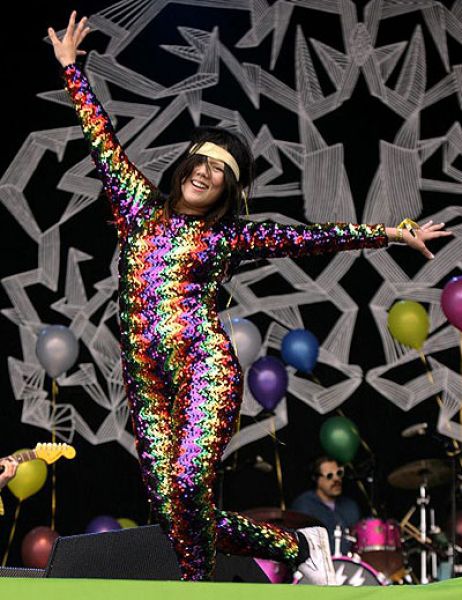 The best boy band of the Noughties was improbably Take That, returning from the Nineties to claim an empty throne, while girl groups like the Sugababes produced impeccable pop, and the Brazilian girl group CSS (pictured)- Cansei de Ser Sexy, or Tired of Being Sexy (weren’t we all?) - fizzed in a way that made their male counterparts look dull and predictable.
If you think of the decades since the dawn of rock'n'roll, the very first names you think of are probably men. There was Elvis in the Fifties. The Beatles and Stones dominated in the Sixties (although here girls ran a close second). Led Zeppelin, the Bee Gees and various punk blokes lorded it over the Seventies. The Eighties saw Michael Jackson trouncing everyone - even Madonna - while the Nineties brought us Blur, Oasis, Take That and Robbie. The Spice Girls ushered in the decade of girl pop. Admittedly much of the music was made or produced by men, so they weren't completely without their uses. But the best artists - from M.I.A. through Camille to Bjork - were nobody’s ciphers.
In other areas of music the girls came up trumps in the Noughties too – from world music stars like Cesaria Evora, to younger visionaries like Lhasa (see video below), Ceu, Mayra Andrade and Susheela Rahman. Only a few male artists who appeared on the European radar had similarly powerful and original visions - notably Manu Chao's Proxima Estacion -Esperanza and his sparkling production of Amadou and Mariam's Dimanche A Bamako, Ali Farka Toure's Savanne and Youssou N'Dour's wholly original Egypt. In jazz Melody Gardot, Norah Jones, Diana Krall and Madeleine Peyroux cleaned up and sold millions, far outpacing their male colleagues, while in folk music the likes of The Unthanks and Julie Fowlis were managing to fuse tradition and the modern world in a new way, Fowlis at the forefront of a new wave of Scottish Gaelic music, the forgotten language of popular music in these islands. Even in that most male bastion of classical composition, the likes of Kaija Saariaho and Jocelyn Pook made a significant dent. So I raise a toast to the Noughty Girls: the champions of the decade.
Watch Lhasa "Con Todo Palabra"
{youtube width="400"}uGNk_zHy4Mg{/youtube}