It kicks off with “No Easy Way Down.” First released on 1984’s mini-LP Explosions in the Glass Palace, it was an instant benchmark by which to measure Rain Parade. Churning, dense and foggy, it made good on what this California outfit were portrayed as: integral to a Sixties-inspired wave of bands defiantly reconfiguring the past for the present. Not all Rain Parade songs were like this, but “No Easy Way Down” was a head-spinner. It still is.
What was dubbed The Paisley Underground also scooped up The Bangles, The Dream Syndicate, The Long Ryders and The Three O’Clock. But “No Easy Way Down” marked Rain Parade as the band most comfortable with deep dives into psychedelia. Forty years on, opening their set with this milestone says they know who they are and were, and that they are happy to meet their past head on.
The history is inescapable
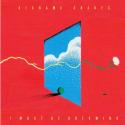
Next up at this London date across from Great Portland Street tube station, the misty duo “This Can't be Today” and “I Look Around” from their first LP, 1983’s Emergency Third Rail Power Trip. Subsequently, the title track and “Forgetfulness” from last year’s Last Rays of a Dying Sun – only their third album. It isn’t all about the past. Nonetheless, the history is inescapable.
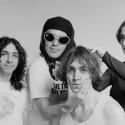
As a full band, Rain Parade last played the UK in 1985. Back then they were touring after the release of their second album, Crashing Dream. Now, they’re here in the wake of 2023's appearance of its belated follow-up. Founder members Matt Piucci and Steven Roback are still in the band, as is guitarist John Thoman, who came on board in the run up to recording Crashing Dream.
It’s as close to foundational as it’s going to get. Piucci (guitar, vocals) and Roback (bass, vocals) were and are the songwriters. Initially, there was also David Roback, Steven’s brother, who left the band in 1983 and went on to Clay Allison, Opal and Mazzy Star – all pretty much the same outfit despite the various names. He passed away in 2020. As well as Thoman, the two founders are joined by Stephan Junca (drums) and Derek See (guitar, keyboards, odd bits of percussion and backing vocals – at this show, he sings lead on “Prisoners”).
Representing where they are now, “Green” is the third track played from Last Rays of a Dying Sun. There are also “Last Stop on the Underground” and “Surprise, Surprise” from a recently issued EP. Otherwise, older material makes-up two-thirds of the 15-song set: mostly from Emergency Third Rail Power Trip and Explosions in the Glass Palace. Just one Crashing Dream track is played: “Depending on You,” its most convincing cut. The two-song encore concludes with a full-bore version of The Dream Syndicate’s “When You Smile”; they issued a studio take on the 2018 Paisley Underground homage album 3×4.
Obviously, the 2024 Rain Parade knows what the audience wants. Following Last Rays of a Dying Sun’s “Green,” Piucci asks the crowd what they would like to hear. There are shout-outs for “Broken Horse” and “Prisoners.” The latter is played. They really are comfortable with their past.
Steven Roback’s bass bubbles – think The Beatles’ 'Taxman'
In contrast, what increasingly becomes a problem for Piucci is his voice. Early on, he can’t quite reach the higher notes of “This Can't be Today.” After this, he repeatedly uses a throat spray. This date is close to the end of a European tour which unfortunately seems to have taken a toll on his voice. His guitar may also have been battered – it is frequently tuned. Despite this, he’s good humoured and genial. Steven Roback also appears to have a problem with his voice while singing lead, but to a lesser degree. The pounding which the road looks to have doled out might explain the initially low energy level, which lifts from “Last Rays of a Dying Sun,” the fourth song in.
Piucci, See and Thoman each have a way with modal, raga-esque guitar solos. All of these were pithy, nothing stretched out. Roback’s bass bubbles – think The Beatles’ “Taxman.” Junca – who has played with Piucci in The Hellenes, as well as with The Bangles and Crazy Horse’s Billy Talbot – beds it all. Clearly, he’s decided to keep it straightforward to hold together what can, on occasion, be hazy.
Despite the hiccups, it all gelled. It is Rain Parade, whichever era the songs are from. Let’s not leave it four decades until the next show.