

"Change" has been the watchword of the past few months, the standard flown hopefully aloft by every political party. A week spent anxiously waiting for a political conclusion, worrying about its impact, and heatedly debating its validity has made for a more than usually vulnerable sense of British nationhood: an apt time indeed for the UK release of Triomf, a brutal South African parable about political prejudice, social intolerance, and above all the fear of the new.
Set in the days leading up to South Africa’s first free elections of 1994, Michael Raeburn’s film yokes the story of a nation’s political coming of age to that of the dimwitted and violent Lambert on the eve of his 21st birthday, living with his dysfunctional family in the Joburg suburb of Triomf.
At the core of the drama is Triomf itself – a living social palimpsest, whose white trash community has been grafted onto the ruins of the once lively black township of Sophiatown, bulldozed by the South African government. The threat of this papered-over past forces its way up through the cracks of the film, threatening the precarious stability of a family – and a nation – built on the flimsy foundations of lies and prejudice. The fear of the white community and the anticipation of their black neighbours are set head-on, reaching collision point on the fateful day of the election itself.
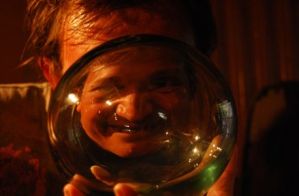 Endlessly goaded by his misanthropic uncle Treppie, played by the marvellously disturbing Lionel Newton, Lambert (Eduan van Jaarsveldt, pictured right) swings between destructive outbursts and bizarrely affectionate urges, caught in the struggle between his uncle, his apathetic alcoholic father (Paul Luckhoff) and indulgent mother (Vanessa Cooke). When Treppie schemes to hire a prostitute for his nephew’s birthday, the hermetically sealed world of the Benade family is torn violently open – an emancipation of devastating finality.
Adapted from Marlene van Niekerk’s massive novel of the same name, Triomf was always going to struggle to isolate a manageable narrative without losing the crucial human – and humanising – details of the original. Raeburn’s distressingly literal response to the material is the cinematic equivalent of reading Lady Chatterley’s Lover as pornography. The brutal and incestuous relationships within the Benade family are shocking in the same way as a flasher on the underground – with no apparent intent or thought beyond the shock-act itself. Billed as Greek tragedy meets black comedy, Triomf is a tough watch. Its many horrors – valid perhaps within a more allusive or tightly structured work – here risk tainting the viewer with their seeming gratuity; they’re extreme without being significant. What comedy there is is hard-won – a bloody pyrrhic victory in which our sympathies are lost without any substantive gain.
The international cinematic catalogue of apartheid films is long and illustrious – Zoltan Korda’s Cry the Beloved Country, Richard Attenborough’s Cry Freedom, and more recently Endgame and Disgrace – yet significant homegrown responses have necessarily been thin on the ground. This may be beginning to change, though, and a small season of films from South Africa, starting today at the BFI Southbank, offers a handul of other examples.
Despite his solid arthouse CV, Raeburn has missed the mark in Triomf, the first film in Afrikaans to gain international distribution. A delicate discussion of the relationships between minor and minority status in the fraught social landscape of South Africa is at times tantalisingly close, yet its measured tones are drowned out by the clamour of a shock-and-awe cinematic style. Lambert is the festering boil afflicting contemporary South Africa, one that Raeburn cannot resist poking for the sheer gratification of seeing the social pus ooze out. Healing or help however he leaves for some other filmmaker. In his world only guns and sex can hope, as one of his characters puts it, to "open the Red Sea to the Promised Land".
At the core of the drama is Triomf itself – a living social palimpsest, whose white trash community has been grafted onto the ruins of the once lively black township of Sophiatown, bulldozed by the South African government. The threat of this papered-over past forces its way up through the cracks of the film, threatening the precarious stability of a family – and a nation – built on the flimsy foundations of lies and prejudice. The fear of the white community and the anticipation of their black neighbours are set head-on, reaching collision point on the fateful day of the election itself.
Endlessly goaded by his misanthropic uncle Treppie, played by the marvellously disturbing Lionel Newton, Lambert (Eduan van Jaarsveldt, pictured right) swings between destructive outbursts and bizarrely affectionate urges, caught in the struggle between his uncle, his apathetic alcoholic father (Paul Luckhoff) and indulgent mother (Vanessa Cooke). When Treppie schemes to hire a prostitute for his nephew’s birthday, the hermetically sealed world of the Benade family is torn violently open – an emancipation of devastating finality. Adapted from Marlene van Niekerk’s massive novel of the same name, Triomf was always going to struggle to isolate a manageable narrative without losing the crucial human – and humanising – details of the original. Raeburn’s distressingly literal response to the material is the cinematic equivalent of reading Lady Chatterley’s Lover as pornography. The brutal and incestuous relationships within the Benade family are shocking in the same way as a flasher on the underground – with no apparent intent or thought beyond the shock-act itself. Billed as Greek tragedy meets black comedy, Triomf is a tough watch. Its many horrors – valid perhaps within a more allusive or tightly structured work – here risk tainting the viewer with their seeming gratuity; they’re extreme without being significant. What comedy there is is hard-won – a bloody pyrrhic victory in which our sympathies are lost without any substantive gain.
The international cinematic catalogue of apartheid films is long and illustrious – Zoltan Korda’s Cry the Beloved Country, Richard Attenborough’s Cry Freedom, and more recently Endgame and Disgrace – yet significant homegrown responses have necessarily been thin on the ground. This may be beginning to change, though, and a small season of films from South Africa, starting today at the BFI Southbank, offers a handul of other examples.
Despite his solid arthouse CV, Raeburn has missed the mark in Triomf, the first film in Afrikaans to gain international distribution. A delicate discussion of the relationships between minor and minority status in the fraught social landscape of South Africa is at times tantalisingly close, yet its measured tones are drowned out by the clamour of a shock-and-awe cinematic style. Lambert is the festering boil afflicting contemporary South Africa, one that Raeburn cannot resist poking for the sheer gratification of seeing the social pus ooze out. Healing or help however he leaves for some other filmmaker. In his world only guns and sex can hope, as one of his characters puts it, to "open the Red Sea to the Promised Land".










Add comment