Founder rate ends 9th September.

We’re rebuilding theartsdesk to secure the future of real arts journalism. Be part of it by subscribing: if you do it now, the founders’ rate of just £40 yearly is yours FOR LIFE!

SUBSCRIBE NOW 

LFF 2012: In the Fog

Divided loyalties between partisans and collaborators lead to a dark, inexorable conclusion

share this article

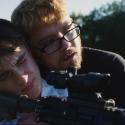
Childhood friends: Sushenya (left) tries to resist the moral choice that partisan Burov has taken

In the Fog, Russian director Sergei Loznitsa’s second feature, shows the wartime world of partisans and collaborators fraught with moral uncertainties. Set in 1942 in German-occupied Belorussia, it returns to a theme much explored by Soviet directors, most notably Elem Klimov in his visceral Come and See. Loznitsa’s film, with the exception of a wider opening scene, is almost a chamber piece: three characters, slow-moving action, dialogue without a voice raised, no musical score.

Loznitsa’s background was in documentary, before he completed the acclaimed My Joy two years ago, a journey through regional, contemporary Russia that some viewers might prefer not to have taken, given its bleakness. The director is paired again with Romanian cinematographer Oleg Mutu, shooting here in glorious long forest-set takes, far from the handheld style of the duo's first film.

Central character Sushenya (Vladimir Svirski) is a Christ-like figure whose attempt to retain his moral core dooms him in a world where ethical boundaries are blurred. Refusing to collaborate with the German-backed regime, he’s released only for the surrounding community to assume he has betrayed the resistance to save himself. Tracked down by two partisans, led by a childhood friend Burov (Vlad Abashin), he goes meekly towards his execution, only for fate to intervene. Circumstances see him with no direction to turn except for an inescapable final gesture, as the fog comes out of the forest to blur our literal as well as philosophical vision.

Three side episodes tell (slightly unexplained, initially) how each character has entered the conflict. Loznitsa insists on his chosen pace, one which will likely resonate more with critics (the film won the critics’ prize at Cannes this year) than with the general viewer.

Tracked down by two partisans, led by a childhood friend, Sushenya goes meekly towards his execution, only for fate to intervene

rating

3

share this article

Help secure the future of arts journalism

In this era of algorithmic recommendation, opaquely sponsored content and AI slop, theartsdesk’s mission to preserve real journalistic and critical values has never been more important.

If you like what you see here, please join us 
in this mission.

Subscribing to the site will help us in our coming 
redesign and expansion.


If you do this before the 9th September this will be at our guaranteed founder’s rate: 
your subs will never increase again.

Subscribe now for £5 per month. 
or yearly for just £40.

Or if you simply want to support us with a one-off donation, you can do so here.

more film

Daft but endearing cult film, the first 'space musical'
The pioneering journalist E Jean Carroll's story is heartening, funny and troubling
A surprise Thai hit combines deadpan-dry humour with sharp-toothed social commentary
School shootings and social media alienation queasily satirised
Enthralling and witty political drama from 1960s East Germany
Matt Damon stars in Christopher Nolan's IMAX-sized recreation of Homer's epic poem
Dip your toes into these Homeric movies before Christopher Nolan’s 'The Odyssey' ties us to its mast
A Bellocchio classic is retooled as a stifllng rich-brats' revenge story
A potential camera in every hand: SMart celebrates smartphone directors
Hitchcockian black comedy from Luis Buñuel’s Mexican period
Olivia Wilde's snappy comedy on the perennial subject of reviving a failing marriage
Kiss kiss, bang bang in a moving Middle East documentary