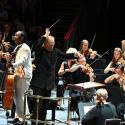
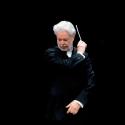
If Brahms’s First Symphony has long been dubbed “Beethoven’s Tenth”, then the 23-year-old Rachmaninov’s First merits the label of “Tchaikovsky’s Seventh” (a genuine candidate for that title, incidentally, turns out to be a poor reconstruction from Tchaikovsky’s sketches by one Bogatryryev). Yet unlike the other near-contemporary works in last night’s programme, Szymanowski’s Concert Overture and Scriabin’s Piano Concerto, it has a disturbing individuality, a heavy heart that is truly worn “inside out”, as Vladimir Jurowski’s season-long Rachmaninov festival with his London Philharmonic Orchestra is subtitled. In other hands the angst could be turgid; never here with the spring-heeled rhythms and textural focus this ever brilliant and well-prepared conductor always gives us.
The evening’s first half can be more quickly dispatched in words than it felt in performance, at least in the case of the piano concerto. Credit to Jurowski for programming an early work by Poland’s greatest composer before Lutosławski and Penderecki, Karol Szymanowski (funds available from the Polish Cultural Institute didn’t go amiss, either). His Concert Overture of 1906 sounds like a tone-poem in search of a programme. Its hero is no pale shadow of Strauss’s Don Juan, but has no comparably fine melodies to unfold, either, and careers towards the brass-heavy doominess of another, justifiably less well known Strauss protagonist, Macbeth, before the final victory flourishes. Jurowski plunged in with sharp-edged swagger, LPO horns rampant, but there was never a moment when this didn’t sound like imitation Strauss.
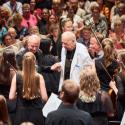
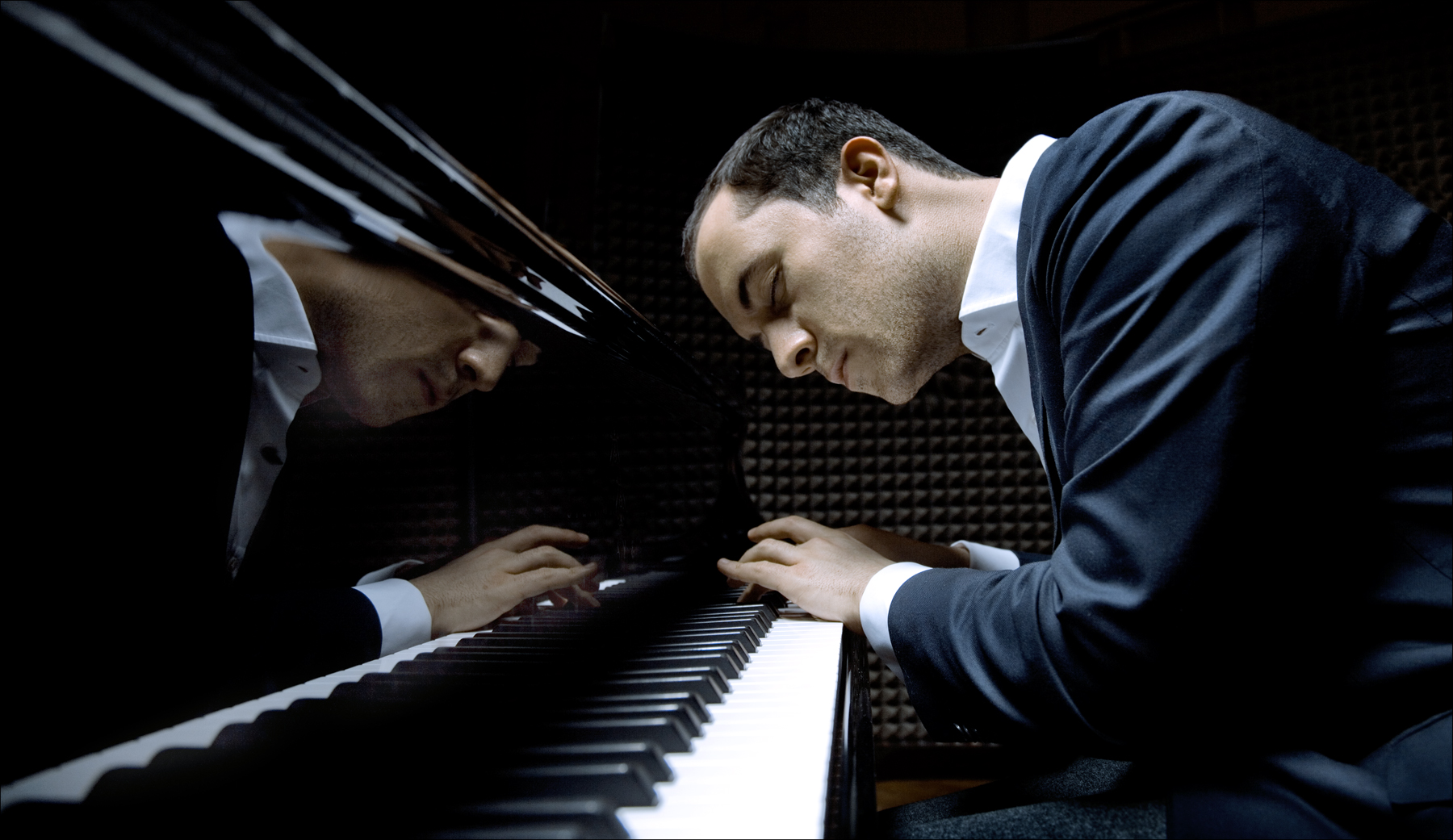
Previous live performances of Scriabin’s early concerto, premiered in exactly the same year as the Rachmaninov symphony (1897), left me with the impression of trim proportions and an unexpected virginal candour in the central theme and some of its variations. Those were beautifully introspective in the hands of the LPO strings, and Igor Levit’s subtle filigree could be heard here as it couldn’t elsewhere. The pianist (pictured below) came with glowing recommendations, but rarely did his contribution shine through, sounding more often like optional overlay; when the heavily-pedalled thunder did break out, it sounded approximate. The Bach encore felt mannered and glacial to me.
 Enter blood and thunder again after the interval with the twists and Dies Irae-like descents of Rachmaninov’s opening. “Vengeance is mine, I will repay, saith the Lord” is the epigraph of both the symphony and of Tolstoy’s Anna Karenina: I have my own fancy, kindly referenced in Andrew Mellor’s spot-on programme note, that we’re dealing here not only with Rachmaninov’s own Anna, Lodyzhenskaya, another married woman, but simultaneously with Tolstoy’s hectic heroine. Or so the feverish glitter and the careering towards catastrophe of the astounding finale, as exciting as the last of the Symphonic Dances at the end of Rachmaninov's life, would lead me to believe.
Whatever the impulse, the symphony is an astonishing technical display (how bizarre that Rachmaninov wanted it suppressed), a mining of only two themes which propel all four movements. And propulsion was the keynote here after a suitably dark and broad introduction which set up hope that was not to be disappointed for its hellish apotheosis at the end of the symphony. Peter Sparks’s clarinet kicked off full-toned woodwind which would dominate the languishing, feminine second subject and its painful extension, with Janacek-like oscillations, in the slow movement (hauntingly employed at length, incidentally, in a little gem of a Swiss film, Garçon stupide). Above all what kept ponderousness at bay was the focused tone of the brass ensemble, which now boasts possibly the best trumpets, trombones and tuba on the London scene. But there was exquisite lightness in the ghost-scherzo, too, rounded off with Jurowski’s masterly touch.
In the hair-raising peroration, the most effective and rounded tam-tam crashes I’ve ever heard – shades of Tchaikovsky’s “death” in his Sixth Symphony – fused gut-wrenchingly with orchestral groans. Like all the great Russian masters, Rachmaninov – with a “v”, please, not the French/American “ff” as this festival, perhaps due to its sponsors, insists – knows how to horrify and exhilarate at the same time. No wonder the younger members of the audience who are now so much a part of the LPO concert scene rose instantly to their feet.
- Next concert in the LPO's Rachmaninoff: Inside Out series is on 21 January (his one-act opera The Miserly Knight)
- Broadcast for the next month on the BBC Radio 3 iPlayer