The Planets, Series Finale, BBC Two review - ice cold on Neptune

Brian Cox's series concludes with a deep-frozen trip to the far end of the Solar System

share this article

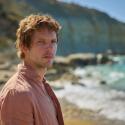
Professor Cox in Iceland – not as cold as Pluto

As an aid to meditation, Professor Brian Cox’s latest series The Planets (BBC Two) could hardly be faulted. A majestic tour of the Solar System awash with computerised imagery, an eerie soundtrack and a travel budget the president of the United States might envy, it exerted a narcotic allure as Cox’s gaze roamed billions of kilometres into deep space. His whispery commentary is a bit like having a scalp massage.

Mind you, you could probably glean most of the facts from assorted scientific publications or even Wikipedia, but Cox has a gift for making you feel that he’s telling the story for the first time to you, personally. For this final episode, he (and the Voyager 2 probe) took us to the farthest reaches of the Solar System, which meant Uranus, Neptune and Pluto. It’s bloody cold out there, with Cox characterising Uranus as “the pale blue marble hanging in the dark, frozen depths of space.” Neptune, a piffling 4.5bn kilometres from the Sun, experiences winds screaming through its atmosphere at 2,000kph and temperatures of -214 Celsius. As for Pluto, so distant that not even the Hubble telescope can get a decent photograph of it, it may have an underground ocean with a topping of “soft nitrogen ice”.

Cox based himself in Iceland to evoke a sense of these glacial destinations, driving through snowy wastelands in an SUV and posing against rugged landscapes like a starship trooper. His device of showing the relative distances between the planets and the sun by using Reykjavik harbour as a reduced-scale model was ingenious and effective. Yet, though he argued the case for space exploration as a solution to Earth’s dwindling resources, he can’t change the fact that for many of us, space remains an infinite freezing vacuum with (so far) no sign of life. Which is a tiny bit terrifying.

Add comment

The content of this field is kept private and will not be shown publicly.
Name that you would like to appear as the author of the comment
For many of us, space remains an infinite freezing vacuum with (so far) no sign of life

rating

3

explore topics

share this article

Help secure the future of arts journalism

In this era of algorithmic recommendation, opaquely sponsored content and AI slop, theartsdesk’s mission to preserve real journalistic and critical values has never been more important.

If you like what you see here, please join us 
in this mission.

Subscribing to the site will help us in our coming 
redesign and expansion.


If you do this before the 31st August this will be at our guaranteed founder’s rate: 
your subs will never increase again.

Subscribe now for £5 per month. 
or yearly for just £40.

Or if you simply want to support us with a one-off donation, you can do so here.

more tv

You can fool all the people some of the time, and some of the people all the time...
Harlan Coben thriller does what it says on the tin
Second series of CIA drama ratchets up the pressure
A cancer operation is just one of the trials ahead for Diddly Squat in a moving new season
The 'Bergerac' star discusses his detective skills, playing troubled men and taking on his first theatre role after a nine-year hiatus
Friendships tested to destruction in Catherine Shepherd's satirical drama
Steve Coogan and Tom Burke lead a formidable cast in Neil Forsyth's drama
Gripping three-part saga is smarter than the average pop-doc
The latest helping of the Jilly Cooper adaptation is much like the first: sparky, filthy fun
The Tony Award-winning star talks female power, sexism and becoming more Scottish with age
Sheridan Smith and Michael Sorcha prove a winning team in this unexpected treat