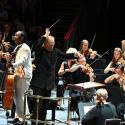
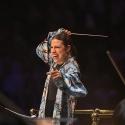
We have John Eliot Gardiner to thank for an unconventional diptych of Czech masterpieces in the London Symphony Orchestra's current season. He had to withdraw from last night's concert - he conducts Dvořák's Cello Concerto and Suk's "Asrael" Symphony on Thursday - but his replacement, Kazushi Ono, was no second-best. Familiar to us in the UK mostly as an opera conductor, firm and clear-headed in the three vivid narratives of the evening, he provided the ideal security for orchestral playing and stunning singing to fly.
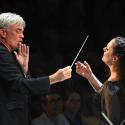
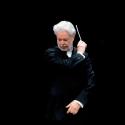
The programme proved, as always, that there's no slack in Janáček's mature style. His Ballad of Blanik seems outwardly like a low-key way to celebrate the Czech independence he had been so vividly imagining in the run-up to 1918, but it charts new territory for the symphonic poem, condensing a dramatic tale in half the length even of Strauss's quarter-hour Don Juan and Till Eulenspiegel. The very first notes kick off an anxious ostinato that could only be by Janáček; the unquiet young peasant quickly encounters the old Hussite knights, symbols of Czech hope, within Mount Blanik - cue horn chorale with harps - only to find, having fainted and regained consciousness, that they have swapped swords for ploughshares (a lovely image for the bloodless independence). Mystery closes in again as he returns to the village as a kind of Rip van Winkle, much aged, but optimism has the last word. 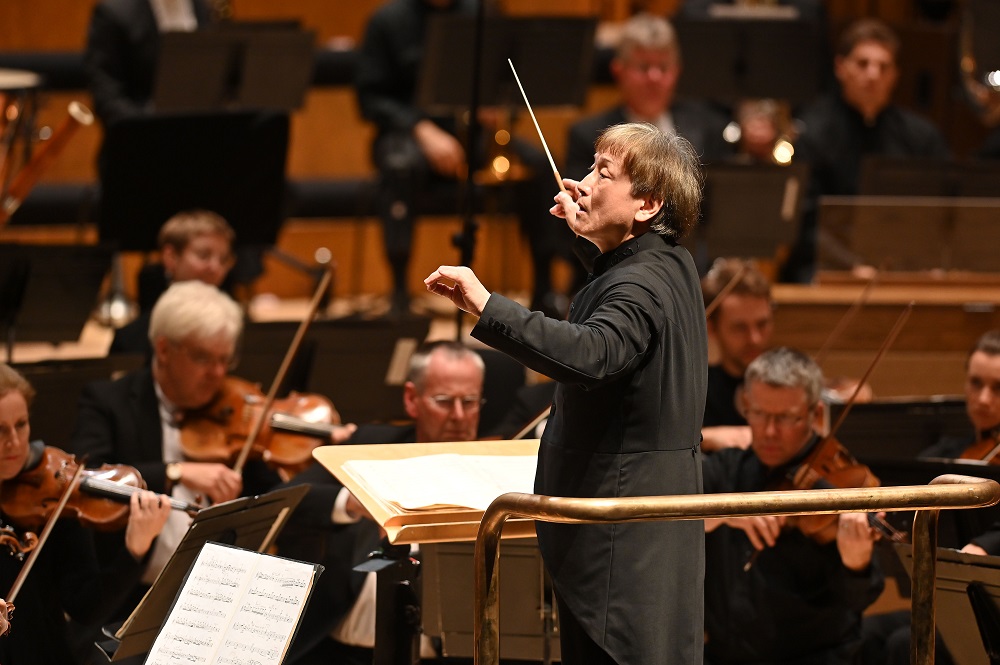 Ono (pictured above) drew fine-etched playing at the right febrile pace here, and riveted our attention in an earlier Czech musical legend that can pose problems of holding focus, Dvořák's The Golden Spinning-Wheel. No need here for the cuts that the late, great Jiří Bělohlávek inflicted on the work at the Barbican back in 2011. The rondo-tale is of a king, riding hither and thither to bind the whole together, reunited with the butchered but magically reassembled girl he loves thanks to a magician whose singing spinning-wheel tells the truth.
There's so much ravishing material here, above all in the piercing, plaintive flute and piccolo solos (Adam Walker and Sharon Williams in a golden woodwind department) and the sweeping love music so ripely and gorgeously phrased by LSO violins. With the similar passion of Dvořák's near-contemporary operatic masterpiece Rusalka gaining ever more currency, there's no reason why the four late orchestral ballads - also championed by the orchestra's music director Simon Rattle - shouldn't become core repertoire. I'd certainly much rather hear them than yet another performance of the relatively one-dimensional "New World" Symphony.
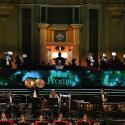
Both the Dvořák tone-poem and Janáček's Glagolitic Mass made a big impression on the first night of this year's Proms. Indeed, the Albert Hall and its redoubtable organ, for which Janáček wrote two stunning, stomach-flipping solos in his Slavonic setting of the Mass - are probably better for the space and resonance this work needs. But last night's was a version with radical differences, the striking fruits of Paul Wingfield's research into the original version of the score, its climactic interjections of timpani (peerless John Chimes on the first set) and organ at the climax of the Credo even more harrowing at Barbican close quarters. 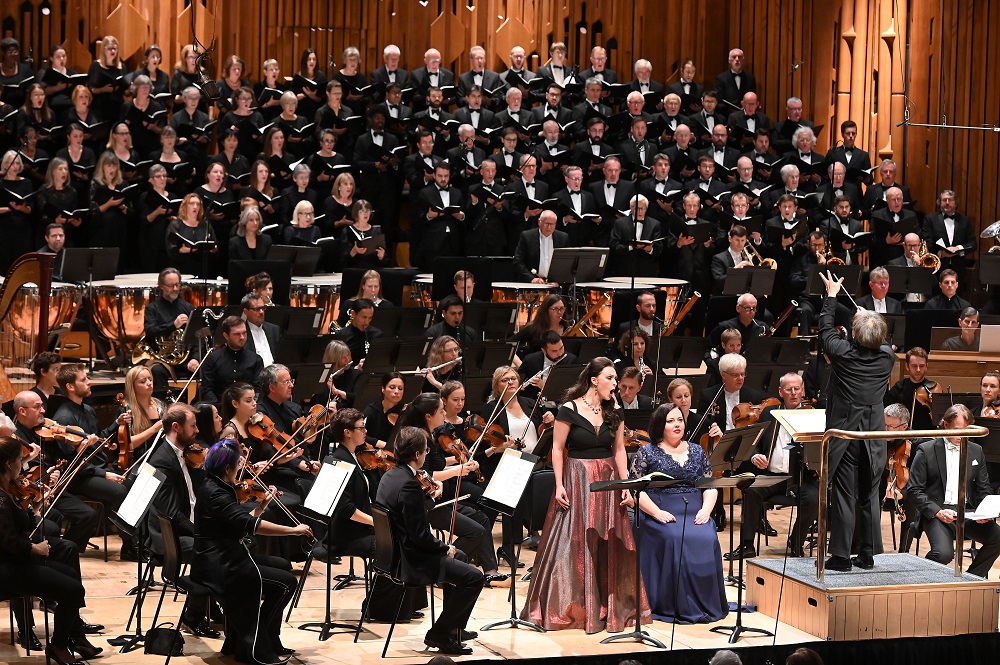 Disconcerting mixed metres early on, weirdly offstage clarinets leading up to that big Passion sequence and the playing of the Intrada at the beginning (the clue is in the title) as well as at the end, as it was at the first performance in a Brno sports hall, give the edge. You have to pity the poor trumpets forced to go through the Intrada's fiendish writing twice, but with Paul Benniston, usually of the LPO, in the lead, that seemed to pose no problems, and to hear the repeat as the crowning glory, with extra letting-rip, was thrilling.
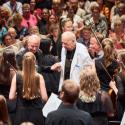
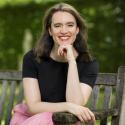
So, too, were all the vocals. I've never heard the London Symphony Chorus on better form; there's no finer chorus director in the UK than Simon Halsey, but have they ever dared to be so authentically raw like this before, shucking British reserve in favour of Janáček's al fresco fervour, and wasn't the language well coached? Bugles sang, too, in the taxing solo roles for soprano (Lucie Vagenknechtová, radiant, pictured above standing) and tenor (Aleš Briscein, the authentic high Slavic type, fearless at the usually strenuous-sounding top). Peter Solomon did what he could with the Barbican's synthetic second-best of an organ - why was this hall ever built without one? - and churned us up before the final blaze. Ono kept everything in perfect synch but made sure the many climactic moments flew. There's never a dull moment with Janáček, the supreme oddball genius.