

It’s nobody’s fault, but – try as they might – the BBC Proms can often feel rather middle-aged. Whether it’s the lumbering albatross of a building, the ushers in their dated, casino waistcoats or the tone of zealous jollity (Have fun! But silently and according to the rules!), it somehow all adds up to a lack of freshness, spontaneity. Thank goodness for Aurora Orchestra.
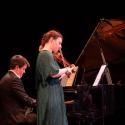
Nicholas Collon’s ensemble has taken a one-off novelty – an orchestral performance from memory – and made it an annual festival fixture. There’s a formula, of course, but thanks to Collon himself and co-presenter Tom Service, it has never yet felt rigid. To teach an audience something without patronising or it feeling like school is the hardest trick to pull off, but thanks to bags of enthusiasm (and the odd viola joke) they reliably leave us all better informed and – better still – fired up to listen more and more carefully. If the BBC are serious about refreshing their arts content they could do a lot worse than deploy Aurora for a series of Bernstein-style programmes. Just think of the impact. 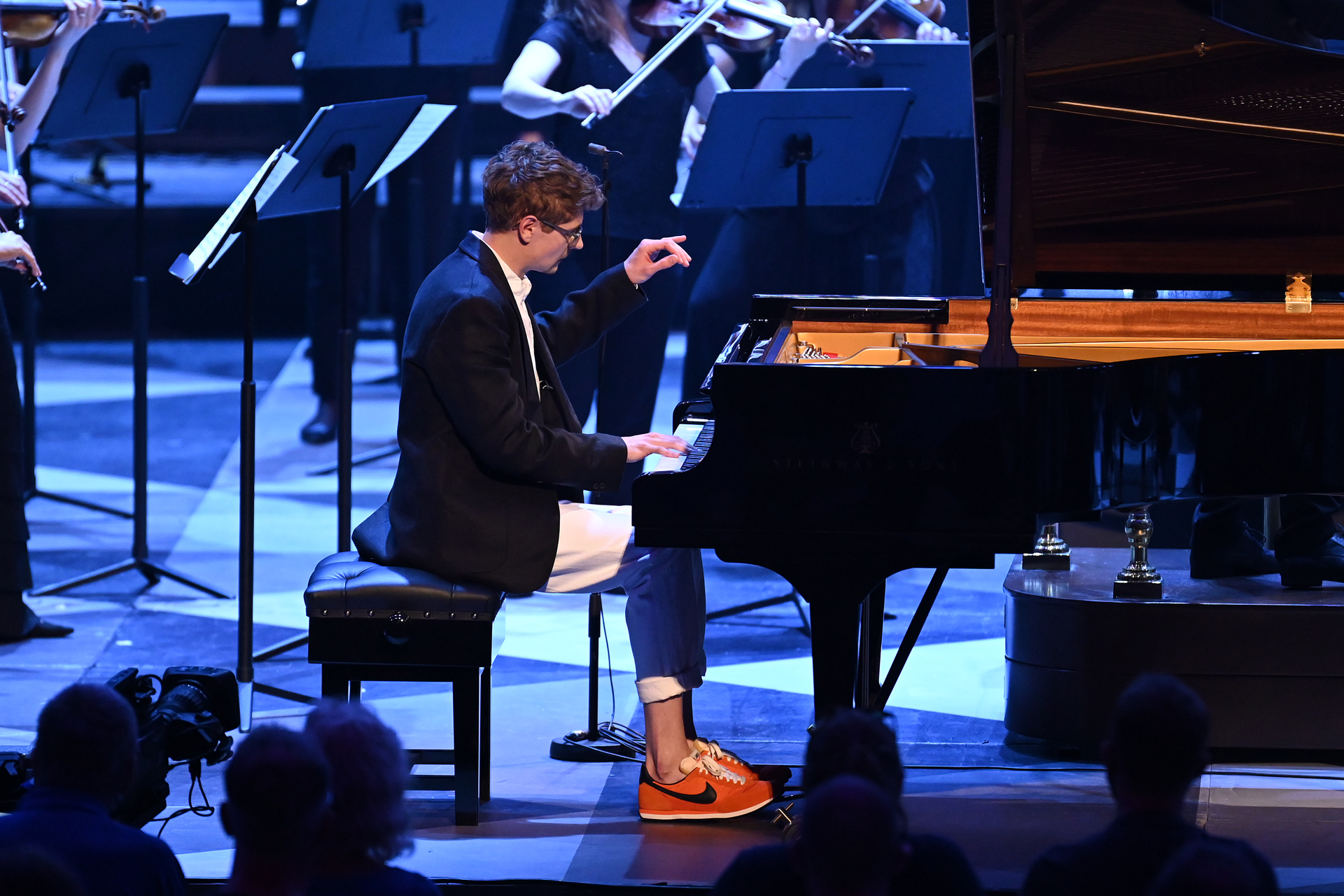 But before Stravinsky’s The Firebird, there was time for a curtain-raiser: a glitzy account of Rachmaninov’s Rhapsody on a Theme of Paganini with Pavel Kolesnikov (pictured above). The young pianist’s orange trainers might have shouted rebellion, but his account was carefully understated, precise – the musical straight man to Aurora’s swaggering excess.
It was a clever partnership: Kolesnikov witty and urbane, casual through the skittering brilliance of Variation II, playing it cool while the orchestra tried on the composer’s many musical costumes for size, dashing back in as stern, Brahmsian ensemble one minute before returning swathed in Hollywood strings for Variation 18’s slow movement; now an overgrown Palm Court orchestra, now a jazz group.
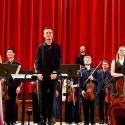
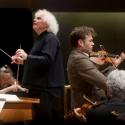
Best in the Chopin-like fluidity of Variations II and XIX, it was no surprise when Kolesnikov gave us the Raindrop Prelude as an encore, a muted, interior performance that made no concession to the size of the hall, coaxing us in close after the seat-pinning drama of the Rachmaninov. 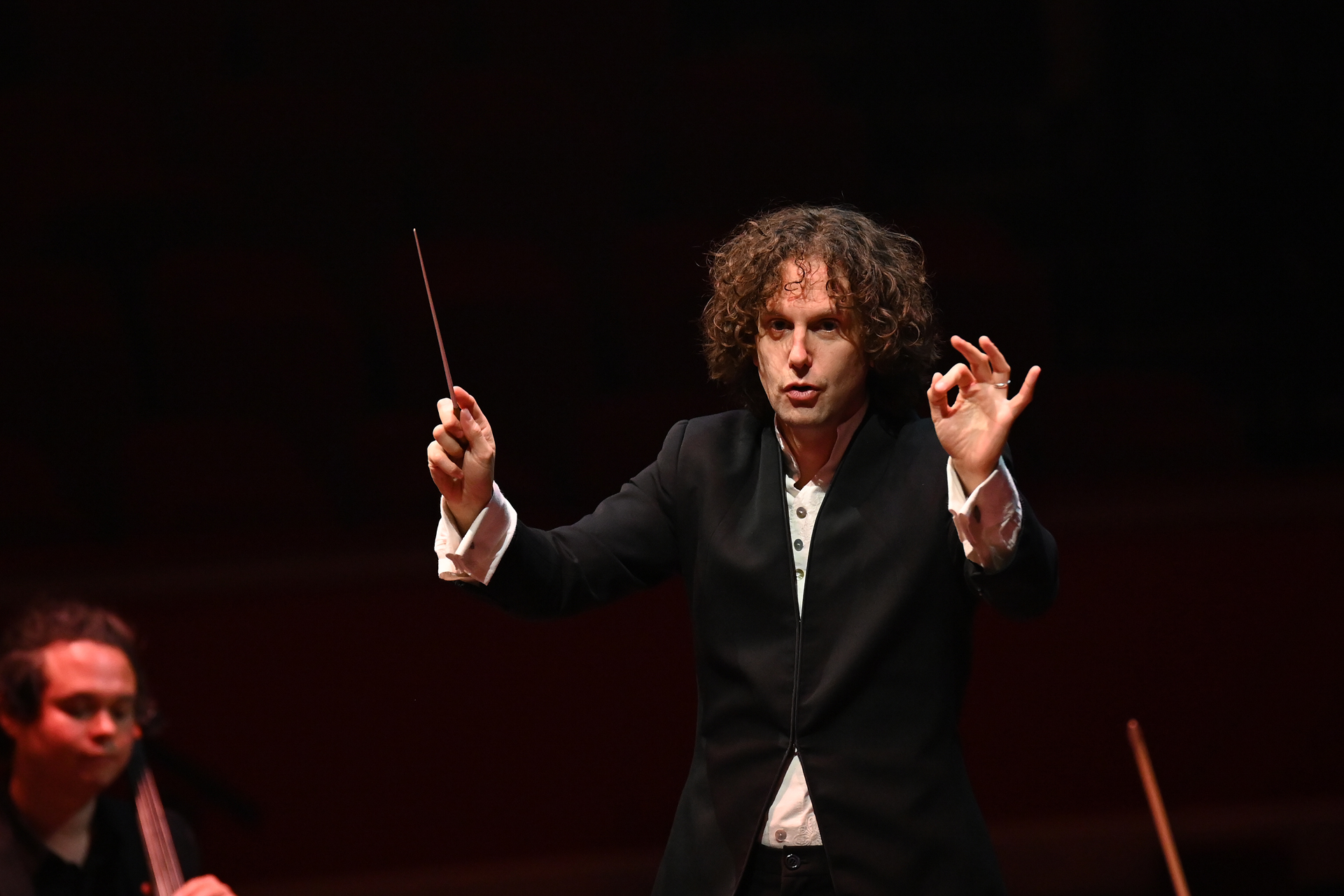 Brilliant though it was, I can’t help wishing we’d had more time for the main event: not the performance of the 1945 Firebird suite, but the 20 minutes of musical explanation and examples that preceded it. Hearing Tom Service and Collon himself (pictured above) bringing the music into focus, teaching an all-generations audience about tritones and Russian folk-music, getting everyone humming and generally under the skin of the score is exhilarating, but we only had time to feel a fleeting brush of the Firebird’s tail feathers before it was gone and we were back on our own.
Stripped of chairs and music-stands, standing limber and open, the orchestra and Collon threw the music around the stage like it was a ball, now giving us the fancy footwork of the Infernal Dance, now the collective breath of the Round Dance. Through it all, storytelling was uppermost, illuminated in bright detail – whether in the bassoon’s eerie, croaking lullaby, or the eddying softness of the strings, flashes of harp gleaming just beneath. It’s not music that needs explanation, but the benefits were immediate, obvious in the focus, the new intensity of concentration across the audience. If music education in UK schools had only a fraction of this expertise, this energy and commitment, just think of the young musicians we could be creating.





Add comment