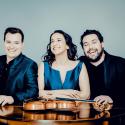
This concert, the Edinburgh International Festival debut of the Castalian Quartet, almost didn’t happen due to the illness of their second violin, Daniel Roberts. Then, a couple of days ago, in stepped Yume Fujise, leader of the Kleio Quartet, to save the day, which is no mean feat considering that this programme featured both a world premiere and the knottiest of Beethoven’s late quartets.
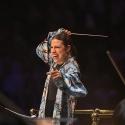
She did a terrific job, though (Fujise pictured below), as did the other three. In fact, they built the programme around that premiere, Mark-Anthony Turnage’s Awake. Turnage’s inspiration came from Beethoven and his relationship with violinist George Bridgetower, which helps to explain the choice of both Janáček’s Kreutzer Sonata Quartet and Beethoven’s Opus 130 Quartet, complete with its Grosse Fuge finale.
Quite a programme, then. Astonishingly, however, Turnage’s new piece was perhaps the warmest, most welcoming thing in it. Anyone expecting dissonant roaring from this (former?) enfant terrible would have gone away disappointed, because this two-movement string quartet had a gorgeously soft texture that was full of beautiful melodies. Yes, from Turnage! It began with a wistful violin solo against pizzicato cello, which was soaringly beautiful in itself and carried hints of Webern in the warmth of its scoring. That carried on into the second movement where even the energetic passages were carefully balanced and gentle, and all the musical interruptions seemed quiet and interrogative rather than explosive or disruptive. The ending of his quartet carried strains of the same duskiness that we would hear in the Janáček, and it ended on a beautifully inconclusive question mark. Is this a new Turnage we’re encountering? If so, I’d like to hear more of him. 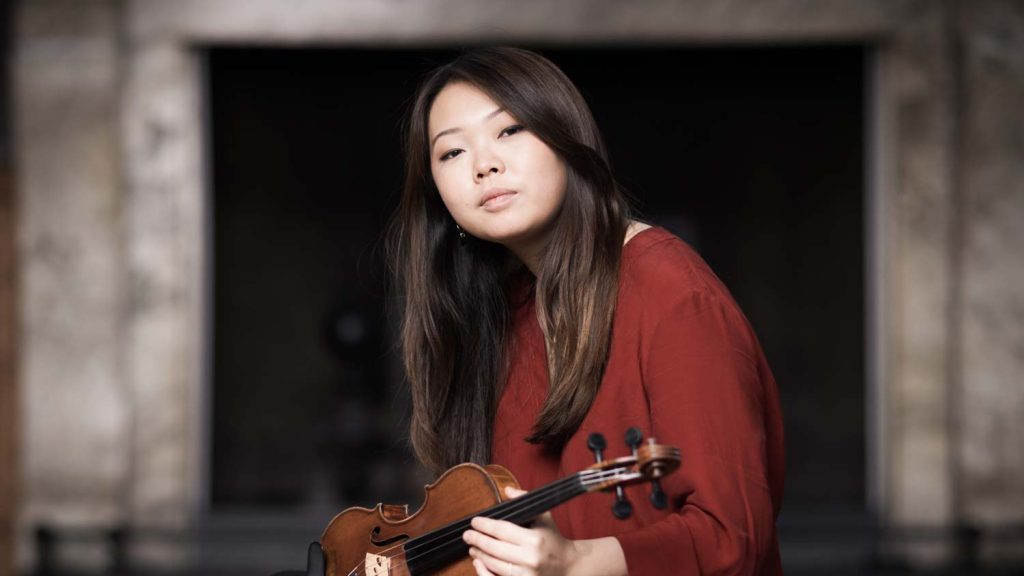 The Castalians played it with sensitivity and gentility, allowing its surprising warmth and gentleness to breathe on its own terms. If anything, it was their playing of Janáček’s Kreutzer Sonata Quartet that carried more urgency and drama, particularly those agitated interruptions that the composer repeatedly uses to inject urgency and drama. Under the Castalians’ bows they became more pressing and more terrifying as the quartet developed, standing in marked contrast to the muted opening, dusky yet vibrant, as well as the unconvincing resting point of its ending.
And Beethoven’s B flat Quartet veritably sang with the warmth of tone they gave to it. Not consistently, however. In the first movement they lavished vibrato on it, giving space for the music to ebb and flow, but then vibrato was in short supply during the Grosse Fuge, giving it an edgy, emaciated quality that made each line sound even more craggy and eternally strange than it always does. The Presto flickered and the German Dance bounced, but the emotional focal point came in a gorgeously played Cavatina, full of grace, elegance an inward beauty.
This concert contained music from the 1820s, 1920s and 2020s, and each piece had its own carefully constructed, bespoke sound world. Nothing was taken for granted here, and there were no short cuts. That’s what made it so powerful.