It could have been a winner: a charismatic star soprano of great emotional and interpretative intelligence, a top pianist given a little space to shine on his own, a programme that looked good on paper, of distinguished German/Austro-German women composers in the first half, French dark versus light in the second. But Milton Court is an unwelcoming venue, like being inside a dark-wood coffin, and the singer seemed uneasy between numbers to begin with.
The voice itself, that bright but far from light soprano, had settled by the time we reached three songs by Clara Schumann; the first group, by Fanny Mendelssohn, felt generic for this greatest woman composer of the time, with way too much piano arpeggiating and texts so awkwardly translated on the back wall – good to have supertitles, of course – that even Goethe seemed like a poor poet. Dessay moved swiftly into character, but kept eyes downcast in shut-off mode before beginning each one (though there were some fine segues). 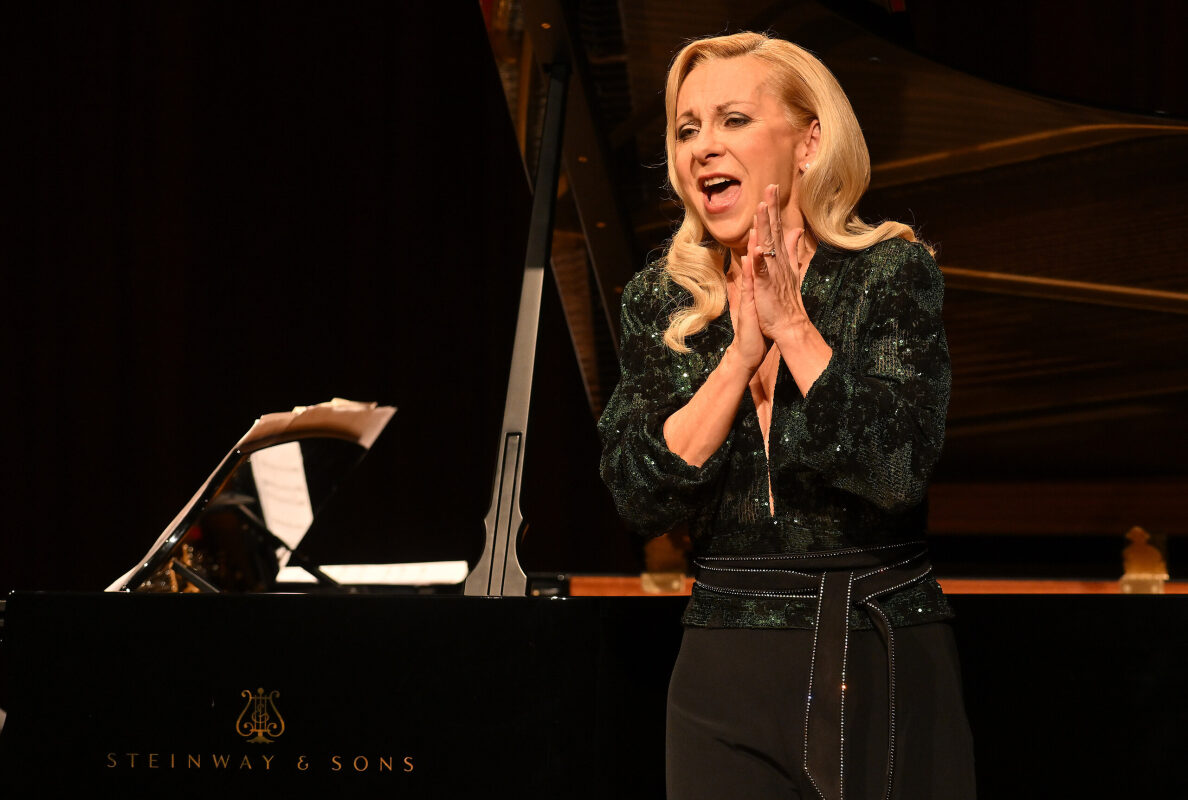 Clara’s texts anticipated the Mahlers in her rather prosaic setting of “Liebst du um Schönheit” (“If you love for beauty”), the Rückert song Mahler set so radiantly with much more emphasis on the transformation of “If you love for love, love me”, and the drama of “Er ist gekommen in Sturm und Regen” (“He came in storm and rain”), another Rückert text that would seem to prefigure the stormy relationship of the next great musical couple, with its dense textures powerfully realized, like the ensuing A minor Romance, by Cassard. Alma Mahler’s songs came across as the most individual, possibly because of the extended turn-of-the-century harmonic palette; but there’s no doubt that she makes the chromatics of “Laue Sommernacht” (“Mild Summer Night”) her own, and finds the dream-magic of “In meines Vaters Garten” (“In my father’s garden”), heightened by the spellbinding slivers of sound which have always been a Dessay speciality.
The hit of the French half, no doubt about it, was the extended drama of Poulenc’s “La dame de Monte-Carlo”, a Cocteau monologue to set alongside the operatic drama of “La voix humaine”: here Dessay extended her range of meaningful arm and hand gestures, gave us the creeps in the intimations of suicide which flank the desperation of gambling, and ended on a show-stopping messa di voce – swell and fade – on the top note of the last “car” of “Monte-Carlo”. A gloomier suicide note in the shape of Chausson’s “Chanson perpétuelle” had watery magic from Cassard and the requisite strangeness from Dessay. 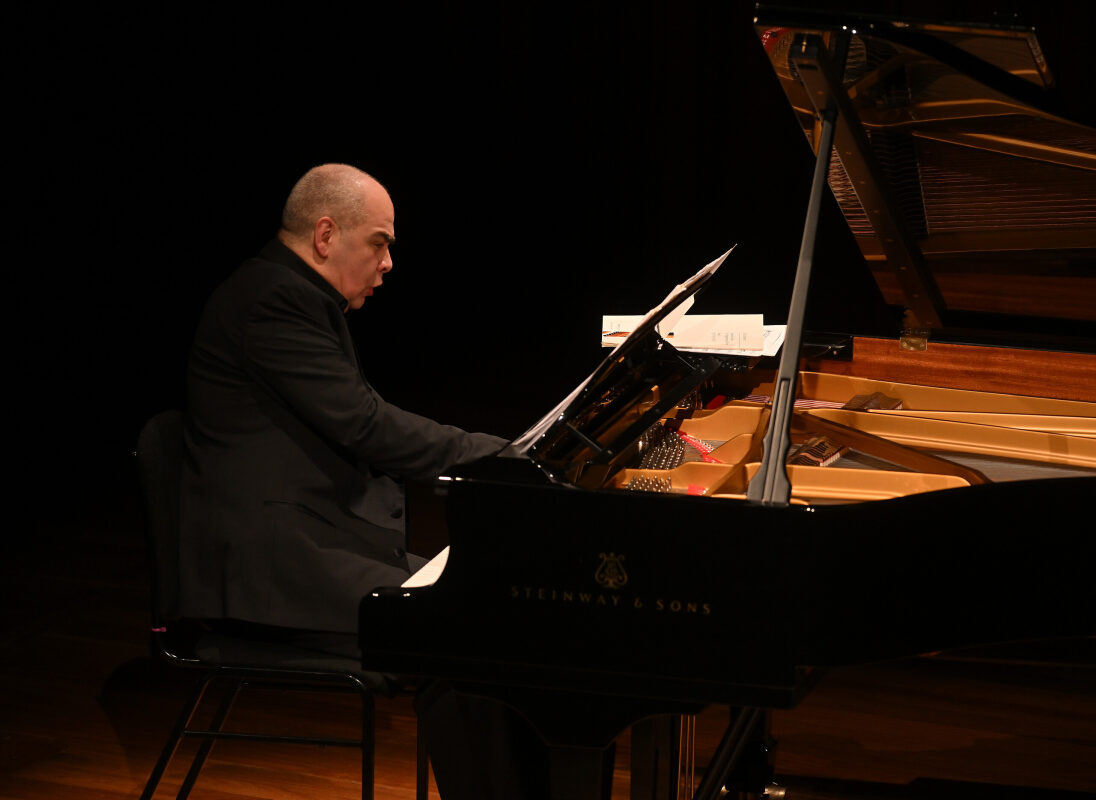 The central chain of Melisande’s meditation from the tower (exquisite, the soprano turned in to the piano keyboard for extra resonance), Massenet’s solo-piano Mélodie, Op. 10 No. 5 and his “Pleurez mes yeux” from Le Cid still didn’t quite justify the intense emotion of Chimène’s aria out of context, though Dessay gave it her all. Strangeness half-justified the official end of the programme, Marguerite’s Jewel Song from Gounod’s Faust, turned to a tragic fixity as if the Goethe heroine foresees the trouble in store. Then, despite the fact they hadn’t brought the sheet music with them, Dessay and Collard gave us perfect melancholy poise and atmosphere in “Tu m'as donné le plus doux rêve““from Delibes’ Lakmé. The impact of such moments will remain, but next time, let’s have a whole half or more of Poulenc.