The Fez Festival of World Sacred Music has been peerless over the years in presenting world/global music acts in one magical place. Only WOMAD is a serious rival as a long-established global music fest.
Fez is also special in another way, the city has miles of car-free winding alleys in the medina that make you feel like you are in a time machine spun back several centuries. It’s slightly easier not to get totally lost since GPS arrived but I still managed it several times.
It has a reputation as one of the Islamic world’s great spiritual cities, you feel the energy of the Sufi saints in the air. Yet it is also earthy, with the stinky leather making district, and mysterious - the architecture is introverted, behind some anonymous door in the medina there may be a fabulous palace. And just like the alleyways, nothing is strait-forward. The city is quite Scorpio, passionate, loves the hidden, and may sting you if you make the wrong move.
This year's festival was shorter than usual, in the old days it was often 10 days, this time it was jammed into four days - the reason given, the dates of this year's Eid al-adha and the World Cup.
The biggest venue with a five thousand capacity is Bab Makina. One memorable night of female artists had some astounding singers which in a normal festival would have been worth four nights and lasted over three hours. Mostly more than worth it though, notably Ghada Shbeir, a Lebanese academic and researcher singing profound and exquisite songs in Aramaic, the language of Jesus. It’s one of the richest types of singing, explored by other great names like Abeer Nehme and even the legend that is Fairuz.
Kaushiki Chakrabarty is a marvellous Indian Khayal classical singer who seemed to be veering into more pop territory, Nabyla Maan is a local from Fez who has taken traditional styles like Andalus music, semi-classical Malhun and Chaabi styles and modernising them - here she performed with a string quartet.
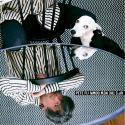
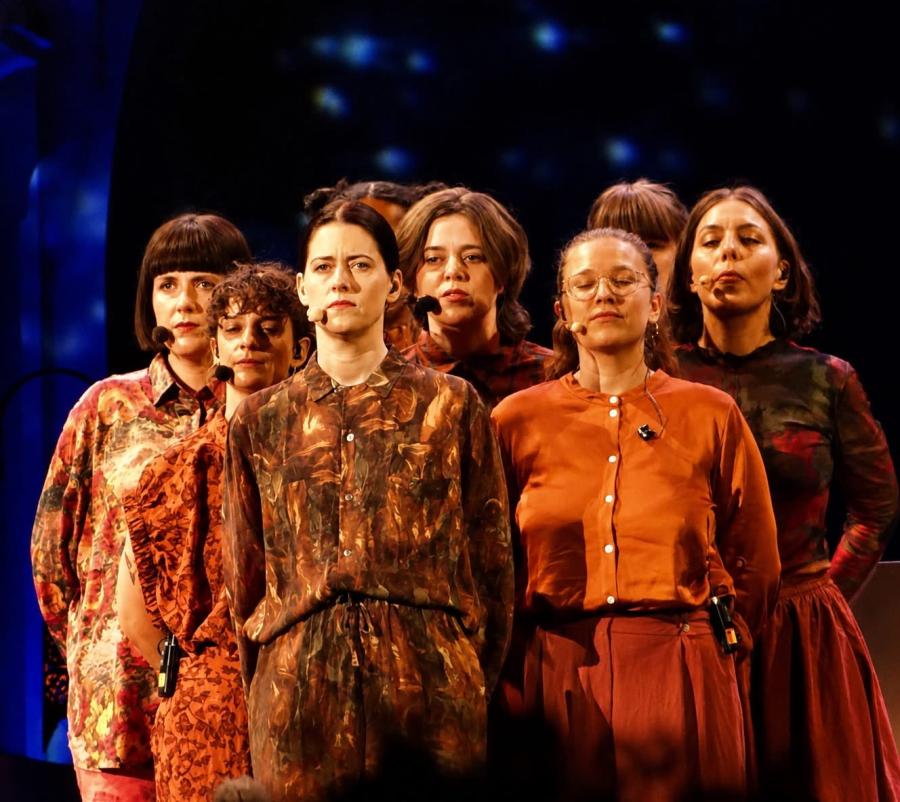
Had Kat Frankie’s Berlin-based Bodies choir (pictured below) been a separate event we could have been knocked out by their Germanic technical ability and general polyphonic sonority, but there was in the end something a little awkward about them in this context, both physically, and in their game but not completely convincing gospel songs. Whereas the other non-European female stars revelled in the glamour of the occasion, they wore more muted clothes. While the Lebanese really do have a lot to be troubled about these days, lyrics like "Civilisation is not civil" suggested how we, from more privileged nations, are often the most angst-ridden.
The other strong night was the opening at Bab Makina, directed by the Festival’s enterprising artistic director Alain Weber was an almost hallucinogenic son et lumière around the theme of the mystical elements of the arts and crafts of Fez: “Whether they are tanners (dabbāghīn), dyers (ṣabbāghīn), weavers (ḥayyākīn), shoemakers (khuḍḍām), tile makers (zelliji), carpenters (naqāshīn, zouāq) or coppersmiths (naḥḥāsīn), each of them draws their inspiration from the protective aura of their brotherhood (hirfa) and their spiritual master (shaykh al-hirfa).”
From Fez, the show span off into nearby Volubilis, the edge of the Roman Empire where the mosaics influenced the Fez Zellig tile makers, and before you knew it you in the Chinese court where an Empress is said to have discovered silk, there were Cambodian dancers, Central Asian singers, images of 40-foot peacock feathers and the whole was like an enjoyably psychedelic mushroom trip.
The big star of the Festival is Britain’s Sami Yusuf, who Wikipedia assures me has sold 34 million albums, who sings a kind of sweet Sufi pop. Generally, all the foreign visitors were not keen, while the Moroccans absolutely adored him. The only parallel I can think of is that Moroccans generally prefer their mint tea very sweet indeed, its sugariness comforting. Hugely successful, he can employ some fabulous musicians but the whole thing, despite a few winners, was so saccharine it hurt my ears.
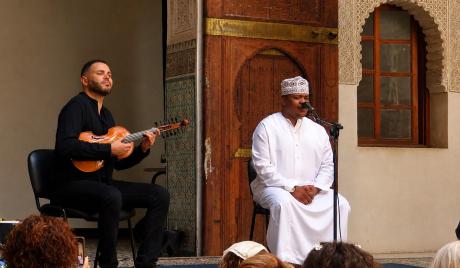
More bracing were some of the early shows at the Dar Adiyal, in the heart of the medina, some of them were the kind of things you might catch at WOMAD like the lovely Irish folk of Niamh Bury, some not - like the ecstatic Sufi singing of Tanzanian Yahya Hussein Abdallah and the violin of Jasser Haj Youssef, like a morning soul cleanse and a highlight of the whole Festival (pictured left).
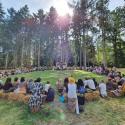
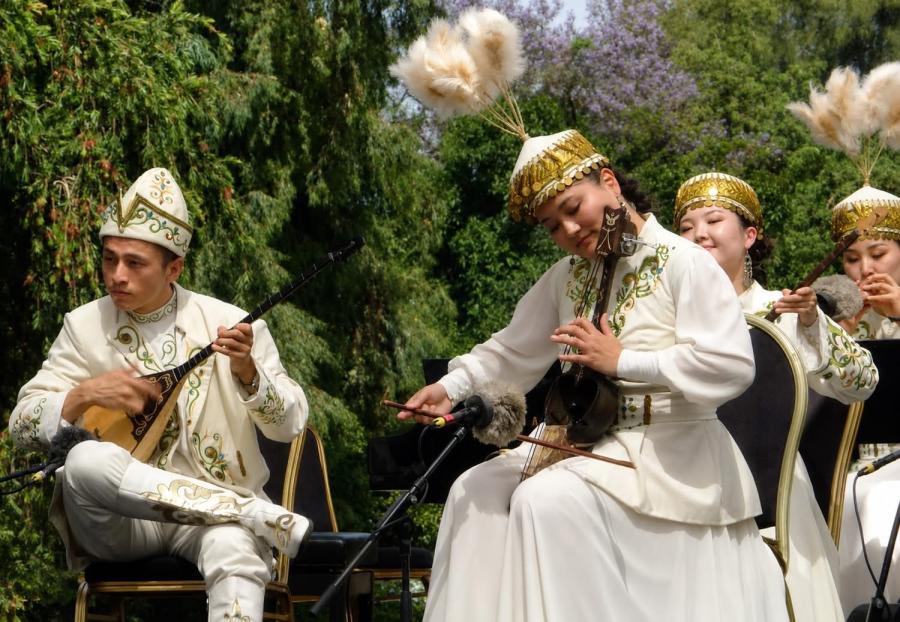
The other main venue was the lovely Jnan Sibil garden, where there were all kinds of delights including assorted Central Asian musicians (pictured above), although the most striking was the Pakistani Sufi singer Sanam Marvi, interpreting sacred texts with a profound devotional intensity. However, she inevitably gets compared to Abida Parveen, who I would place among the top five female singers of hte last half century. Both doing interpretations of Bulleh Shah poems and classics like "Mast Qalander". Marvi’s arrangements were a little too complex for the trance effects Parveen achieves, and the unusual addition of adding a synth player didn’t really work, partly because he was showing off how many notes he could play.
Abida’s concert at Fez in 2001 was one of the most extraordinary and moving I have ever seen, and she invited me to Islamabad where I arrived on 7 September 2001 only to be stranded in Pakistan when the airports shut after 9/11, but that, as they say, is another story. "Mast Qalander" kind of translates as “The sacred energy of a free spirit”, Qalanders being seen as wandering Sufis who often reject societal norms. I’ll have some of that, please.
It would be remiss not to mention the kind of younger, funkier version of the Fez Festival, the Fes Gathering, which happened just before. There were amazing collaborations between Brazilian and Moroccan musicians, the playful virtuoso sax of Yedo Gibson and guitarist Guilherme Pestana Vaz worked miraculously well with the gnawa grooves of Ismaeil Maarouf.
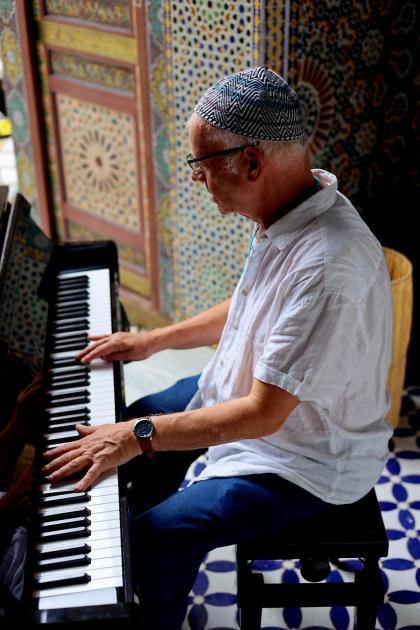
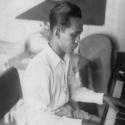
There were different Sufi groups who never played together before accompanied by action painting from the wonderful Maria Caixés, workshops on Vedic Art, and a poetic film by Heidi Vogels The Gardens of Fez. My critical hat must be removed as they also showed a work in progress of Sama:To Listen, a full-length documentary road movie directed by Darek Mazzone set in Fes, Istanbul and Malaysia about music and healing, for which I was Music Director, composed the incidental music and appeared in. I also took part in a panel discussion about Music and Memory, introduced as a “Composer, alchemist, and shepherd” (kind of somewhat true) and did a piano performance (pictured right by Rich Gold) which 30 seconds after it ended, the voices of the Muezzin filled the air, calling the faithful.
What does work is everyone involved eating dinner together and meeting artists around the world - this has already resulted in assorted projects happening, happy spin-offs, most of which not known to the dynamic festival director Omar Chennafi.
I did meet again the very bright and thoughtful Chérif Cheikh Sidi Brahim Tidjani who has an important position as the son of the Tidjani Sheikh, who has millions of followers from Chechnya to Lagos. He actively promotes an inclusive Sufism and interfaith dialogue and opposes religious fanatics. He is also a techno freak, comparing the repetitions of the Sufi Zikr chants to techno. He invited me to a festival he helped set up, Africa’s first techno festival set in Senegal to be held next March. Watch this space.