Puccini elevated the operatic tearjerker to tragic status in three masterpieces: La bohème, Madama Butterfly and Suor Angelica, rivalling the other two in intensity despite its brevity. Its special atmosphere works best as the central part of a trilogy (Il Trittico) between a dark melodrama and a pacy comedy. The jury’s still out on whether it works on its own, so disappointingly undernourished is Annilese Miskimmon’s production.
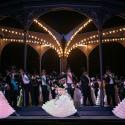
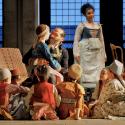
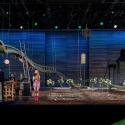
For a start, Puccini’s delicate evocation of a cloister towards sunset in springtime, with crepuscular birdsong, doesn’t tally with the grim picture of pregnant girls and stern nuns wheeling prams in evocation - as Miskimmon is at pains to tell us in the programme - of an Irish Magdalene laundry in the 1960s. Despite the hanging sheets, Yannis Thavoris's set design is unatmospherically minimalist - it's advertised as a semi-staging, after all - though Mark Jonathan's lighting occasionally comes into its own.  This decidedly isn’t the place the protagonist later asks her inflexible aunt to respect as one of mercy and pity (though there are probably more kind nuns around than there were in the real Magdalene thing). In any case, David McVicar got there first in his highly-praised Trittico shared between Welsh National and Scottish Operas. To succeed, the detailing and the characterisation of convent life which Puccini observed for himself at his sister’s retreat need to be both sharper and lighter of touch; it isn’t until Genevieve – a perfect performance from Alexandra Oomens – sings about the sunlight striking the fountain that there’s any complement between stage and pit, where Corinna Niemeyer‘s fine pacing doesn’t always feel quite fleshed out enough in orchestral colours.
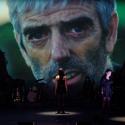
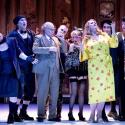
Emotional high points do happen, but always later than they should. Somehow the protagonist, Sister Angelica with her secret sorrow, needs to stand out from the crowd; such is the carelessness of grouping – miles away from Richard Jones’ meticulousness at the Royal Opera - that we hardly notice her until Sinéad Campbell Wallace launches into Angelica’s first major solo. A convincing ENO Tosca and stunning Salome for Irish National Opera, Campbell Wallace needs more bloom and sweetness in the sound for this role, though she does rise to the grief-stricken heights in the one truly excerptable aria, known in its original Italian as “Senza Mamma”.  Even Christine Rice (pictured above with Campbell Wallace), so used to filling a stage with her presence, seems dwarfed by the space until she gets to open out in the hard-hearted aunt’s narrative of mystic communion with Angelica’s dead mother. Puccini downplays the terrible news that the child died two years ago, but it needs more emotional registering than a jumper the aunt somewhat implausibly produces from a tiny suitcase.
At least Miskimmon plays the vision of the boy by the dying Angelica straight, but doesn’t know how to follow it through to curtain fall (don’t bring it down while the music is still playing; scattered applause ruined the final moment). Campbell Wallace is moving in Angelica’s plea for salvation in suicide, but again it’s an isolated moment. If your eyes don't at least fill with tears, something's wrong. All the smaller solo parts are well taken, if no-one especially stands out, but despite the stalwart ensemble work, it all feels too half-baked, too thrown together without enough thought. The much-revived Bohème sounds like a safer bet, though it's high time Jonathan Miller's also underfilled production was replaced. Maybe it figures that a company that can now only put on two thirds of a season can only give us one third of Puccini’s most variegated masterpiece. for one night only.
- No further performances of Suor Angelica. La bohème runs at the London Coliseum until 19 October
- More opera reviews on theartsdesk