You could hardly ask for a better cast than the one assembled for this short run of Wozzeck at the Royal Opera House: Simon Keenlyside in the title role, Karita Mattila, John Tomlinson, Mark Elder in the pit. And at a top price of £65, with many tickets going for much less, this is quite the bargain – not least because the marquee names absolutely nail the performance.
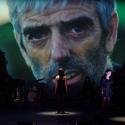
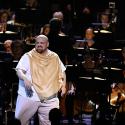
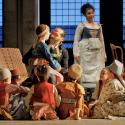
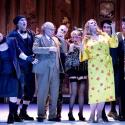
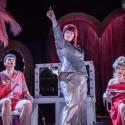
Keenlyside jitters and stiffens as Wozzeck gets progressively consumed by imagined and real-life torments, while harnessing the strange lyricism of his vocal lines. Mattila, her voice full and perfectly controlled, brings a poignancy to the adulterous but long-suffering Marie. Meanwhile, Tomlinson uses his magnetic stage presence and flawless delivery to disturbing effect as the unscrupulous Doctor (pictured below). The supporting roles are also well handled by Gerhard Siegel (Captain), Endrik Wottrich (Drum Major), John Easterlin (Andres), Allison Cook (Margret) and the rest of the cast.
Wozzeck is a work still staggeringly modern and vital 91 years down the line
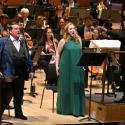
The orchestra plus on- and off-stage bands complete the picture – it really is an as-near-as-damn-it ideal account of Berg's first opera, a work still staggeringly modern and vital 91 years down the line. Strange then that it should be the staging that feels like it hasn’t aged well since its first outing a mere 10 years ago. Director Keith Warner and set designer Stefanos Lazaridis, the latter sadly no longer with us, were the dream team behind Covent Garden’s much admired Ring, yet the approach here tends occasionally to undermine the drama.
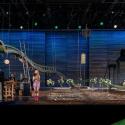
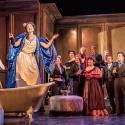
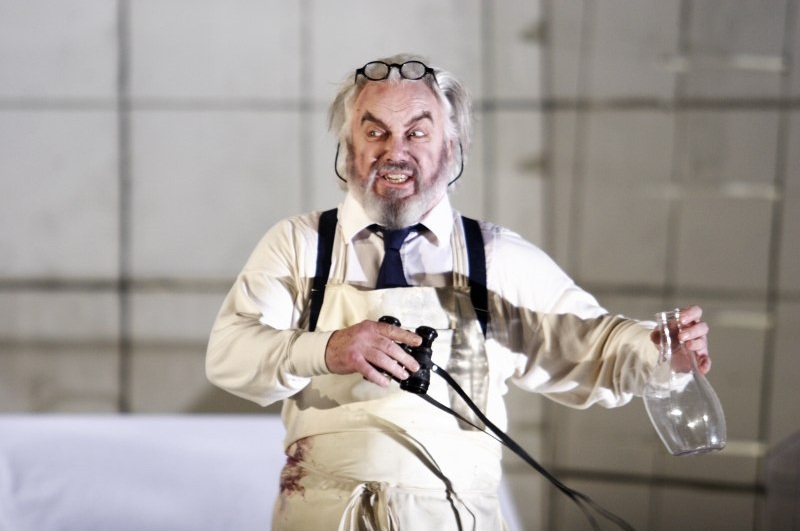 The main set is a strange lab-like space with mildew blooming in the corners, a white tiled box with a raked floor, its seams drawing the eye into a trick of perspective. It's dominated by four large glass boxes, initially covered in white sheets but gradually revealed to show one containing giant mushrooms, one specimen jars, one a model of house in the mountains, and one just water.
Twice, an upside-down black triangle as wide as the stage is lowered down to reveal a window cut into it, then a few minutes later flown back out again. It all feels somehow significant but that’s really the problem – should one be puzzling over what the staging might mean when there’s a human tragedy unfolding?
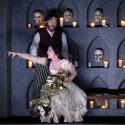
Not that it is short of memorable and affecting touches: thanks to the illusionist’s trick of a large angled mirror, Marie first appears pinned to the back wall like a butterfly; in a grizzly coup de theatre, Wozzeck’s death ends with him suspended in a bloody aquarium like a specimen. But there is very little of the mundane, impoverished normality which might allow us to see Wozzeck as a broken human being, rather than just a symbol amid a sea of symbols.