Bloomsday doesn't just celebrate James Joyce's odyssey through so many parts of Dublin that still teem with character; it's also putatively about the same 16 June 1904 when the budding writer first walked out with Nora Barnacle and she put her hand inside his trousers to "make me a man". Do all those folk who swan around in straw hats and frilly dresses know they're marking National Hand Job day too? Have any of them read his deliciously filthy early letters to Nora?
No matter; let them have their fun, but let it also be of quality homage to the towering and frequently very funny masterpiece that is Ulysses. That's becoming so much more the case in recent years, thanks to the extension of events to the week leading up to Bloomsday itself. If you're part of a professional theatre company, you don't just put something on for one day a year. Liam Hourican and his Volta Theatre Company have their fingers on the pulse.
Readings of Ulysses' opening chapter, "Telemachus" at 8am on the day, faithful to the time, may be a nice idea but at the one I attended only one of the speakers could really be heard; the swim afterwards was more enjoyable. Now Hourican's team provide the perfect site-specific staging, produced by tower curator Alice Ryan. They start on the rampart before taking breakfast in the very room where the characters of the novel's chapter one take theirs (as, of course, did Joyce with Gogarty in reality).
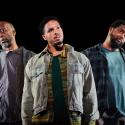
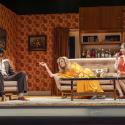
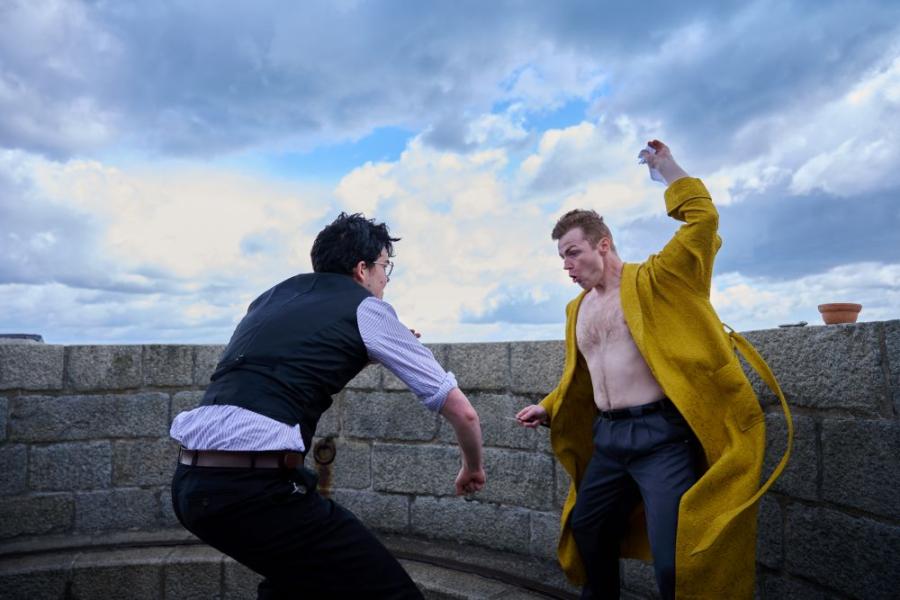
I saw it and loved every minute of it in 2025; this year I gave my ticket to a visiting friend and caught the last bit outside the Martello Tower. There are a different Stephen Dedalus (Jack Morey Walker) and Buck Mulligan (Darren Mone, the two pictured above by Caleb Geng), but they seemed excellent from what I caught and overjoyed attendees confirmed as much. And yes, this Buck can be heard loud and clear from the tower as he prepares to jump into the sea at the Forty Foot.
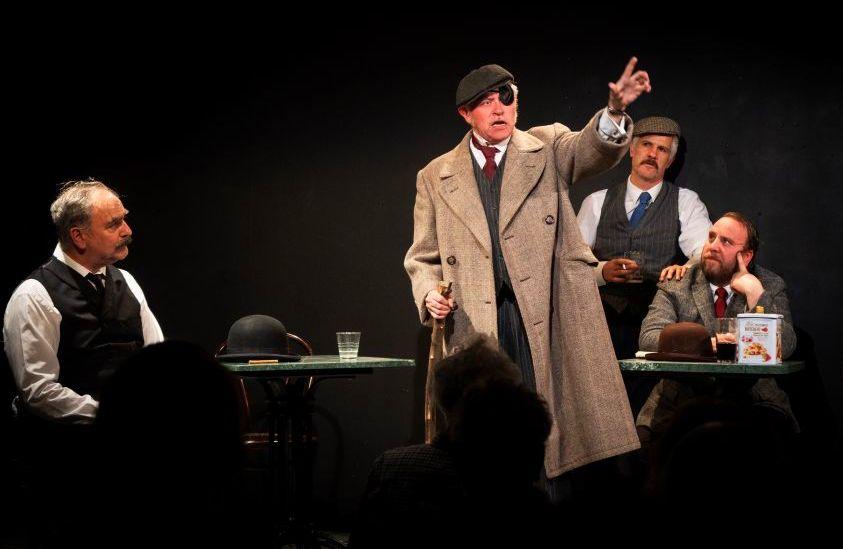
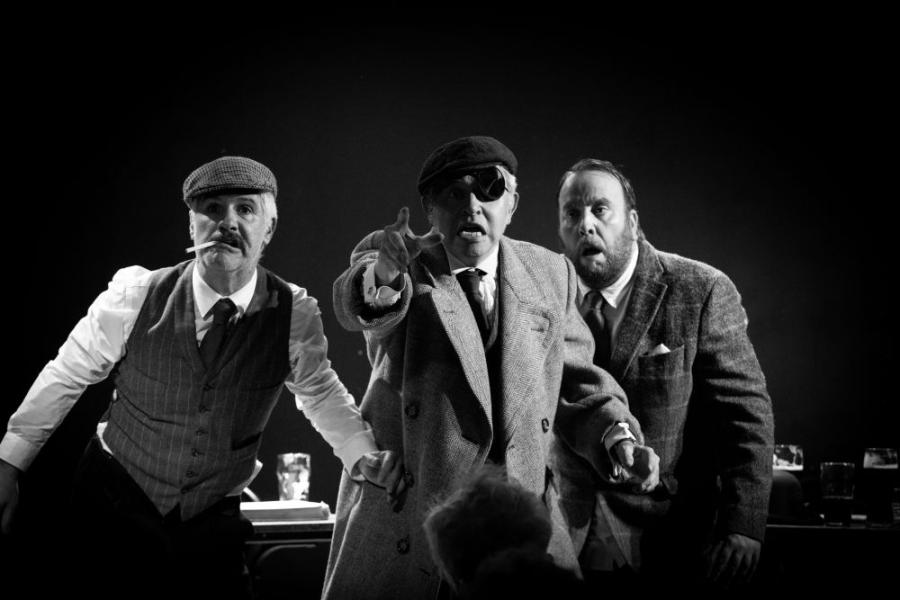
In 2025 Volta's adaptation of the "Cyclops" chapter was work in progress in the Dun Laoghaire Library's studio, which didn't prevent Frank McGuinness, in the audience, from writing a warm letter of congratulation. This time it's had a full, sold-out run at Bewley's Cafe Theatre, and it's exhilarating to experience, with the core energy coming again from Jim Roche as the monocular monster known as the Citizen, with "bloody mongrel" in tow (Roche pictured above with Jo Craig, Liam Hourican and Danny Kehoe by Al Craig).
Again, there are two different actors involved this year: Danny Kehoe has shifted sideways from Leopold Bloom to a dopey, go-along-with-anything Joe Hynes, while our hero is taken with quiet, sad dignity by Jo Dow. When the Citizen's ranting nationalism turns angry and anti-semitism takes over, you could have heard a pin drop. It's a magnificent chapter to dramatise, and Hourican, with a delicious Dublin accent, and a chameleonic Damien Daveney as Bob, Bard and Martin Cunningham help keep the testosterone levels high.
Another Ulysses chapter which works so well in the dramatisation is the "Hades" episode. It may be a bit strange that the JoyceStagers' annual performance in Glasnevin Cemetery - which I was seeing for the first time - stops when Leopold Bloom and co descend from the carriage; we only get the ride, indicated by two pairs of chairs facing each other on the lawn, Bloom and Dedalus Senior facing Mr Power and Martin Cunningham. Bloom in Glasnevin was replaced by a tour following the performance.
Yet how much wisdom there is here about suicide - Bloom's father, we learn, killed himself, and not everyone in the carriage knows it when judgment is passed - and other reflections on death. And when Joyce states "Twenty Past Eleven" as the carriage passes "the hugecloaked Liberator's form" of Daniel O'Connell's statue, it was 11.21am.
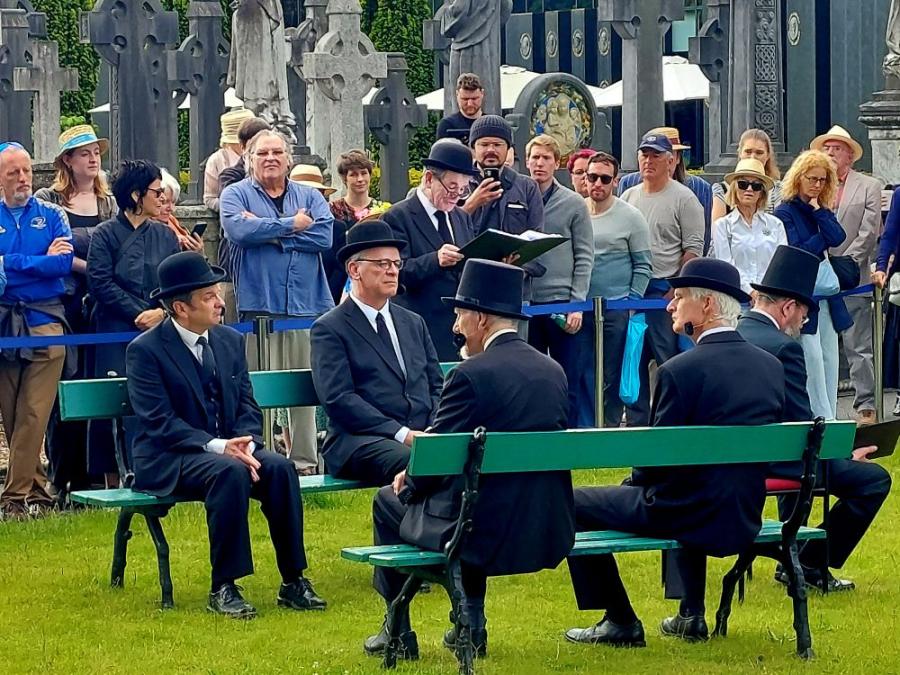
The JoyceStagers don't seem to have a website, and I've had no reply in my request for details of the actors from the James Joyce Centre which this year co-ordinated details of Bloomsday, so the only credit I can give is to balladeer Joe Black Ryder, who sang the framing ballads specially tailored to the subject, Paddy Dignam. Many in the audience knew the refrains.
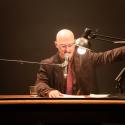
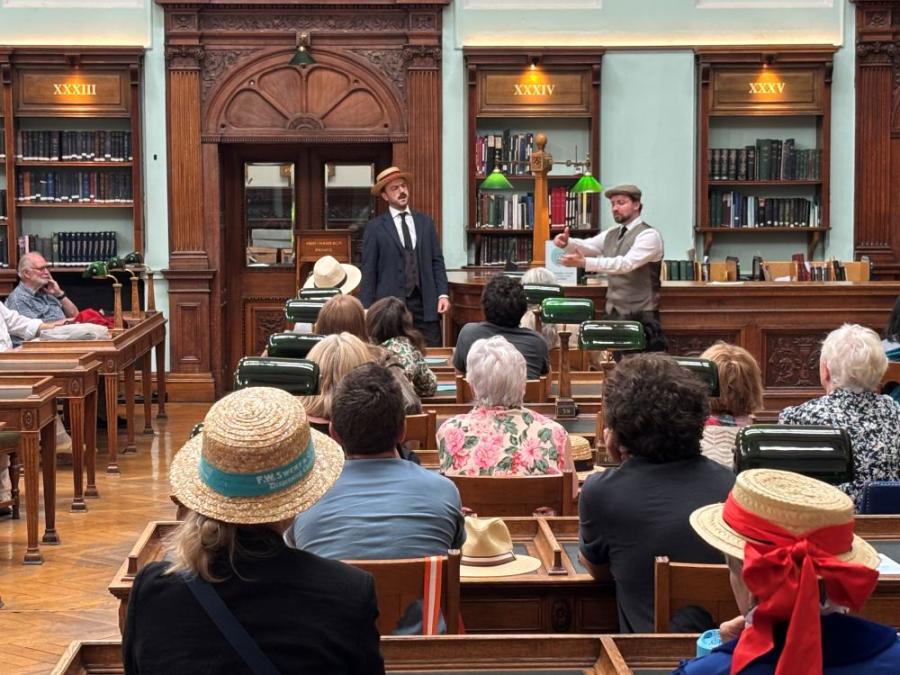
Words alone carried a very short but brilliantly executed dramatisation taken from the "Scylla and Charybdis" chapter, set in the National Library of Ireland, where we took our places in the Reading Room, an august location I was seeing for the first time. We were greeted by Joyce himself at the gate (see lead photo) and afterwards entertained by the Fingal Mummers on the steps outside, on the grounds that words about mummery feature substantially in Ulysses, but the playlet was the thing. Pictured, courtesy of NLI, Ruairí Lenaghan and Ross Fitzpatrick.
The essence of it is summed up in a new publication by Tom Mathews of Ulysses in Limericks (New Island Books), his reading from which I was sorry to miss:
In the library Stephen's oration
Renders agnate the art of creation.
Not Hamlet but rather
The ghost of his father
Was the source of the Bard's inspiration.
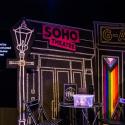
I picked up a copy that evening at the bookshop which lodges the New Theatre in Temple Bar, my last stop of the day. It seemed important to balance the all-male ensembles with a monologue for a woman: not the celebrated speech of Molly Bloom at the end of Ulysses but a fresh take on The Dead, one of the greatest short stories in any language at the end of the collection Dubliners.
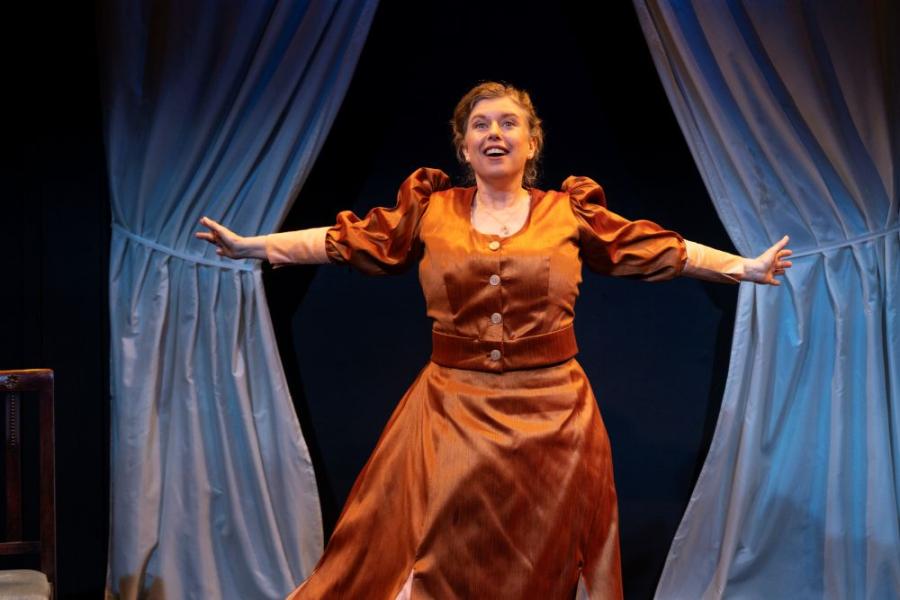
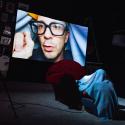
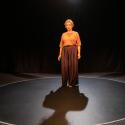
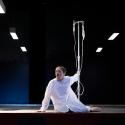
The imaginative move-about dramatisation of The Dead at the university building on St Stephen's Green which is now part of MoLI (Museum of Literature Ireland) is rightly fixed as a sell-out annual occasion (Telemachus in the Martello Tower has now joined it). This is different. For Epiphany, directed by Fiana Toibin, Lesley Conroy (pictured above and below by Al Craig for The New Theatre) has reimagined the well-loved and ultimately poignant events around a 6 January gathering from the perspective of Gretta, the wife of the main character who only truly comes into focus in the final pages.
The characters of The Dead have such a life off the page by the time you've finished reading it that I, at least, thought much of how Conroy plays Gretta (also Conroy) is in the story. Not at all. Though the enthusiastic sister-hosts and others address her as "Gretta", she's Mrs Conroy in the early stages, and only in the crucial final bedroom scene with husband Gabriel does Gretta become "she" or "her".
We share Gretta's ebullience, her deep love of her Gabriel, the ordinary domestic scenes she evokes, her jealousy when he dances with the brusque (an encounter which does not end well, Joyce tells us, over the use of the Irish language, but the wife doesn't know what it's about). She plays the good wife at table, where talk of Italian opera singers goes over her and she's in a reverie during Gabriel's big speech.
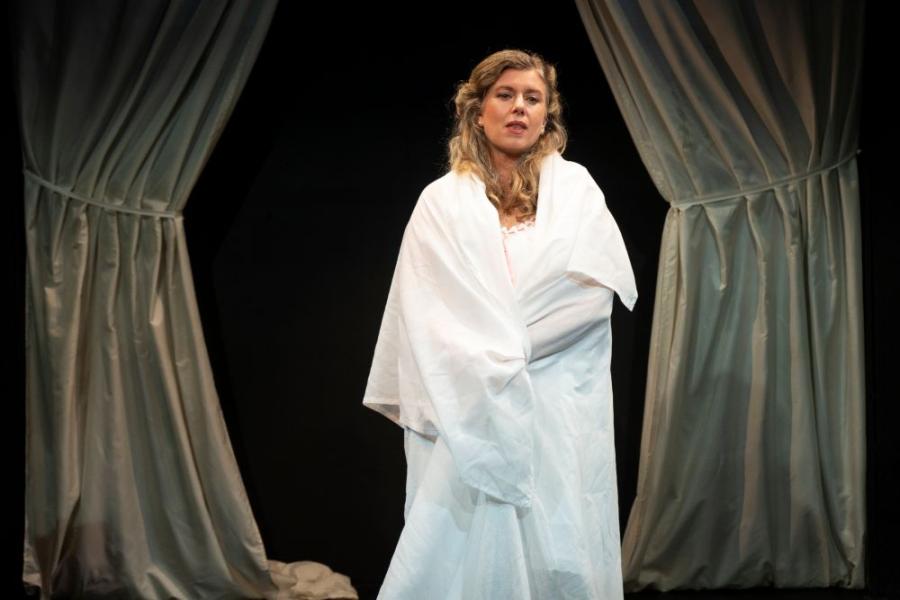
Everything changes, as it does in the story, when sweet-voiced tenor Bartell D'Arcy, having used a cold as an excuse not to sing, finally delivers "The Lass of Aughrim" (beautifully sung here; Gretta quickly takes it up). The lighting changes dramatically to give the distant melancholy gleam in the woman's eyes, and before we know it, we've reached what she tells Gabriel it evokes in the Langham bedroom: the devoted young man with whom she walked out in Galway, who died shortly after standing outside her room in the pouring rain. Conroy achieves a complete transformation here, and moves us deeply even though we're prepared for what she says. Then she goes beyond Gabriel's meditation about snow over Ireland, and hints subtly at the reconciliation that has to happen. It's all perfectly judged, and made a classy end to a fascinating day. Another permanent fixture, especially for the Christmas and New Year season.