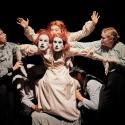
Alan Ayckbourn refuses to write down to children, and it shows. The Boy Who Fell into a Book is as sophisticated in structure as it is family-friendly in content. The narrative follows nine-year-old Kevin, who is absorbed (literally) into the detective story he is reading: Rockfist and the Green Shark. Kevin dreams he has joined Rockfist on his latest case, in which they must discover the identity of the shark to save the planet, although the investigation is secondary to the inventive episodes along the way as the pair slip through the books on Kevin's shelf – Chess for Beginners, Grimm's Fairy Tales, Robert Louis Stevenson's Kidnapped, Scary Ghost Stories and The Wooblies' Picnic – pursued by Monique, the villain of the Rockfist story.
Ayckbourn might be known for social comedies (Absent Friends, Season's Greetings) but his 76 plays include several fantasy works, including Surprises (now on at the Stephen Joseph Theatre in Yorkshire). The Boy Who Fell into a Book, first staged at the SJT in 1998, enables him to play with genres, an idea he returned to in 2005 with his adult play Improbable Fiction.
That The Boy Who Fell into a Book has taken 14 years to come to London is to do with its staging rather than its quality. With its sudden shifts in setting, it requires tremendous organisation and a versatile cast. Steve Marmion, artistic director of Soho Theatre, brings the many worlds within the play alive with wit and vision, and there are a lot of things to love about this production. The first is that no child (it's recommended for children aged seven and over) could possibly be bored. With the near-constant movie-scene music and sound effects, there is plenty of stimulation.
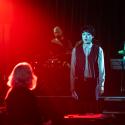
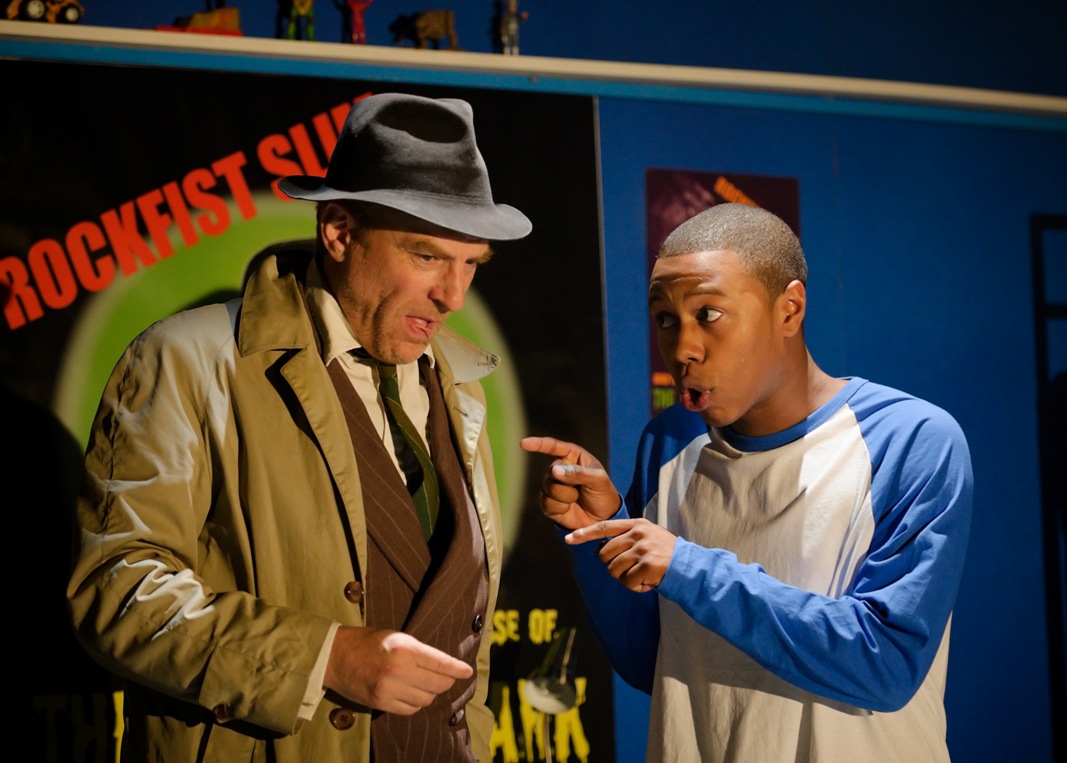 Kerron Darby as Kevin gets us on side with his enthusiasm, although it should be added that he speaks his lines too quickly. However, as Rockfist Slim Simon Kunz is brilliant (pictured right, Kunz and Darby). A seasoned actor whose credits include the Royal Shakespeare Company and Disney's The Parent Trap, he plays the Columbo-like, toothpick-chewing detective with warmth and gusto.
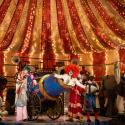
Hayley Grindle's set uses Kevin's bedroom as an effective backdrop, with characters emerging from under the loft bed, out of the wardrobe and beneath the floor. I found the lighting (designed by Philip Gladwell) too extreme, with much action occurring in semi-darkness and too many scene changes accompanied by strobe effects. Some tricks work better than others. A face appears on a mirror during a ghost story startling even the toughest children, but a plate whipped off a table in the Kidnapped scene is “obviously” attached to string, said my young companion. But the script, full of puns and rhymes, plus the lively characters ensure the production is robust enough to withstand the odd DIY experiment.
Swishing around in her crimson velvet gown, Emma Handy makes a seductive Monique. In one hand she waves a gun; in the other a baguette (Monique is French). The three other cast members play 15 characters with varying success. Hammed Animashaun is fun as the narrator in the Woobly scene, his face poking out from a cardboard sun; his bumbling Little Red Riding Hood wolf is less convincing, although my young companion was one of several who laughed as Kevin and Rockfist followed the wolf, dressed as Red's grandmother, off stage, imitating an animal with a bad back.
The Woobly scene, featuring Ayckbourn's version of the Teletubbies, goes down best. An hour and a half into the play, their minds stretched and invigorated, the young audience is only too prepared to laugh with Ayckbourn at these rotund creatures with their one-word vocabulary (you’ve guessed it: “woobly”). I caught myself smiling at the production’s charm, although after a minute of my companion singing “woobly, woobly, woobly” on the Tube home, I was less pleased that Ayckbourn had ignited her imagination so strongly.
- The Boy Who Fell into a Book, part of the London 2012 Festival, is on at the Soho Theatre until 28 July