With its five-hour Angels in America, the International Festival has already hosted one production of epic proportions in Edinburgh this year. At getting on for three and a half hours, Al-Sirah Al-Hilaliyyah almost counts as its second – and there’s no doubting, in any case, its epic subject matter.
This is a huge, sprawling Arabic poem from around the 11th century, telling of the political manoeuvrings, the conflicts and the magnificent victories of the Bani Hilal people and their great warrior hero Abu Zeid. It’s been transformed into a stage production by Palestinian company Khashabi Theatre, and co-creators Bashar Murkus and Khulood Basel, in a high-profile international co-production between several European institutions.
And, no doubt not unconnected with the production’s origins and current world events, there was a lot of good feeling in Edinburgh’s Lyceum Theatre towards the show – helped, certainly, by the informal welcomes shouted from the stage by the seven-strong company as audience members filed in. There are, indeed, some heart-wrenching moments at the precise mentions of Palestine and Gaza in the original, centuries-old text. But ultimately, Al-Sirah Al-Hilaliyyah feels like a deeply flawed show.
It’s perhaps not surprising that its vast, ever-expanding and sometimes dream-logic-following storyline isn’t exactly straightforward to keep on top of, partly because of its often convoluted twists and turns, and largely because of its enormous cast of characters. A running joke about whether the audience can even remember who certain characters are, however, risks undermining the tale’s integrity and seriousness of purpose, especially when the gag is trotted out time and time again.
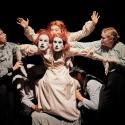
Likewise, there are some odd decisions about staging and tone. Most perplexing is a lengthy clown scene at the start of Act II, where three quivering trees merrily report on war, pillage and rape to general hilarity from all involved. Perhaps we’re meant to register a disconnect between the method of delivery and the material itself. It isn’t clear.
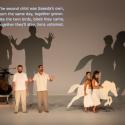
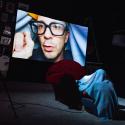
Elsewhere, setpieces simply drag on too long. A lengthy section on an epic campaign boils down to actors miming horseriding for what feels like an eternity, and too much narrative and background detail is consigned to lengthy surtitles projected onto the stage’s back wall, rather than being represented on stage.
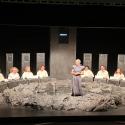
These cavils aside, however, there’s still much to enjoy. Murkus and Basel’s idea of a troupe of actors/musicians retelling the epic is a strong and nicely adaptable one, although the Brookian empty space (or almost empty space) of the first Act gets rather cluttered and compromised with more lavish props and costumes in the second.
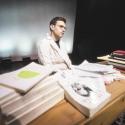
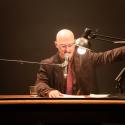
Murkus and Basel’s actor/musicians are universally excellent, and the production’s music – from a solo drummer and oud player plus singers – is very strong, though less reliance on pre-recorded backing tracks might have added to the piece’s raw authenticity. That said, however, given the vast nature of their material, there’s little sense of connection or jeopardy with the show’s characters or storylines, therefore little at stake on an emotional level. Impressive it might be; involving it’s not. There’s no doubting Al-Sirah Al-Hilaliyyah’s epic monumentality, but its contemporary retelling feels disappointingly unconvincing.