Dracula: Lucy's Dream, Pleasance at EICC ★★★★
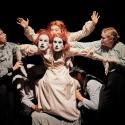
If something’s scary, it’s usually because you know it’s a threat, and that it might cause you harm. If something’s creepy, however, things are far worse: something apparently innocuous, even reassuringly pleasant, might actually have it in for you after all. Dracula: Lucy’s Dream – from Franco-Norwegian company Plexus Polaire and its artistic director Yngvild Aspeli – falls firmly into the second category. It’s a seductive and often very beautiful show, but also one that on occasion snarls with bloodied teeth to show you what it really has in mind.
And it does so quite magically, using light, shadow, suggestion, and some uncannily realistic life-size puppets expertly manipulated by the five-strong company. In purely technical terms, it’s a thing of dark wonder as actors glide seamlessly between roles, as masks transform personalities, and as the stage space itself seems to expand or contract to claustrophobic or vertiginous effect. Creepiest of all, however, are the moments when it’s not even clear where human ends and puppet begins, and which is manipulating which.
All of which serves as an ideal vehicle for Aspeli and Plexus Polaire’s classic horror storyline. No, this isn’t the full Jonathan Harker-to-van Helsing tale: instead, we’re plunged into the turbulent interior world of Lucy Westenra, her forbidden desires to offer herself up to the Count’s sinister power, and the life-sapping damage that the undead creature ultimately inflicts. Contemporary parallels of abuse and violence hardly need to be pointed out, and nor are they in Plexus Polaire’s canny and thoughtful telling of the tale, though they’re clear for all to see, not least in a particularly harrowing scene where the increasingly deranged (and supernaturally powerful) Lucy is brutally forced into submission.
Visual storytelling in this (almost) wordless show is often crystal-clear, but sometimes rather more opaque. Its strengths, though, lie in its dream-like atmosphere and its often free-feeling flow of ideas and images as figures emerge from the murk and bodies coalesce only to dissolve again. It’s an exquisitely conceived and often deeply troubling show, and one to unsettle (rather than to scare, perhaps) through its visual and thematic ambiguities.
The Dream Machine, Pleasance Courtyard ★★★★
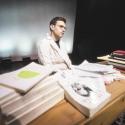
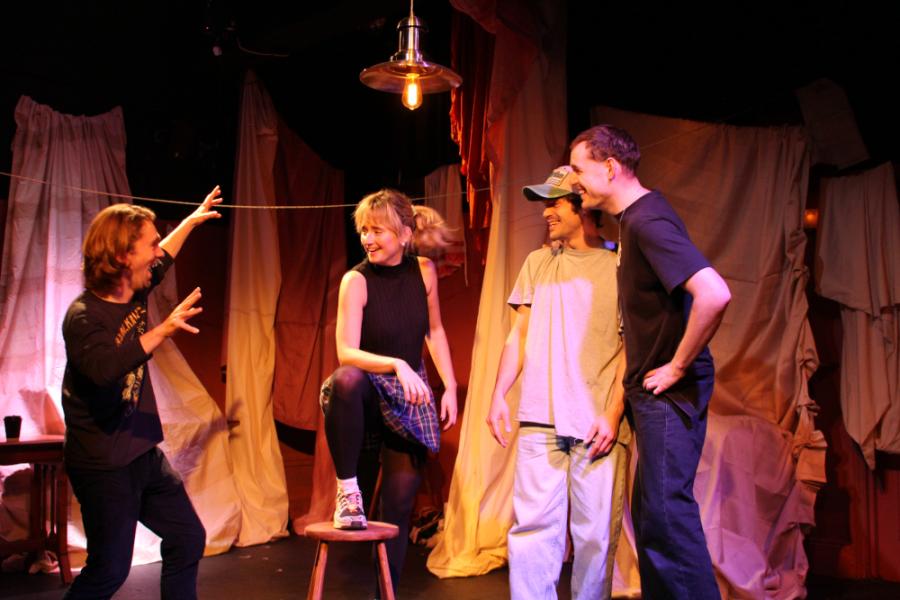
Improv at the Fringe: yes, it’s a tried and trusted format, and there are countless groups peddling late-night made-up mayhem for slightly squiffy punters. The Dream Machine (pictured above), however, are a bit different. For a start, they’re on at lunchtime, and they also deal in long-form, thought-through, show-length improv – though judging by the show I saw (and each offering is entirely different, naturally), the made-up mayhem is still very much present and correct.
And they set themselves a novel starting point, too: the memory of a recent dream that any audience member is confident enough to put forward. This time round, it was a schoolkid drinking uranium, and the frenzied search for a flying athlete to serve as the climax to the Cure’s outdoor concert in Edinburgh later that night (that last bit was based in fact – well, the concert at least). You’ll forgive me if details are a bit sketchy, as they almost certainly were for the Dream Machine’s three improvising actors, guest improviser (in this case SNL UK’s Lorna Rose Treen), plus two improvising musicians – oh, and the all-important improvising tech helper, on lights, sound effects and more.
The results take the chaos to another level entirely, but it’s to the Dream Machine’s credit that there’s a precarious thread of narrative credibility running through their madcap creation, and their sheer theatrical exuberance and eagerness to expand on each other’s far-fetched ideas is a joy to behold. Results usually go for belly laughs rather than intellectual sophistication, but there’s an enthusiasm to throw in off-the-wall ideas and run with ridiculous concepts until they’re mined of all their comic potential that’s very appealing. And with its all-round improv ambitions covering sound, music, props, lighting and more, the Dream Machine make for a very funny but also forward-looking addition to the Fringe’s improv arsenal.
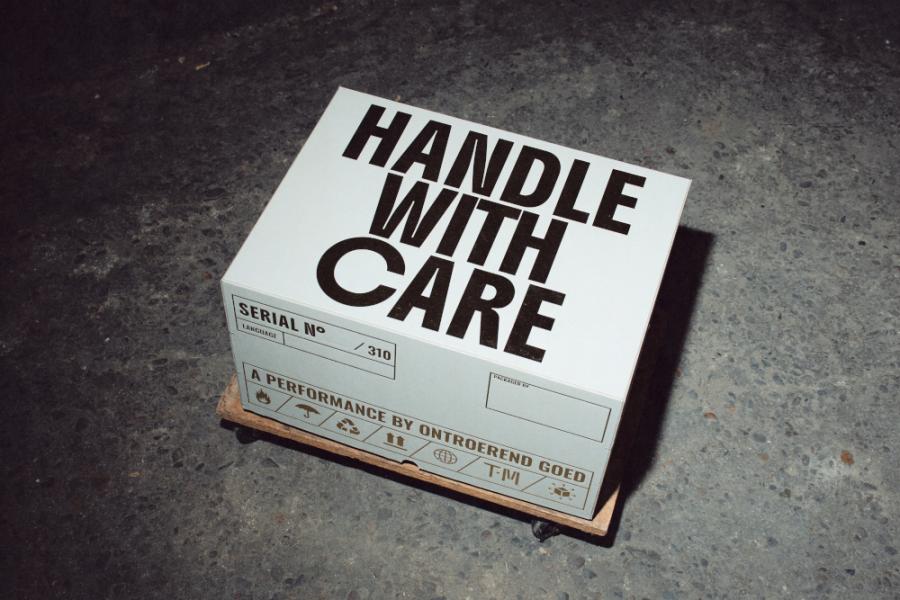
Handle with Care, ZOO Southside ★★★
Ghent-based mischief-makers Ontroerend Goed have been lobbing glittering grenades of theatrical danger at Fringe audiences for years: they’ve prodded and provoked their audience, spoken to individuals one to one, catapulted us into the far distant future, even invited us to a funeral. What to say about Handle with Care, this year’s creation, without giving the game away entirely? Not much, save what’s already in the Fringe’s own description: an empty venue, a cardboard box (pictured above, image by Joëlle Desmet), an audience, and – well, the rest is up to you.
Yes, there are instructions, suggestions, challenges and many, many complications. Yes, it’s a lot of fun. And yes, with an Edinburgh audience heavy on performing-arts professionals, there’s no shortage of individuals only too eager to throw themselves into it all.
And, as the company reassures us early on, you can’t do anything wrong. Except, I guess, divert from their intricate, carefully laid-down requests, demands, ideas and instructions. There’s always a bit of double-think going on with a conceptual show like this: in ceding control to its audience, the company ultimately only reasserts its own authority in being the ones to cede control in the first place. And whether Handle with Care amounts to much more than an hour (or thereabouts) of gentle fun is another question entirely: with little at stake – for either the absent company or the present audience/participants – there’s a danger it simply falls into whimsical Fringey quirkiness, rather than – as previous Ontroerend Goed shows have dared to do, sometimes confrontationally – raising or addressing meaningful issues. But then again, Handle with Care is – by definition – what you make of it.