Mametz Wood was the objective of the 38th Welsh Division during the First Battle of the Somme in World War One. Numerous failed attempts to capture the wood were made, during which much Welsh blood was spilt. Mametz therefore holds a great deal of significance for the Welsh and their contribution to the First World War.
Welsh writer Owen Sheers attempts to see the battle through the eyes of the soldiers in his poem on Mametz Wood, and now on a farm near Usk in Monmouthshire he has joined forces with National Theatre Wales to bring his poignant, powerful words to life. Drawing on the works of famous Welsh writers at the Somme such as David Jones and Llewelyn Wyn Griffith, Sheers cleverly intertwines his own words with theirs to create a powerful script featuring with highly convincing characters.
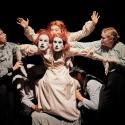
 The audience begins their journey along a pathway accompanied by the intimidating roar of distant artillery fire. They are then funnelled through an impressive trench (pictured). The location is perfect; still, scenic and sombre. The sweeping landscape of the Great Llancayo Upper Wood is certainly evocative of 1916 France. Peppered throughout the trench are soldiers reading modern magazines and Skyping loved ones back home. While this element may be intended to comment on the timeless similarities between past and contemporary soldiers, this touch does feel a little clumsy and threatens the fluidity of the transition back to 1916.
After an introduction the audience is ushered into an abandoned barn where the feel of a conventional theatre is established. The main set features another trench, while a side wall is transformed into a French country house, with soldiers bathing and women working. An older Llewelyn Wyn Griffith appears on his way home from Waitrose, subtly placing the action in context and commenting on his own position in the battle. A young French woman also tells us her own personal history of the wood. Another narrator appears in the form of a Dutch scientist fascinated by Einstein's exciting new theory of relativity. While these narrators connect the fragments of script together, soldiers tell us their own stories, of sweethearts in Caernarfon or families back in London.
 The audience is fully immersed by the time the order comes to move forward with the large ensemble of soldiers, and we are invited to imagine the terror these brave men must have felt knowing the almost impossible task that lay ahead. As the audience marches towards the woods, women move in the opposite direction, brandishing placards in protest, demanding that they be permitted to help the war effort too. Then, entering the almost silent wood, the audience hears the screams of soldiers being impaled against a tree with a bayonet, a dying German softly consoling himself with a song from home, a mother's calls as she searches for her mortally wounded son.
A final scene ties up all loose ends. The sad conclusions of these Welshmen's stories really hits home and as the rain begins to fall on the bodies, the audience is left feeling stunned by the sheer brutality of the battle.
Directed by Matthew Dunster and designed by Jon Bausor, the production’s attention to detail is impeccable, right down to the peculiar black silk flashes on the jackets of the Royal Welsh Fusiliers. It is difficult to present a frank yet compelling work on the First World War without resorting to jingoism or sentiment, but Sheers and NTW have achieved it. Mametz seems likely to be the finest commemoration of the Welsh contribution to the Great War.