The phenomenal global success of Six began when two young writers decided to give voices to the wives of a powerful man, bringing them out of their silent tombs and energising them and, by extension, doing the same for the women of today.
Its extraordinary popularity is a siren call to find forgotten women and reclaim their personalities, to give a theatrical second life to those to whom the historical record has denied a first. Indeed, Oh! Mary, also about President Lincoln's wife, is proving that point in New York now.
Something of that desire lies behind painter, writer, playwright, filmmaker John Ransom Phillips’ Mrs President, an imagined series of sittings at Mathew Brady’s photography studio in Washington some time after the Civil War. The subject is the eponymous Mary Todd Lincoln, about whom most Brits know only one fact – that she was next to her husband (as was Jackie Kennedy on 22 November 1963) the night Honest Abe was shot.
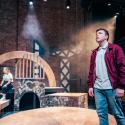
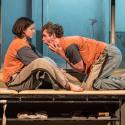
Over 75 minutes or so, we learn some more. This First Lady was an outsider, distrusted by the DC establishment, but clever and resourceful, if not always blessed with good judgement. We learn that she lost not just her husband so traumatically, but three of her four sons, events that tipped her fragile mental state into episodes of depression. We also learn that it’s quite tricky to locate the status of the widow of a dead Head of State, and also the widow of a victorious Commander-in-Chief, within any polity with which we are familiar. For all of its premiere at Edinburgh and its current run in the West End now, this feels like an impenetrably American story to my British ears.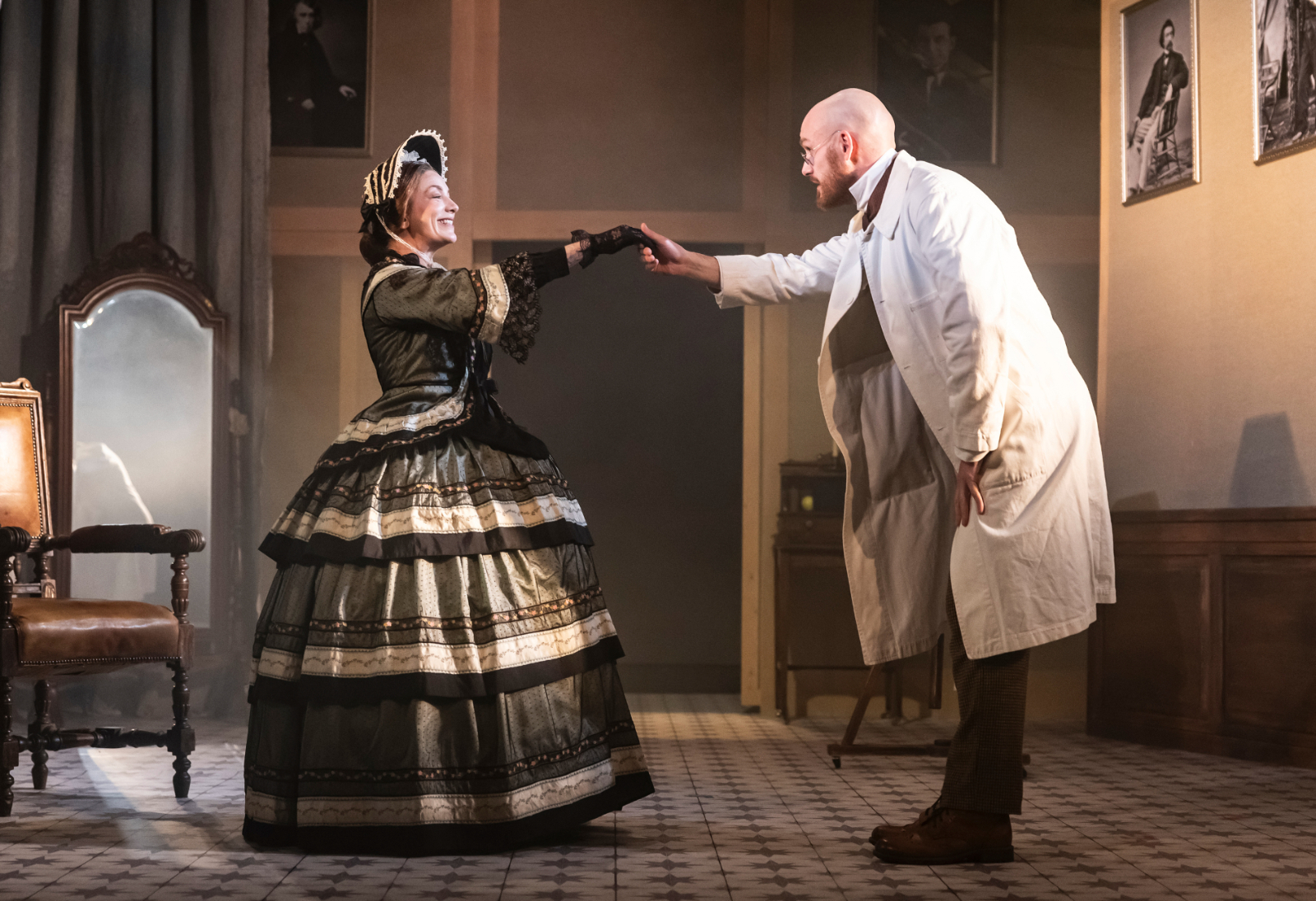 Sam Jenkins-Shaw (pictured above with Miriam Grace Edwards) does what he can with the photographer, Brady, talking initially about the power of this disruptive technology to communicate in newly effective ways (Lincoln himself gave him much credit for swinging the sharply divisive 1860 election his way). But the promising analysis of new media on the securing of political power doesn’t really go anywhere, and Jenkins-Shaw is soon multi-rolling as a variety of bogeymen who miss no opportunity to denigrate Mary in a time when, it will not surprise you to learn, feminism was yet to find its feet.
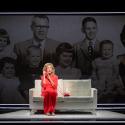
Miriam Grace Edwards, in a variety of impressive dresses, is the more compelling character, as Mary reveals both her story and the damage done to her as a consequence. The problem is that she is given so little to work with. She tells us of the events, of her misery and ill-treatment – like many disruptive women, medical incarceration was a continual threat – but there’s nothing in a very wordy script that captures the soul of the woman. There’s a vague sense of the spiritual, even the religious, that topples towards the occult in her reflections, but nothing coalesces into a coherent portrait. The play isn’t sufficiently theatrical to bear the weight of the task it sets itself.
There’s time for a couple of bizarre voiceover conversations between Brady’s camera and his subject’s chair and a silhouetted Lincoln himself to appear and remind us of what we’re missing, and we’re off into the night confused as to exactly what we’ve just seen.
I guess much depends on your reaction to this quote from the author.
“The journey to Mrs President began unexpectedly. I was walking through New York City one day when I felt her spirit. I know that might sound strange, but I experience the world as a realm of energy. Spirits are part of my life, and that day, Mary Lincoln's presence surrounded me. I saw her, but more importantly, I heard her. She said, 'I want you to tell my story.'”
If that experience resonates with you, you might find a way in to this singular play – if it doesn’t, I’m pretty sure you won’t. That said, one can have worse nights at the theatre…