What to make of The Simon & Garfunkel Story, which began a week-long residency at London’s Vaudeville Theatre last night and which tours in the new year? A success “from Sydney to Seattle” apparently, with Elaine Paige having called it “amazing” and various regional newspapers offering superlatives. The programme proclaims it (with idiosyncratic use of upper case), "The World's biggest and most successful Simon & Garfunkel Theatre Show". Is there competition?
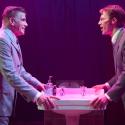
The singing is pretty classy, Sam O’Hanlon as Simon and Charles Blyth as Garfunkel producing evocative close harmony, though Blyth’s high notes inevitably sound more effortful than Garfunkel’s who was, well… artless. But this isn’t in any meaningful sense a theatrical piece.
The script, if you can so dignify it, is almost non-existent, little more that a recitation of the sort of key factoids you can glean from Wikipedia. The back projections – ads, newsreels, stills – are basic and low-budget, showing no spark of imagination. Some bore little or no obvious connection to what was being sung about and the series of postcards that accompanied “America” looked like a jumble-sale job-lot, very 1950s (the song is 1968) and almost all of places unrelated to the lyrics. It was poignant, however, that one showed Paradise and Chico, California towns that have just been tragically burned to a crisp. A British Airways jet flashes across the screen – but its livery is too modern.
No scriptwriter is credited and what the programme calls the 'creative team' seems a tad sparse
What’s puzzling is how the show got on the road. It must have required permission from the real Simon & Garfunkel and it’s hard to see why they would license a show such as this. There have been some good juke box musicals and of the shows that centre on a star, the Carole King musical Beautiful stands out, an oft-times witty script that told a proper story and which put King, and Goffin and King, in a wider musical context.
This is less juke box musical than tribute act. No scriptwriter is credited and what the programme calls the “creative team” seems a tad sparse, Dean Elliott (who played Paul Simon in the 2015 production) listed as “Director and Musical Supervisor” with pretty much everyone else on the (low-) tech side of things.
The show tells the story of Simon and Garfunkel from their first hit as Tom and Jerry with the Everly-inflected “Hey Schoolgirl” through to their 1970 split following Bridge Over Troubled Water, plus their reunion a decade later for the Concert in Central Park. There’s a good story to be told about their Greenwich Village years, playing the clubs in which Bob Dylan (of whom Simon was reportedly very jealous) and numerous others came to fame. The brief telling here would have been improved by some old 1960s film (of which there is plenty) or even just better stills – or perhaps actual scenery, maybe “the sad café” of “Bleecker Street”, the song which most evokes this period and features the immortal line “30 dollars pays your rent”. Ha! Soon Simon is on tour alone in Britain (cue “Homeward Bound” and an image of Widnes) until “The Sound of Silence” gains airplay and American success beckons for the duo. As for Central Park, why was the backdrop mostly just a grey screen when an image of Manhattan twinkling in the starry night would have been both evocative and equally inexpensive?
It would have been better to have spent a little more money on staging and scrapped the brass players, who appeared, out of tune, in the second half with “Mrs Robinson”: no brass on the original! The players – keys, guitars and bass – were mostly good. As for “Simon and Garfunkel”, they made a joyful noise and the audience clearly loved them. Blyth captured Garfunkel’s manner well, the stillness on stage, thumbs hooked in his jeans or vest (as the Americans call a waistcoat), while O’Hanlon was excellent on the guitar, Simon’s riffs practically note-perfect.
But for shows such as this to work properly, a moment of (something like) transcendence is required – the performers must truly inhabit the role and the audience must “believe”. The spell here is rather broken when “Paul” and “Art” talk to each other as Sam and Charlie - in English accents.