If you’re tempted to see Fiona Shaw’s impressive solo performance as Mary the mother of a son she can’t bring herself to name – and see it you probably should – then bear two things in mind.
First, anything you may have heard or read about this being the narrative of everywoman mourning an everyman who just happens to have been crucified is nonsense; despite the contemporary props, it’s unequivocally the New Testament story told from a perspective which Biblical literalists will dislike (and they hated it very vocally when the show opened in New York).
Second, don’t expect the kind of nuanced weighing-up of Gospel truth versus phoniness Philip Pullman delivers in The Good Man Jesus and the Scoundrel Christ, or even the sense of mysterious goodness at the heart of Jim Crace’s astounding Quarantine. At the same time, don’t be too hard on the one-sided views expressed, which are not any more those of the original monologue-novella’s author Colm Tóibín than Martin Amis’s sexist protagonists are necessarily Amis himself. This is a grieving mother who bears witness only to how her boy has become a rather remote and very naughty man surrounded by a bunch of hysterical misfits and caught up in his own living legend.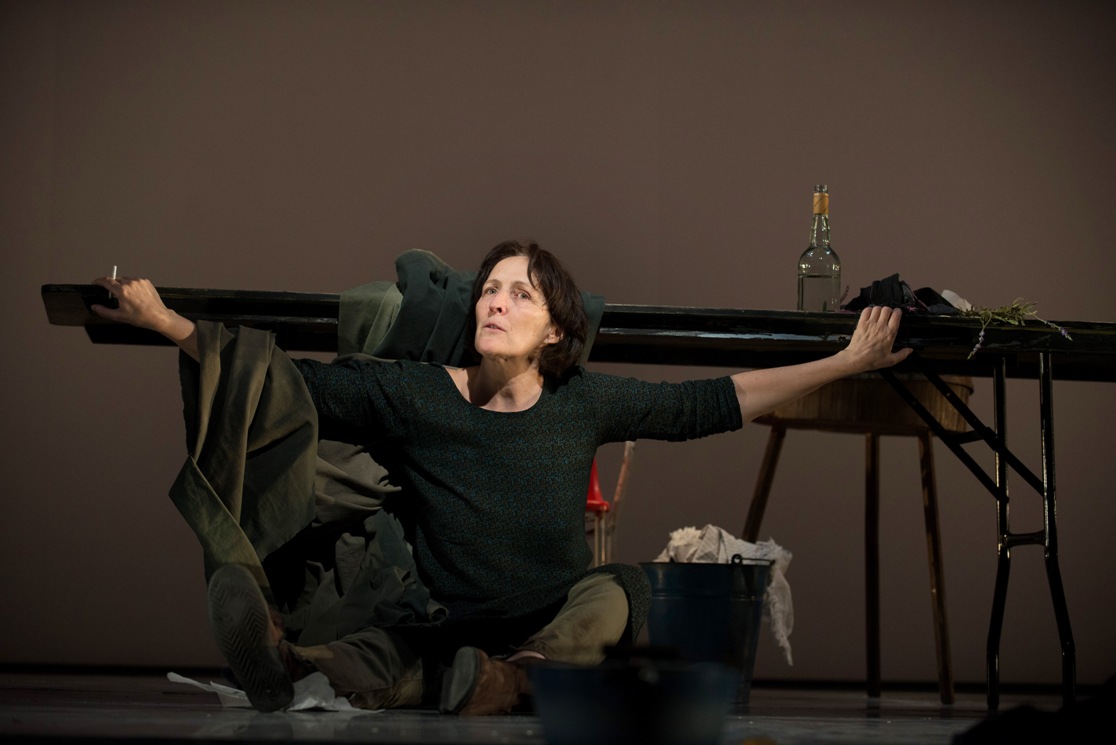 Shaw creates a very specific character out of Tóibín’s prose, which seems so simple, sometimes even a bit drab, on the printed page (suited to the subject matter as his oddly flavourless attempt at characterising Henry James was not). She’s not just a mother but also the Irish mourner at a wake (or so my Irish companion insisted): gossipy as well as steely and clear-eyed, never sentimental. The soft and low, sometimes even contralto tones can pierce our hearts, and she does all the voices, too, characterising the Pharisees as Ulster Unionists.
Perhaps it’s understandable that Tóibín focuses not on Christ’s parables of the poor and good but on three of the more questionable aspects of the Gospels, given that Mary, according to John, was supposed to have been present at one of them, the miracles, and in the wrong order - the lame man walking, the questionable raising of Lazarus and the turning of water into wine, which always struck me as a cheap circus trick so it’s trivialising to place it last.
As counterbalance, there are three moments in the evening when Shaw makes time stand still: the rebuke at Cana, with Mary in disbelief at her son’s “Woman, what have I to do with thee?” and her stunned reaction to the declaration that he is “the Son of God”, the dream she shares with her cousin of her son’s peaceful resurrection, ripe for manipulation by the disciples but kept by Mary for the night and not the daylight testament, and the bitter denunciation with which the play, though not the book, ends: “When you say that he redeemed the world, I will say that it was not worth it. It was not worth it.”
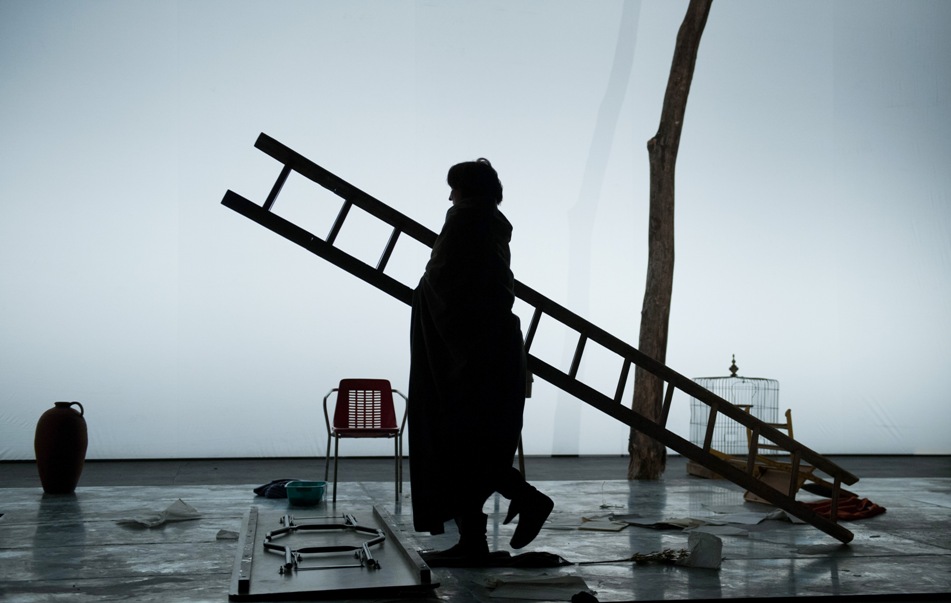 As often, though, mannerisms can break the spell. When she shouts, Shaw feels a bit untruthful – which is why I never bought her Electra in an early, award-winning performance, though her Richard II was mesmerising – and I can’t tell you what the weird foot-pattering is all about. But these are only minor distractions compared to the tricks of a production which, since it’s by her close collaborator Deborah Warner, Shaw must have approved. Do we need all those props, the water-pouring, the upturned chairs and tables, above all the bracelet of barbed wire and the hammering of nails in what for me was, and I use the word carefully, the least transfixing of crucifixion narratives?
Designer Tom Pye’s basic stage picture, prefaced by others (one pictured below) which we’re invited on stage to examine before the drama begins – live vulture included, to become a potent image in the drama – is handsome, broken only by the large wooden cross, and were it only down to the lighting by Jennifer Tipton – such a blue, such a yellow - it would be evocative enough. But there’s also the irritating, sometimes deafening soundscape by Mel Mercier, especially distracting when Shaw’s Mary speaks of nature falling quiet or awed silences. We want to hear the actress alone, we know we could rely on her charisma and her vocal modulations to conjure every scene.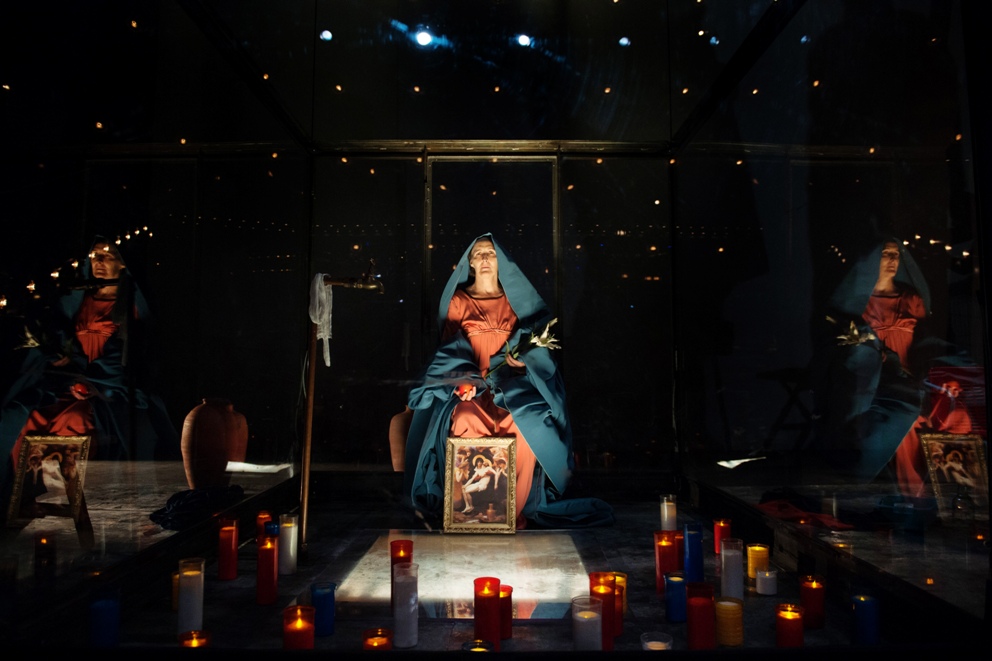 As for the constant movement – this is where I move from one chair to another, here I lie on the table, here I throw down a ladder - you wish a metaphorical pretext could be found for burying Shaw up to her waist, and then her neck, in sand: a predicament known to this actress, and more recently to Juliet Stevenson, as Beckett’s Winnie in Happy Days. Stevenson nearly broke our hearts in a much more poetic and resonant text; mine thumped occasionally here, and the head busily processed some of Tóibín’s special questions, but the soul remained unstirred and my superficial self distracted by the noisy audience, not least a neighbour’s readiness to laugh knowingly at the biblical debunkings Still, it’s a four-star performance in a two-star production, which means the three I reluctantly decided on are certainly not for anything middle-of-the-road.