David Attenborough’s characteristically soothing narration again described the unceasing struggle for survival in the animal world. In astonishing films from all over the world, we witnessed an enormous variety of tactics for finding homes that not only provided shelter, but protection. In nature, he told us, good homes are all too rare, and we were treated to some not-so-subtle allusions to our own housing crises.
This episode, subtitled Home, opened by visiting a bushy glade in the huge Zambian plain where a dozen wild dog pups were guarded by an adult male babysitter, as the other adults of the pack were out on the hunt. Danger appeared in the form of an eight-foot python, perfectly capable of swallowing a pup. The adult canine had to decide whether to stay put or lead his troop away, both dangerous options. As the python slithered into the pups’ burrow, Mr Babysitter successfully led his charges to another natural shelter.
 A chimpanzee group living on the edge of the Sahara in Senegal had to be led by the dominant male – in 50 degree heat – on a 10 mile search for water, at the height of the drought. The eldest of the group knew to dig down for water in a dry river bed, showing the others what to do. Here there was no fixed home, but an intimate knowledge of the territory made survival possible.
During the winter, mountain goats (pictured above) lived high up in the North American Rockies, safe from predators, but their seasonal home did not provide the mineral salts their bodies needed. In the spring, we watched a yearling goat, on his own for the first time, delicately descend the precipitous mountainside, cross a snow-melt raging river, and feed on the vital salt deposits. A grizzly bear hoved menacingly into view but went off – whew! – in another direction.
Hermit crabs lined up on a remote Caribbean island to move themselves from shell to shell as they grew; if they could not find an appropriate shell they would burn to death under the unforgiving tropical sun. The crabs formed an orderly queue, from big to little, handing down the shells by size; was this by implication a model for human househunting? The smallest hermit crab lost out, though, gazumped by a slightly larger crab that shoved him aside.
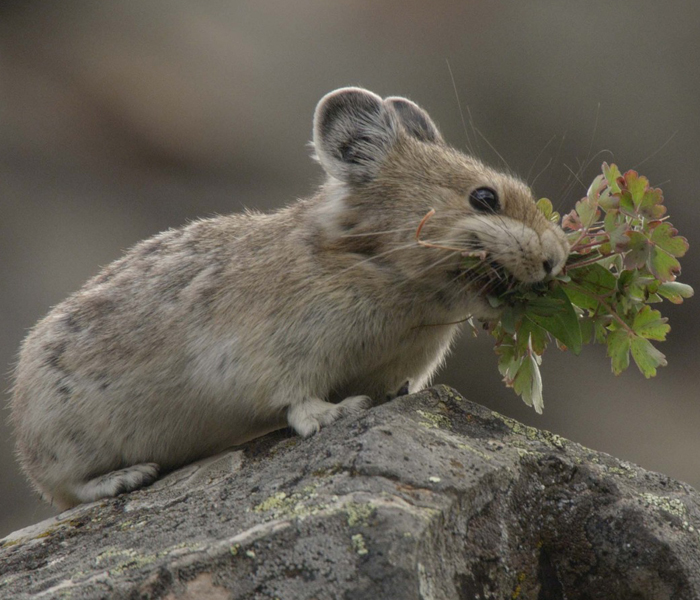 Remora fish, in the sea off Fiji, attached themselves by suckers to passing sharks and huge manta rays. In return for living on their mobile homes, over which they have no control, they consume the parasites attached to the host fish. Back in the Rockies, American pika, alert and chuntering small rodents (pictured left), have to find safe shelter in which to store the plants which bloom in the short summer, to see them through the winter. They worked like maniacs, running scores of miles, and even stealing from each other. One watched in despair as mountain sheep ate her precious store, which wasn't safely enough concealed.
Throughout we were accompanied by the BBC National Orchestra of Wales, playing Murray Gold’s original compositions, ranging in mood from tense suspense to bucolic calm. The manipulation of our emotions was far too obvious, and although St David did tell us correctly that we do not know how animals think, fewer hints at human parallels would not come amiss. The dominant theme, though, was that however ingenious the animals' survival strategies were, the natural world remains totally at the mercy of – well – nature.