Exhibitions with titles appended "in Britain" or "and Britain" tend to be the kiss of death: indicating concentration on a brief and insignificant visit, on the subject’s impact on British art or – even worse – the influence of local collectors on his or her reputation. With Mark Rothko, though, it has to be different. The New York abstractionist’s current near-sacred status is such that a show of his dog-ends and nail clippings would probably prove a major draw.
Indeed, the sheer incongruity of the grouchy high priest of Colour Field Painting being in Britain at all, never mind socialising in Somerset or chain-smoking his way through Cornish cream teas, is enough to send one scuttling to the Whitechapel.
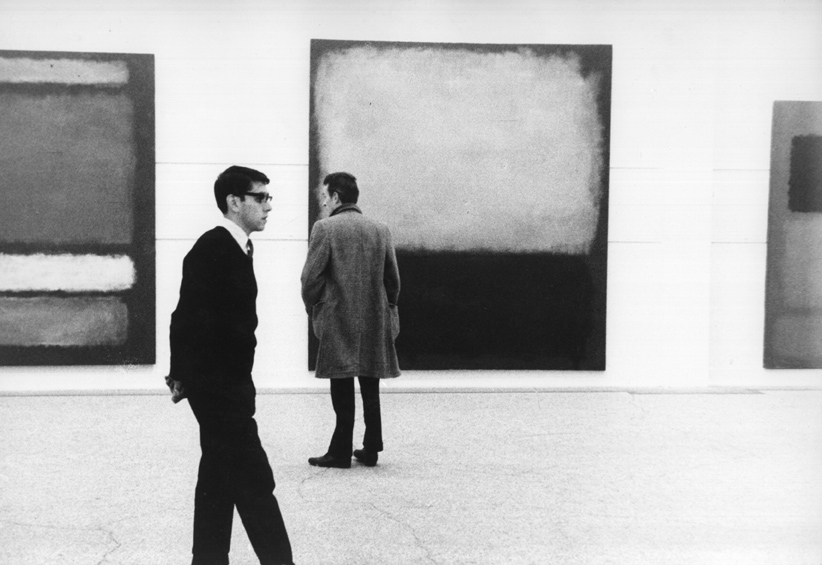
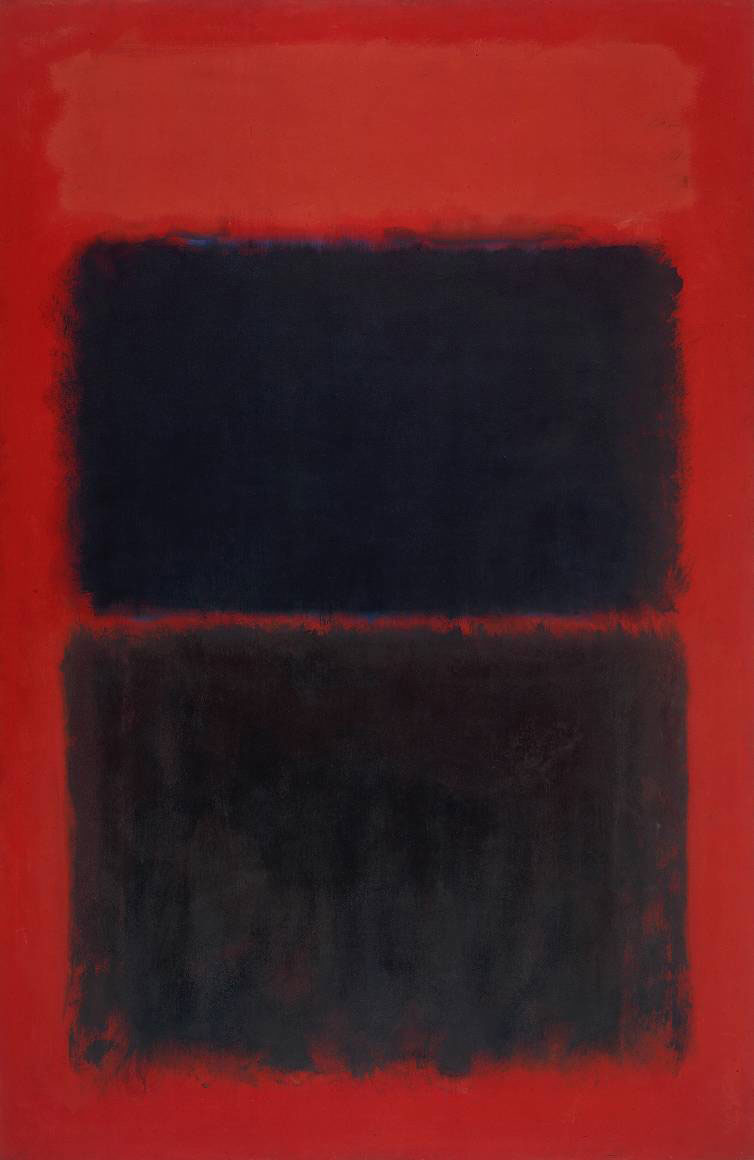 At first sight, this is a very small show, even for the diehard Rothko devotee: just one painting (Tate’s Light Red Over Black, already familiar to every London gallery-goer, [pictured right]), photographs of the Whitechapel’s pivotal 1961 Rothko exhibition (whose 50th anniversary has prompted this display), a couple of vitrines of letters relating to that exhibition and Tate’s acquisition of Rothko’s Seagram Murals, plus recorded comments from people there at the time.
Yet this territory’s mythic heft is such that anyone interested in postwar British art won’t fail to be at least briefly intrigued. Those first British showings for the New York School – Pollock in 1958, Rothko in 1961, both at the Whitechapel – had a cataclysmic effect on British art; students mired in an antiquated art education system rushed there to have their minds blown. These were moments that helped get us where we are today. Or that is certainly the way they have come to be seen. Here we get a privileged view of what Rothko’s show actually looked like.
If the black-and-white photographs make the thought of all of those incandescent colour combinations, fresh out of the studio, feel all the more tantalising, then it has to be said that a white room full of paintings looks pretty much as you’d expect it to. Indeed, such is the cyclical nature of fashion, the students in these photographs look much like art students of today, from clothes and haircuts down to their dazed "what am I doing here?" expressions; though an occasional look of alertness makes you wonder how that person responded to the experience in their own work.
Below: the 1961 Rothko exhibition at the Whitechapel, picture Sandra Lousada (courtesy Whitechapel)
The documents exclude no scrap of paper that could be considered even slightly relevant. We learn about Rothko’s accommodation on the Queen Mary – as though following the progress of some secular saint – of his hotel preferences in London: "a double room with private bath would be ideal", he writes. (In the end they put him in The Ritz.)
Moody and difficult by reputation, Rothko appears warm and generous, faced with the internecine bickering of the St Ives artists – Peter Lanyon, Patrick Heron et al – who compete for his attention. A deliciously squirm-inducing letter from Heron to fellow artist William Scott, complaining at Lanyon’s cantankerousness, tells you more about the human chemistry of the St Ives art world than whole shelves of books. Finally, Rothko complains that after being sent a few early press clippings, he received no further word from the Whitechapel Gallery. I hope the current director has taken note.
If this display had been beefed up with a few more Rothko paintings and some choice works from the British artists, it might have made a little gem of an exhibition. As it is, the sheer bathos of much of the material is weirdly compelling ("Did you go to the exhibition?" the curator asks Lanyon’s widow. "No, I was looking after the children.") Around a vital moment, this exhibition has amassed a hillock of relatively trivial material that is almost a work of art in its own right.
- Rothko in Britain at the Whitechapel Gallery until 26 February, 2012