Pop music and politics, fiction and fact, debut novels and posthumous publications: TAD’s reviewers reveal their best reads of 2025.
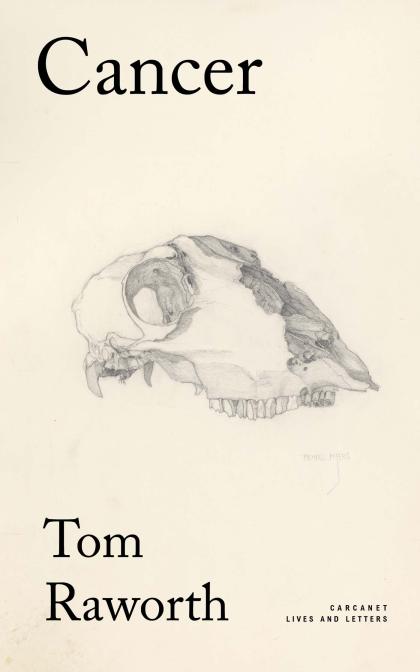
The poet Tom Raworth passed away in 2017, leaving an irreconcilable space in the heart of contemporary British poetics. His is verse of swift wit, formal innovation, and biting critique: the weird inheritor of the British Poetry Revival’s serious-mindedness and Frank O’Hara’s sense of fun. Thankfully, this year Cancer (Carcanet, £12.99), a posthumous "lost book" of three sections: "Journal", "Logbook" and "Letters from Yaddo". Each part showcases Raworth’s wonderful versatility and the development of a truly unique poetic mind; it’s a privileged to experience more of his diamond-edged mind, always reaching towards (but also sceptical of) the "true centre, where art is pure politics". Jack Barron
What’s left when your kids grow up and leave home? That’s the question posed by the 55-year-old narrator of my novel of the year, Ben Markovits’s subtle – often mesmerisingly so – The Rest of Our Lives (Faber & Faber, £9.99). Twelve years after his wife had an affair, Tom Layward, a law professor, drives his daughter off to college in Pittsburgh and then just keeps on driving – in much the same way that the hero of John Cheever’s The Swimmer just keeps on swimming, visiting old friends, including an ex-girlfriend, his son, his brother, his father’s grave. Describing this journey, Markovits’s marvellously naturalistic prose discloses a remarkable understanding of family dynamics and of the dynamics of storytelling too. Hugh Barnes
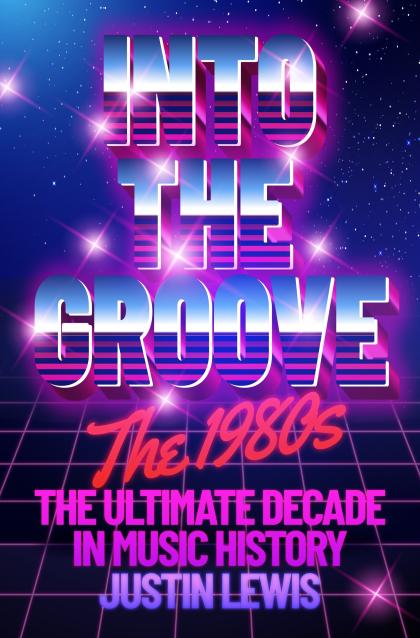
Of the books I’ve reviewed this year, two (contrasting) music titles stand out: Jessica Duchen’s thoroughly-researched and welcome biography of the pianist Dame Myra Hess, and Justin Lewis’s entertaining miscellany of 1980s pop, Into the Groove (Elliott & Thompson, £16.99). Of other non-fiction, I would mention Phil Tinline’s engrossing tale of fake conspiracy theory that people believed was real, The Ghost of Iron Mountain, although with due acknowledgement that the author is a friend. Lastly, I really loved Lissa Evans’ novel Small Bomb at Dimperley, about an unlikely younger son inheriting a stately home post-World War II, with a delightful comic tone that recalls Evelyn Waugh. Bernard Hughes

My book of the year is Omar El Akkad’s One Day, Everyone Will Have Always Been Against This (Canongate, £16.99). A quietly angry anatomisation of the smug hypocrisy and colonial mindset of ‘the West’, focusing in particular on Israel’s gleeful, live-streamed genocide against the Palestinian people, the book’s title speaks for itself. The question it poses – why is it that some people aren’t against this right now, as it happens – speaks to the already gaping fissures in any claim the Western powers might ever have had to morality or justice or even intermittent feinting towards operating as a force for good in the world. John Carvill
There are few things more exciting than a good debut novel, and this year I found none so moving and lively as Harriet Armstrong’s To Rest Our Minds and Bodies (Les Fugitives, £14.99). Narrated in the first person by an anonymous woman in her final year at university, this book’s greatest strength is its voice – ironic, vulnerable, and utterly convincing. It reads so naturally that it would be easy to mistake the cerebral narrator for Armstrong herself. Yet the marks left by her hand are evident throughout, and the narrator emerges as a taut, perfectly judged work of fiction. We follow her as she drifts in search of meaning and feel with her as she sinks into an asymmetrical relationship with her housemate Luke. At long last, angsty young women can call off the search for their Salinger. Claudia Bull
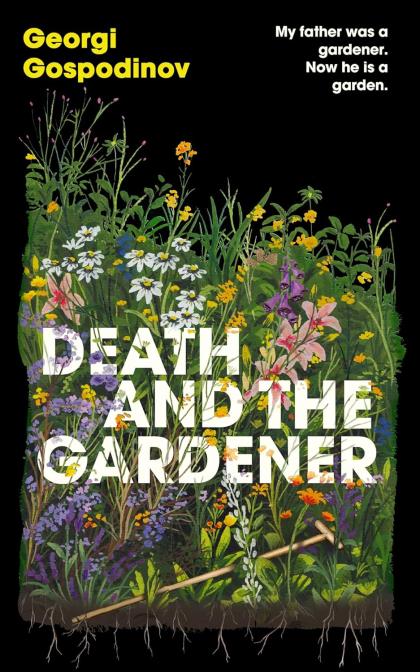
Death and the Gardener by Georgi Gospodinov, translated from the Bulgarian by Angela Rodel (Orion, £18.99). A modest personal meditation on his father’s life and painful death, Georgi Gospodinov’s latest hybrid prolongs my greatest literary pleasure of 2025. What books were out there in English translation, on the eve of my first trip to Bulgaria? Time Shelter was the only one to be found in one of the two Piccadilly bookshops I tried – a justly celebrated Booker Prize winner about the act of collective and individual remembering and forgetting, starting as a fantasy about a clinic with different rooms styled in different eras to cater for Alzheimer’s patients, exploding into a look at what different EU nations would choose in a referendum on what time they would most like to return to. The grand virtuosity of what imaginatively might happen when Bulgaria voted is the climax of a book with a real core in a way that the earlier The Physics of Sorrow, which I read next, lacks, despite its central conceit of the Minotaur as victim.
These are not difficult books to read if you live in the moment, thanks to the lucidity which Gospidinov’s translator champion Angela Rodel manages to convey, but they take some spectacular leaps. Death and the Gardener keeps it simple, moving between the present and two pasts. How much it will resonate with you may depend on your own experience of grief and loss – mine with both parents was very different from Gospodinov’s with his father – but there’s no denying the beautiful images of the ever-living garden occupants lovingly tended and recreated on each of many moves by the lost one. It may be the best place for you to start with this writer, and its thematic links with the previous books are many, but next time I hope there will be a return to complexity. David Nice