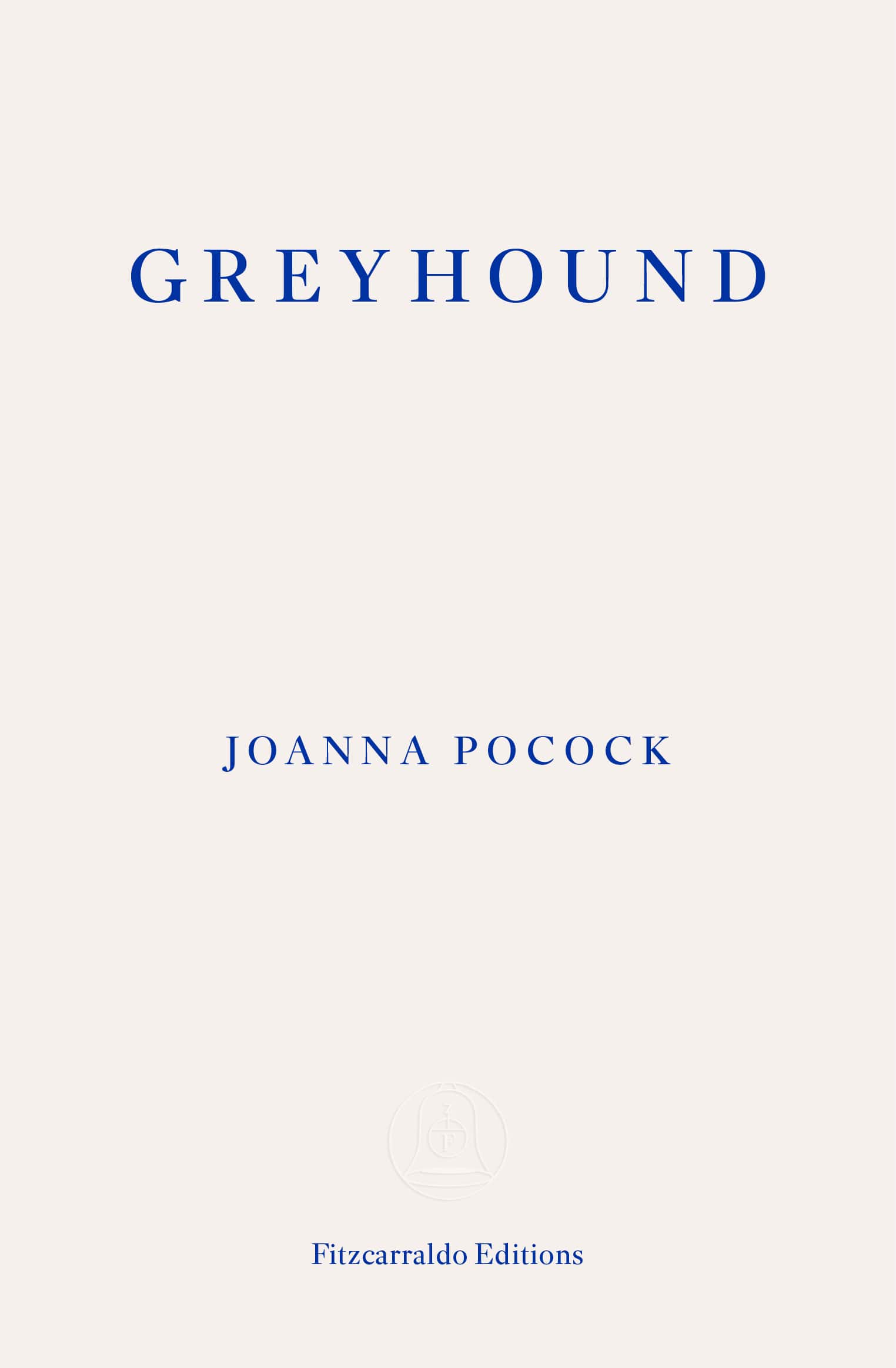
Joanna Pocock’s second full-length book, Greyhound, tells the story of a single journey made and remade. In 2006, after the death of her sister and several miscarriages, Pocock travelled 2,300 miles from Detroit to Los Angeles by bus. She replicates the trip seventeen years later, curious to see how the States have changed and hoping to catch sight of her former self: “A ragged person running away from loss.”
Greyhound synthesises the two trips and represents a blend of aims and genres typical of Fitzcarraldo’s non-fiction list: part memoir, part reportage; a polemic on environmental vandalism and a deeply personal account of grief and growth; an homage to American literature and a weigh-in for American delusion. We head West in flight from pain, into the heart of a “barbaric innocence”.
 How many others have furrowed a rut across this dreamscape? The first that spring to mind are the great Road Trip writers: Steinbeck, Kerouac, and Least Heat-Moon. “There are only three accounts of women undertaking the Great American Road Trip that I know of”, Pocock writes: de Beauvoir, Mannin, and Kurtz. In a genre dominated by the lone man in his automobile, Pocock is unusual both for her gender, and for travelling by Greyhound. She astutely draws the distinction between car and bus travel: the one offering sovereignty, and the other demanding participation in a kind of itinerant, impermanent community.
Greyhound’s subject is this very community and the fragile infrastructure by which it is supported – or, rather, by which it is failed. We visit stops where, since 2006, the telephones have been ripped from the walls and the staff have disappeared. The buses are always late. Tearful people spend hours on the phone to customer services. Pocock points out that cross-country buses are the only accessible form of transport for a growing demographic in the US, yet year to year, stations are closed, restrictions are introduced, and ticket services are moved online. At certain points, the timeline grows a little hazy, but you can always situate yourself as follows: if things are bad, we’re in 2006; if they’re worse, it’s 2023. The second tour takes in the bath-tub rings that have appeared since our first trip to the reservoir:
Much of the hope I had seen in 2006 had evaporated. Worsening climate disasters, a global economic crash, meth, fentanyl and every other opioid, Covid, zero healthcare, the relocation of human transactions and experiences to the digital sphere, all of it felt like a tsunami that had been gathering in size and strength for months, years, decades.
This, Pocock argues, is the cost of easy living. She asks how important comfort is “when it relies on extraction and exploitation for its existence”, then marshals an awful variety of evidence: from the forced migration of members of the Choctaw, Cherokee, Seminole, Chickasaw, and Muscogee nations in the 1830s (otherwise known as the Trail of Tears), to the derailment of trains carrying hazardous chemicals; from the storage of radioactive waste right next to the Navajo Aquifer, to the Panhandle cattle feedlots which use 8.5 million gallons of groundwater per day. Everywhere, the unsustainability of our lifestyles is evident, and yet we do business as usual.
As the litany of wrongs grows, Greyhound begins to feel less like On the Road than Waiting for Godot. That is, the second trip is an atrophic rerun of the first, complete with scruffy figures on a grey curb, and a pervasive sense of hopelessness. At times, Pocock risks lamenting all pain – the human predicament writ large – and it becomes difficult to see any way forward. I found myself fatiguing and hoped for a spot of good news. Pocock, it seems, felt the same, growing tired of “the routes not lining up, the apps not working, the people who seemed sad and driven to addiction, the dark, the filth, the vomit, the shit.” But this is, she points out, the root of the problem. Pollution, addiction, and despair are symptoms of a serious sickness indeed. On the societal level, as at the personal, self-deception will undo us. We must find some way to resist the pull towards fantasy, to reconnect to each other, to reality, and to the earth.
Towards the beginning of the book, Pocock quotes James Rorty, who travelled across the States and found that nothing appalled him so much as “this American addiction to makebelieve”: “Of all the facts I dug up, none seemed so significant or so dangerous as the overwhelming fact of our lazy, irresponsible, adolescent inability to face the truth or tell it”. Echoing Rorty, Greyhound is an impassioned confrontation with the American myth, rendered in clean, lucid prose. Wherever the persuasive entreaties for us to mend our ways border on repetitive, they are softened and enriched by recursive returns to Pocock’s inner life, keenly observed detail, and stories of real connection. In Greyhound, frontier-chasing hits the end of the road.
- Greyhound by Joanna Pockock (Fitzcarraldo, £14.99)
- More book reviews on theartsdesk