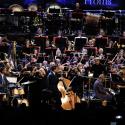
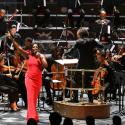
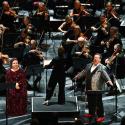
Manchester Camerata give relatively few old-fashioned concerts these days – I mean the sort that are done in purpose-built concert halls, with a conductor, soloist and conventional orchestra strength – because they’re busy crossing boundaries and attracting new audiences. But when they do return to the traditional path, they do it extremely well, and especially when music director Gábor Takács-Nagy is in charge.
This time, at the Royal Northern College of Music, there was the additional distinction of Jean-Efflam Bavouzet as soloist in two Mozart piano concertos. He and they have recorded Nos. 17 and 18 already for Chandos, and this concert was part of the process for their next CD, of Nos. 14 and 19. They are combining the concertos with the "Salzburg Divertimenti" which the extraordinary Wolfgang created at the age of 15 – sometimes played as string quartets, but sounding fantastic done by a string chamber orchestra of 22 players.
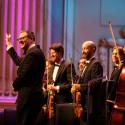
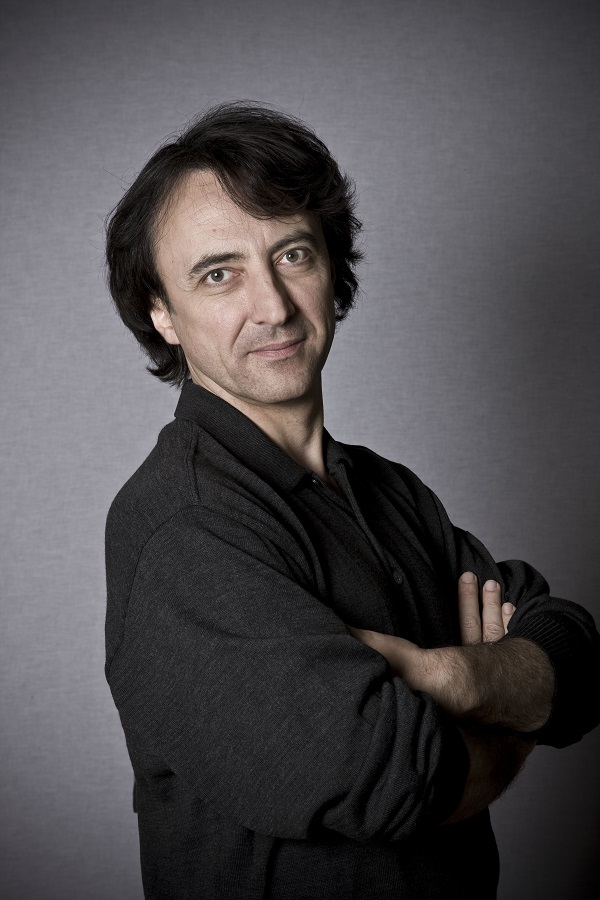
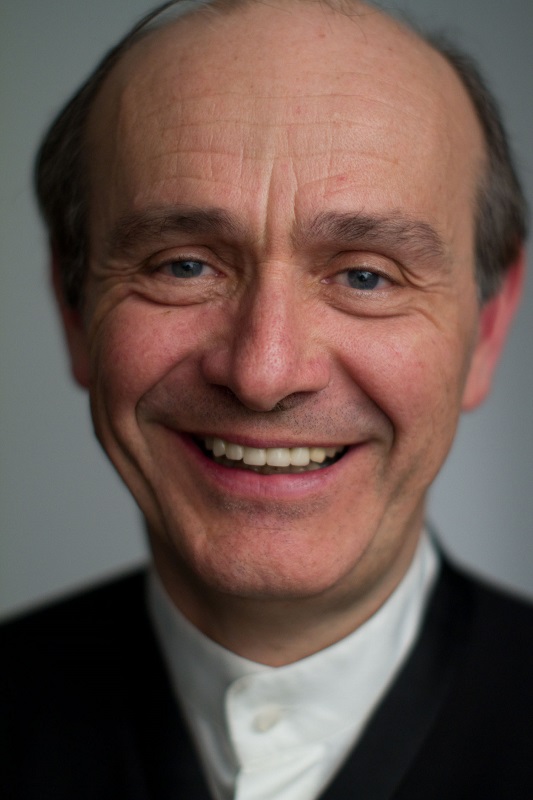 Gábor Takács-Nagy (pictured right) lavished as much care on the Divertimento in D (K136) as others might on a full-blown symphony. Announcing at the outset his intention to make his audience smile as they heard the music, he did the same himself and inspired the musicians to play likewise. There are delightful contrasts of theme and echo in the writing, and he was alive to them all (especially the fade-away ending of the repeat of the first part of the opening movement). The Andante (like a stately sarabande in this performance) showed meticulous preparation in each phrase and revealed beauty in every one. The Presto was joyous in its fugal effervescence, zippy in tempo and vital in its contrasts.
The same distinctions were there in the opening movement of Piano Concerto No. 14 (K449) – a gentle, feminine second idea clearly characterised – and Jean-Efflam Bavouzet (pictured below by Paul Mitchell) became an instantly affable partner in the dialogue that followed his own entry. His playing of the cadenza to the first movement was impressively flamboyant, and unexpected in some details.
 The Andantino, with mutes on, came over like one of those dreamy, hushed, expectant arias we know from Mozart the opera composer, and the final Rondo, skilfully judged in pace to be a kind of all-breve, Toytown march, had Bavouzet bouncing in and out of the textures like a pianistic Tigger.
The second part of the concert was on the same pattern. The Divertimento in F (K138) is a deservedly popular essay in the Nachtmusik style, beginning with a march-along, serenade-style movement and continuing with another lovely aria-style melody. The rondo finale, another Presto, was full of life and energy. Piano concerto No. 19 (K459) involved the seven required Camerata wind players smoothly – we’d had oboes and horns in the previous concerto, beautifully integrated – and their soloistic qualities came to the fore in expert style in the first movement. Bavouzet injected a sense of mystery to the fantasy section and made smart work of Mozart’s rather flashy cadenza.
There was a touch of the wind harmonie sound in the lilting Allegretto – very laid back, almost like a social dance, but still a very sophisticated one – and the cheeky rondo at the end was an opportunity for the soloist to catch his moments and toy with them. So much, in fact, that they decided to play it again as an encore – though not, in the event, quite so brilliantly as the first attempt. There may be those who dislike hearing Mozart’s concertos on a modern (Yamaha) piano and with modern orchestral instruments, but these performances showed that the classical spirit can be caught every bit as well with small numbers in the band and a keen sense of style on the part of all concerned.