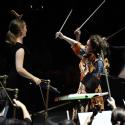
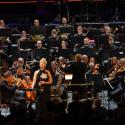
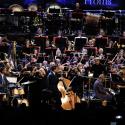
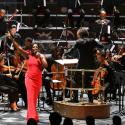
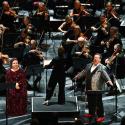
It was mostly Russian night at the Proms, and mostly music you could dance to, as a hand jiving Arena Prommer rather distractingly proved in the finale of Tchaikovsky’s Second Symphony. Even Prokofiev’s elephantine Second Piano Concerto was transformed into the ballet music Serge Diaghilev thought it might become in 1914. Much of this was thanks to the fleet feet and mobile shoulders of febrile BBC Philharmonic conductor Gianandrea Noseda. But even he could do very little with the odd man out in every way, Edward Cowie’s Earth Music I.
One blunt question has to be asked: why a BBC commission for a composer whose music, however connected he says it is with science and visual art, has hardly touched a wide public across nearly 40 years? Partly because it’s Cowie’s 70th birthday. But if this had been the result of a young composer’s chance, we’d still be questioning the corporation’s judgment.
We had eight unforgettable song and dance themes in 25 minutes
The first of Cowie’s Earth Music canvases, The Great Barrier Reef, impresses only in its brevity. The composer comes across as arrogant when he tells us in the programme note that this is a piece of "great energy and timbral richness". The timbres, chords and sea-splashes, atmosphere in search of foreground ideas, seemed to me curiously unoriginal until the earcatching last few bars of calm, the large percussion array engaged until then with a far from discriminating ear. As for "great energy", doesn’t it usually come from the firm rhythmic backbone which this invertebrate lacked, and which was so apparent in the three other works?
Noseda cannily kicked off with not just the Overture from Borodin’s Prince Igor but also its Polovtsian Dances minus chorus, both owing their special vitality to more than a little help from Glazunov and Rimsky-Korsakov. The sequence meant that we had eight unforgettable song and dance themes in 25 minutes. Just as in the previous evening’s Overture and Venusberg Music of Wagner’s Tannhäuser, we first heard the noble – in this case a widescreen picture of old Russia – and moved on to exoticism, which with Borodin means depiction of the eastern tribe about whom, unlike Wagner with Venus's sexy realm, he was so unjudgmental. Noseda shoulder-shrugged the overture’s vigour and bounced the more pungent dances into vivid life, but gave plenty of time to Igor’s aria melody, coolly sung by first horn Andrew Budden, and the wistful undulations of the Polovtsian women.
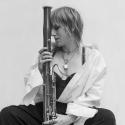
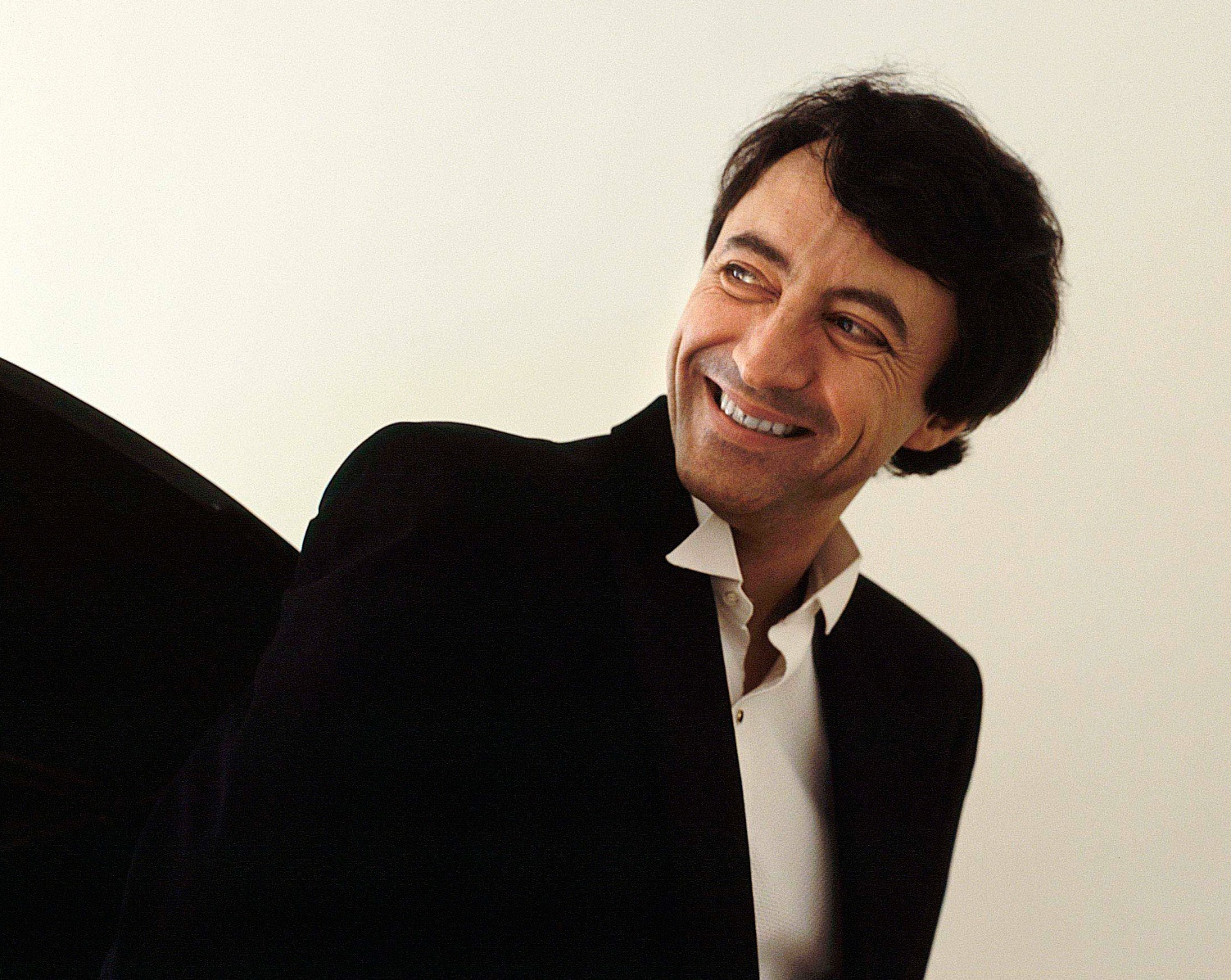 The conductor’s spring-heeled manner found a perfect mate for Prokofiev's killer concerto in the mercurial shape of Jean-Efflam Bavouzet (pictured right by Guy Vivien), a surprise interpreter better known for his gleaming Ravel and Debussy. This was the perfect antithesis to heavier, fast-vanishing performances from the likes of Gergiev and the heavy-footed Falstaff at his court Alexander Toradze.
Having started with crystalline brightness in right-hand octaves, Bavouzet hit a galaxy of wrong notes in Prokofiev’s outlandish first-movement cadenza, but he did it with such style that you believed in it. The scherzo flashed past with greater velocity and nimbleness than I’ve ever heard before, while the cavalcade of third-movement monsters found Noseda and Bavouzet playing naughty boys rather than carnivorous dinosaurs.There was poetry at just the right point in the rather prolix finale. What a shame Bavouzet couldn’t have given us a cooling Debussy etude as an encore.
Tchaikovsky’s patronizingly nicknamed “Little Russian” Symphony – the alien subtitle sticks - could only charm us with its rhythmic vivacity after Cowie’s jellyfish. A little poker-faced in the first movement’s fusion of folksong and Beethoven, and over-brittle in the miniature march Tchaikovsky uses to replace the expected slow movement, Noseda’s players dazzled in the last two movements, culminating in a ferociously articulate account of the finale’s variations on a Ukrainian folk song. The last delicious joke was how the merrymaking danced out unhindered from under the heels of the severe tam-tam, prince among Tchaikovsky's demons of opposition, and whirled their way to an irrepressible victory tattoo.