The Sunday Afternoon Song Recitals are a wonderful Wigmore tradition. Filling in that tricky gap between lengthy weekend lunch and early school-night supper, they offer a chunky one-act programme, generous but without the fuss and faff of an interval. Balancing young talent with more established performers, the next few months see (among others) Emma Bell, Anna Grevelius and Isabel Bayrakdarian occupying this slot. Playing to the prevailing mood yesterday afternoon was repertoire from Gounod, Britten’s Cabaret Songs and the UK premiere of Iain Bell’s song cycle Day Turned Into Night. Sitting less comfortably however were Poulenc’s Quatre poèmes de Guillaume Apollinaire which set proceedings off to a rather inscrutable start.
Mezzo-soprano Christine Rice is seen almost more often on the opera stage than the concert hall platform these days, working regularly for both the Royal Opera and ENO, most recently struggling against weak direction in Handel’s Radamisto. Her range and well-balanced tone make her a desirable soloist, but I still remain to be fully convinced by her acting skills.
These unfortunately were very much at issue in the Poulenc. Apollinaire’s poems are elusive; filled with fractured images and characters, they always seem to end prematurely, catching the listener unawares. Though game in her characterisation of the literal narratives – the gossipy backbiting of “L’Anguille”, the offhand vocal shrug of “Hôtel” – there was an absence where a coherent interpretation needed to be, a sustained tone or a musical gesture to make sense of these epics in miniature. Both she and accompanist Roger Vignoles however did bring demonstrable enjoyment to the set, with Vignoles’s delicate touch playfully highlighting the shift from furrowed-brow Neo-Classicism to music-hall vamping in “Avant le cinéma”.
More satisfying were Gounod’s 3 Mélodies, with their more solid Victorian sensibility. The long lines and caressing lyricism of “Au rossignol” showed Rice’s voice at its most finely spun, and gave us the first real encounter with the power that lies behind, released here to magnificent effect.
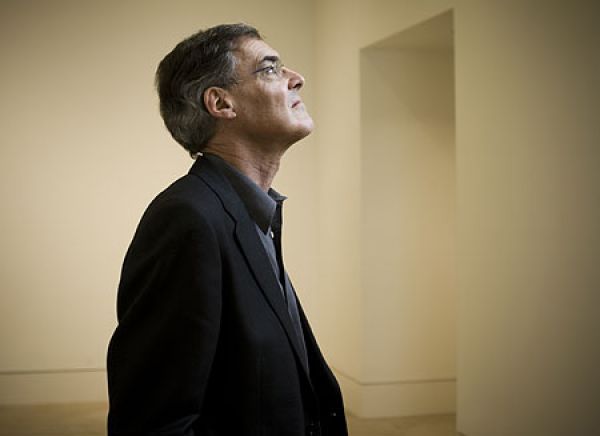 British composer Iain Bell’s song cycle Day Turned Into Night takes inspiration from the figure of Queen Victoria. Resolutely monochrome in the national imagination, Bell attempts to flesh out the caricatured black-clad figure with context, setting texts from the Queen’s correspondence leading up to her marriage and then following the death of her husband. It’s a novel idea, and one that gains weight from the surprisingly heartfelt writings. We start with the awkward formality of “My Dearest Uncle”, all truncated phrases and wilful rhythmic hesitations, strikingly at odds with the emotive account of the first meeting between Victoria and Albert. Emotions are allowed greater release in “The honeymoon night”, with its lingering repetitions in the accompaniment, before the mood darkens for the final three songs.
Bell’s harmonic language is unmistakably English, with the shadow of Britten falling over the subversive accompaniments and occasional glances toward bitonality. If there is nothing especially new here, then there is also much to enjoy; Bell’s understanding of vocal writing is evident, and Rice’s instrument a good fit for the cycle’s broad emotional arc.
Closing the afternoon were Britten’s Cabaret Songs, a series of virtuoso vocal feats masquerading as off-the-cuff musical musings and encore fodder. While technically secure, there were a number of interpretative quirks to the performance that didn’t quite ring true. The recitative-like sections in “Tell me the truth about love” for example, while encouraging expressive liberties also demand a certain metrical control if they are not to distort the work’s careful architecture. Pianist and singer parted company here (and later again in “Johnny”) and in each case I would be tempted to side with the more measured Vignoles (pictured above) than the runaway Rice. “Funeral Blues” can be a struggle for mezzos, sitting squarely on the lower break into chest voice. While the emotional tone, with its extrovert show of grief, was thrilling, the vocal mechanics were rather too much on show to allow listeners to surrender to the text.
I can think of few nicer ways to spend a Sunday afternoon than being given a leisurely tour through 19th and 20th-century European song by two such performers. While interpretatively I have my issues with Rice, there is no arguing with the glorious tone to her voice, especially the rounded power of its bottom register. Coupled with the elegant intelligence of Vignoles, the result is reliably delicious.
- See what's on at the Wigmore Hall this season
- Find Christine Rice on Amazon
- Find Roger Vignoles on Amazon