French-Danish soprano Elsa Dreisig’s operatic schedule is so busy and so successful, it is perhaps not surprising that she – and Texas-born pianist Jonathan Ware – treat the song recital platform as a place of freedom, where, rather than delivering the predictable or the comforting, they can test out ideas and set themselves challenges. As she has told one interviewer, it is a place where "I can push my artistic practice to its ultimate limit."
In the early stages of their recital a deep dive into French fin-de-siecle aestheticism, they occasionally drew that particular kind of slightly bemused, questioning applause that London audiences can sometimes give, but gradually the pair won over a nearly-full Wigmore Hall to the point where the appreciation had become whole-hearted.
What is beyond doubt is that Dreisig has a stupendous, dare one say bankable voice, and she also knows many ways to own the stage. Particularly in the more theatrical material towards the end, she was able to play with all kinds of different personalities, and make teasing use of irony. There are singers who put more effort into earning and winning applause from an audience, and have far more deliberate and calculated ways to do it (Ute Lemper might be at the extreme end of that particular spectrum), whereas with Dreisig it seems to be more about setting herself the challenge – and basically winning every time.
 Maybe the first clue to that way of taking pleasure in the simple act of unleashing the voice came at the top of the programme, in one of the Berg Seven Early Songs, “Die Nachtigall”. I noticed an absolutely delightful expression of pride, joy, victory – the Germans would call it a “Siegermiene” which lighted across Elsa Dreisig’s face in the last stanza of the Theodor Storm poem. The song text describes a nightingale who has sung so beautifully all night, it has caused roses to spring up. On the words “Hall und Wiederhall" (echo and re-echo) Dreisig just let her glorious voice ring out free for the first time, as if she just had one simple, elemental wish: to have the physical sensation of the Wigmore’s magical acoustic giving her her own voice back. Yes, there is a wonderful, uninhibited joy, excitement and sense of connection in this voice, but also a depth of characterisation that makes one impatient to hear her again.
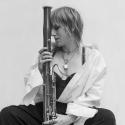
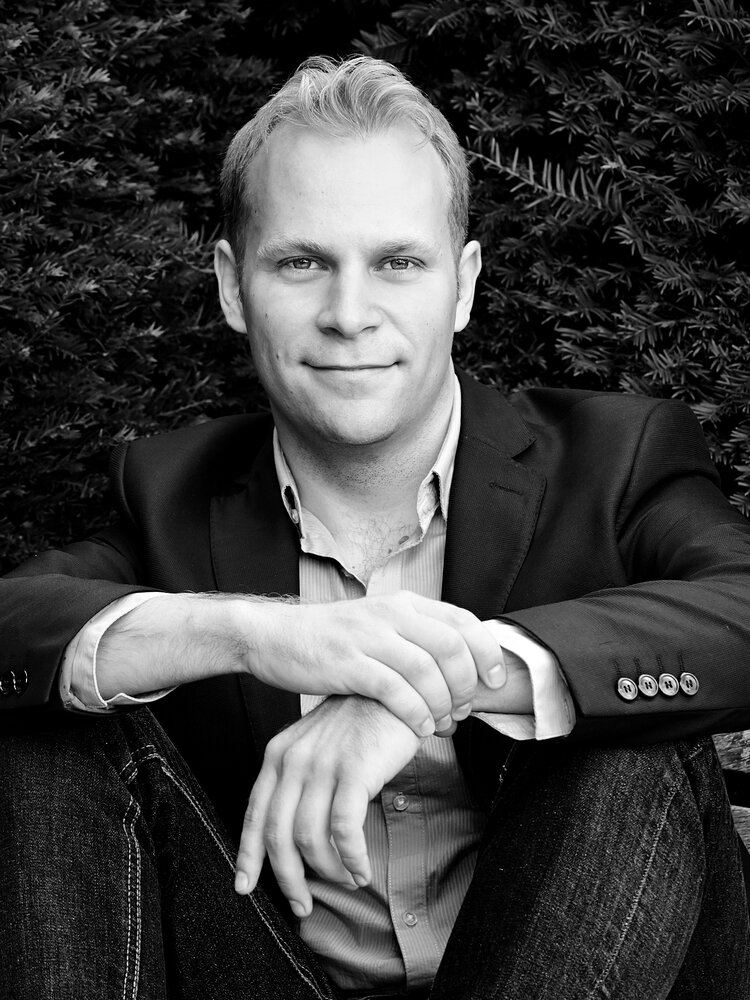
That vocal joy can sometimes seem improbably natural too. Korngold’s vocal lines almost have an unwritten instruction on them that they should not be attempted by singers without superhuman vocal control. So what do Dreisig and Ware (pictured above by Kaupo Kikkas) do with the songs? Slow them down and make them even harder. The closing gesture of “Welt ist stille eingeschlafen” is an ethereally high held note with a diminuendo on it, where the attention shifts to the subtleties of the piano part. Dreisig went beyond giving a mere masterclass: it was deeply affecting. Pianist Ware can set himself challenges too: the piano parts of the Amy Beach songs, and of “In the Twilight” in particular are not for the faint-hearted.
One of the most fascinating experiments was an uninterrupted sequence of songs to texts by the French aestheticist poet Tristan Klingsor, alternating the three well-known Ravel Shéhérazade songs with settings of his poetry by Charles Koechlin. Thematically the affinities between the songs were very cleverly drawn. The juxtaposition of the theme of women living under the male gaze was doubled down in Koechlin’s “Oiseau en cage” and Ravel’s “L’Indifférent” . That brought a brilliantly effective moment for Dreisig to act and to ironize, a hint of what was to come. However, by contrast with the polychrome exoticism of Ravel’s orientalism, the Koechlin songs are almost too self-effacing. “Le Voyage” has particularly apologetic musical instructions for the performers: the pianist is required to play “très éteint” at one point, and the singer is expected to deliver the whole song “avec une douce philosophie.”
The most playful experimentation came in the Weill. Gershwin and Kay Swift songs at the end of the programme. Here Dreisig was playing brilliantly with the trope of being victim one moment, and then switching her persona completely to being back in control, and doing the switch in the twinkling of an eye. It was mesmerising stuff where her remarkable acting craft took over.
Elsa Dreisig's continuously developing crafts as singer and actor are - and will remain - fascinating to hear and to observe.