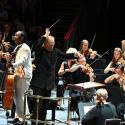
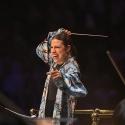
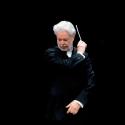
Even in a big orchestral concert, you’re bound to note Berlin Philharmonic principals as among the best instrumentalists in the world. I cited five in the central instalment of Simon Rattle’s Sibelius cycle on Wednesday. Of those, only viola-player Amihai Grosz figured in the Octet, joined by seven more players of peerless sophistication. Rattle may have been taking the evening off – unless he was brainstorming plans for a new concert hall elsewhere in London – and the keynote here was freed-up enjoyment. But there was no self-satisfied coasting: chamber music takes supreme concentration and vigilance (the fact that all bar the cellist stand certainly helps). To witness it at the highest level was a privilege.
Superficially, the programme could be seen as a bridge between Sibelius at the Barbican and Mahler on the Southbank (performances of the Second Symphony follow tonight and tomorrow; theartsdesk will be covering Sunday’s performance). For the first half, we had two very different Nordic figures, fellow anniversary genius Nielsen and early 19th century Swede Franz Berwald, for the second the colossal Octet by Mahler’s greatest source of inspiration, Schubert. Nielsen’s Serenata in vano for five players was a bonne bouche, but a quirky one: clarinettist Wenzel Fuchs kicked off suggesting klezmer, but the line soon incorporated an unmistakeable Nielsen twist. The humorous Dane evokes the wooer attempting to lure a lady onto her balcony, but even mock-swoony moments don’t do it for her, and a final march-ette sees the band retreating as it plays for its own pleasure: sheer delight in seven minutes.
 Berwald’s Grand Septet really needs to be half-heard while you enjoy a smörgåsbord and a glass of snaps/schnapps, not in reverend silence. Its halfway house between Beethoven and Schubert doesn’t really live up to the latter’s melodic genius. But then if you only half-listened, you wouldn’t have been able to observe the subtlest of turns the POB found in it, while the chirrups and other birdsong of the spirited finale really were on the Schubert level.
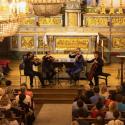
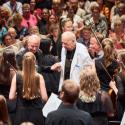
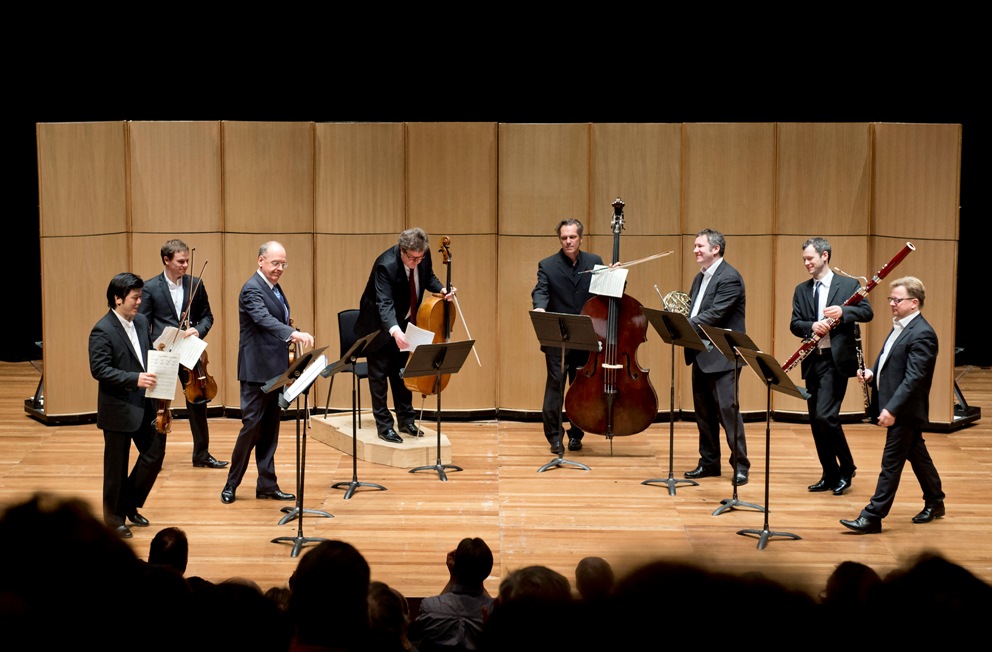
His Octet is something else, though, justifying its hour-long serenade with the sudden shades of sadness which pierce through all but the ebullient third-movement Allegro vivace (the players pictured above between movements). Schubert’s a much more democratic sharer of gems between the players than Berwald, too. So we had the essence of songfully vibrated German horn sound from Stefan Dohr in the magical coda of the first movement, Fuchs in perfect harmony with Daishin Kashimoto, one of the Berliner Philharmoniker’s three leaders and a master of nuance, a recap spotlight on bassoonist Mor Biron and a moment in the sun for the string quartet which suggested that just in that format they could be one of the world’s best, with such great listeners as Grosz among them.
The only slight flaw was visual: not enough in the way of obvious enjoyment or smiles for Viennese sunshine. But we heard it even if we didn’t see it; a semi-standing ovation was well deserved. For anyone to whom this looks too blokey, you can catch Berlin horn-player Sarah Willis, also a speaker of such natural charm that she puts quite a few BBC Radio 3 presenters to shame, getting the 12 cellists of the Berliner Philharmoniker to accompany her round-the-world tour for children and adults tomorrow at noon. The treats of this week's residency are far from incidental, and even without Rattle, one of its pleasures of this splendid residency has been to get to know the individual players better.
- Sarah Willis and the 12 cellists tomorrow at noon, in between two performances of Mahler's "Resurrection" Symphony