Aldeburgh offered strong competition for the three evenings of Schubert at the discreetly restored Ragged School Museum, but I knew I had to return for the last event of Pavel Kolesnikov and Samson Tsoy’s third festival here, much as I’d love to have heard Allan Clayton in Britten’s Our Hunting Fathers. And if anything, the three-part all-Schubert programme was even more levitational than I’d expected.
The circumstances are unique. Kolesnikov and Tsoy welcome you as if into their home to sit in a close semi-circle for wonders in the schoolroom at the top of the building – now more spacious, with big windows at both ends, since the partition has been removed. The Yamaha piano has been hauled up, as before, Amsterdam-style, entering by the streetside window, to be tended lovingly over the three days by technician Yusuke Kojima. And here you witness the greatest playing of Schubert in the world. If that sounds like an exaggeration, you should have been there for the centrepiece: Elisabeth Leonskaja (pictured below on a previous evening), friend and mentor of the two younger partner-pianists and due to celebrate her 80th birthday in November, playing from memory the A minor Sonata, D845. 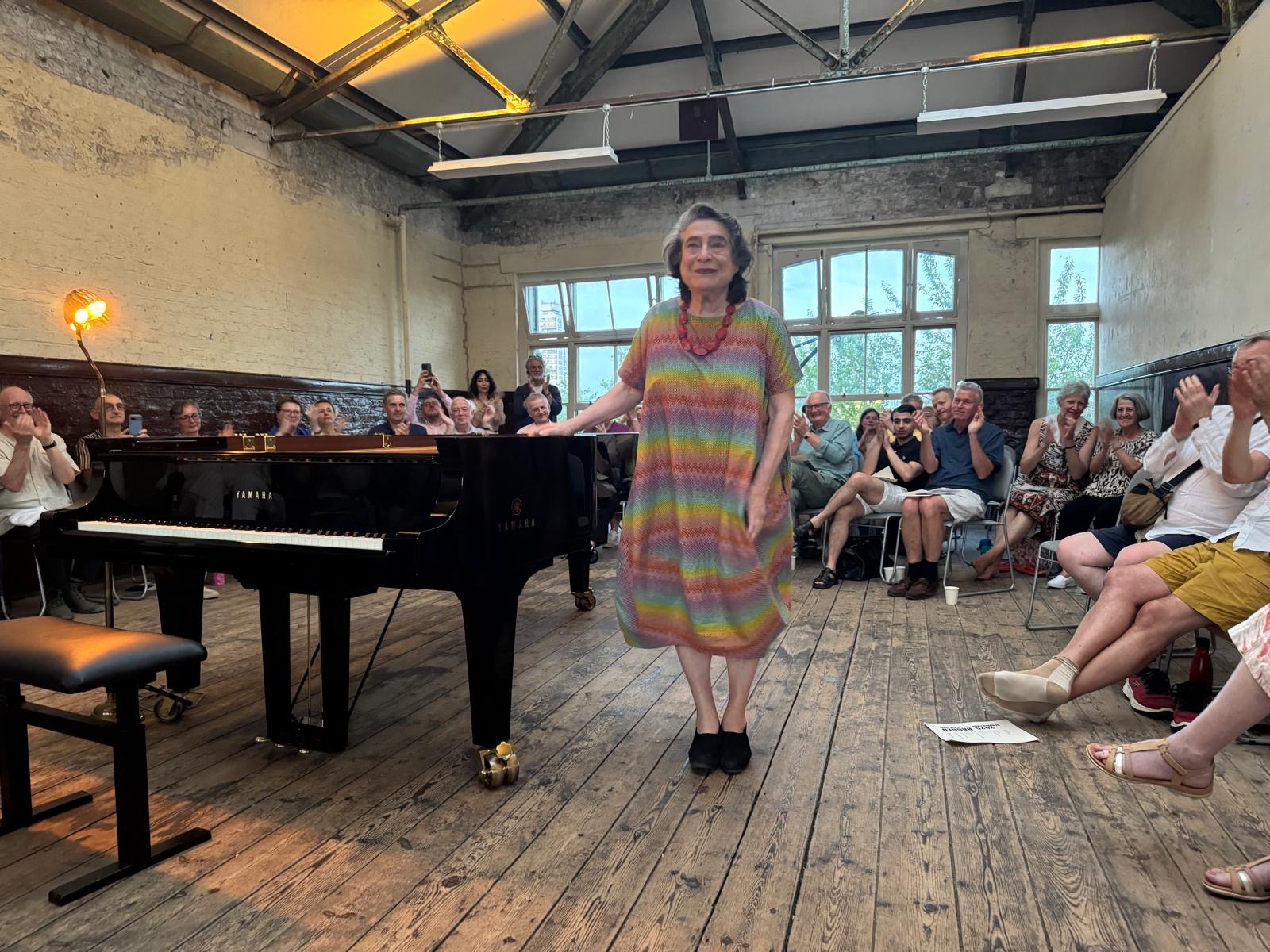 It stood out in even higher relief here than in her performance at the East Neuk Festival, the contrast between monolithic majesty and an almost Mozartian delicacy even more marked: an instant masterpiece, different from the more delicate balance between major and minor, the bittersweet mix of sadness and release, in the last three sonatas, but no less impactful.
Throughout the evening, one marvelled at Schubert’s sleights of hand at the end of one section and the beginning of the next – here, in the extended exposition treatment of the main idea which made the repeat all the more essential (Brendel and his pupils never gave them, which is why I can only respect the late master, not love him). The ever-surprising round-offs gave extra life to the sheer charm of the B flat Sonata for four hands at one piano with which Kolesnikov and Tsoy (pictured below on the first evening) began the concert; I disagree with the caveat of a friend, who thought this one of the most remarkable concerts she’d ever attended but questioned whether the starter made it too long. 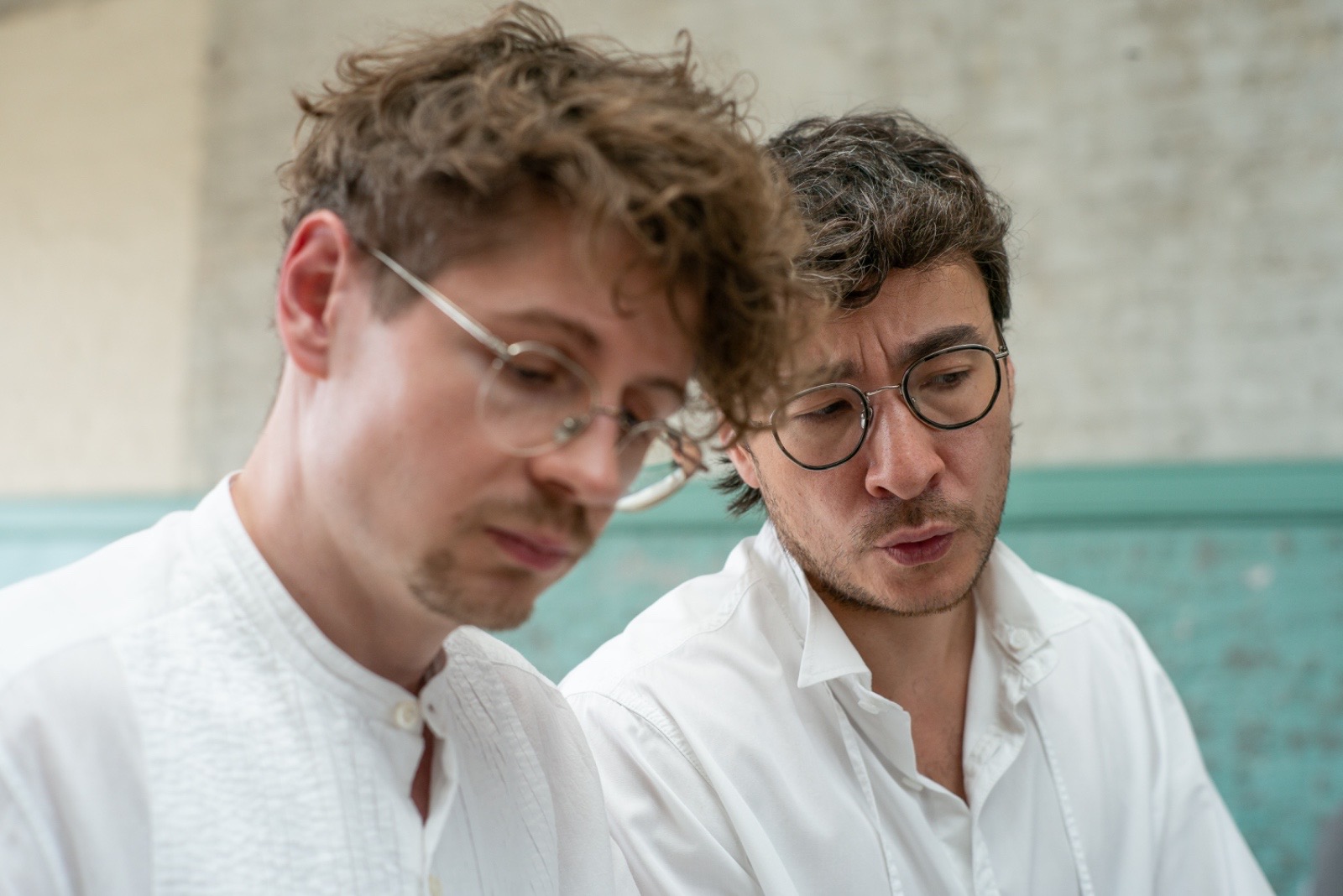 Ibragimova and Tsoy breathed life into every phrase of the “Grand Duo” Sonata, D574, unpredictabilities but not licences following the innocuous walking tune at the start. At this point the Boishakhi Mela, which I’d love to have dipped in to, was still going strong in Mile End Stadium beneath the windows, but Kolesnikov and Tsoy had assured us that they’d found once they started playing, it stopped intruding, and that happily turned out to be the case for the audience too. A police siren started up between Leonskaja’s sonata movements, but she let it pass and carried calmly on.
The levitation reached an apogee of sorts in the B flat major Piano Trio, Ibragimova and Leonskaja joined here for the first time by cellist Marie-Elisabeth Hecker (pictured below on the right with Leonskaja and Ibragimova, Tsoy as page-turner). Having never heard her before, I’d just been bowled over by the two-CD set of mostly Russian works for cello and piano she’s recorded with husband Martin Helmchen, which BBC Music Magazine has just made its release of the month. Hers is music-making on a no-fuss, transcendental level; again, an exposition repeat was longed for so we could hear the unique way she launched into a counter-theme. 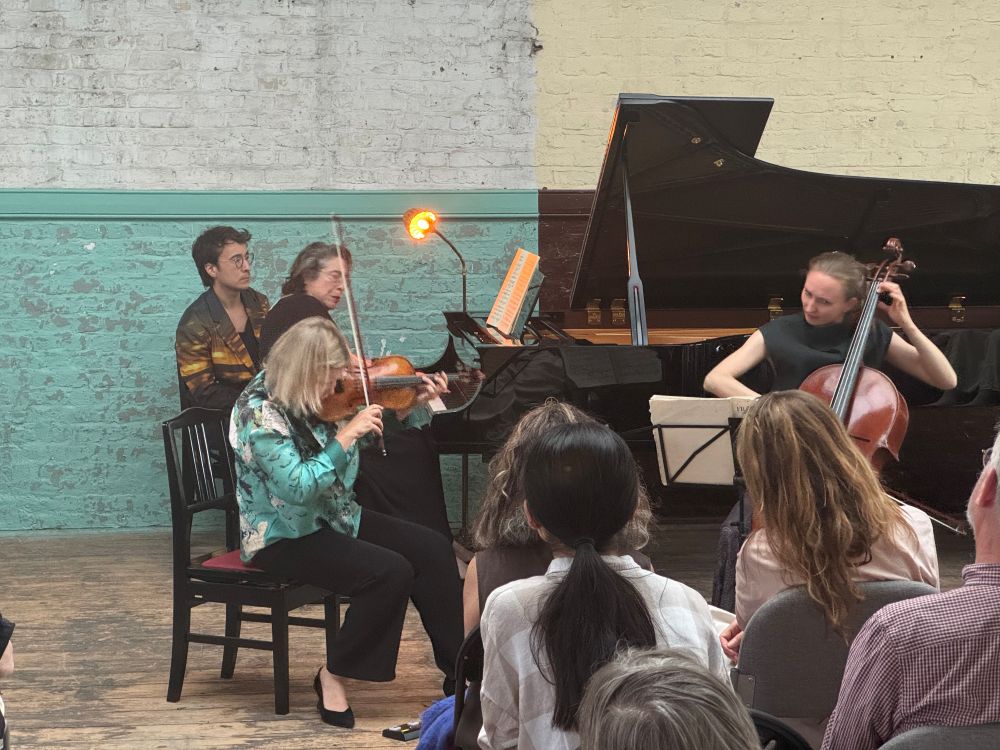 Ibragimova produced exquisite pianissimi and though Leonskaja’s role here was most often poised support, the melodic descents against shimmering strings provided another magical moment in an evening stocked full of them. And do visit the Museum – I can vouch for the surprise of the café into which I stepped from the canal, now run by Tangerine Dream, whose forced departure from the Chelsea Physic Garden made me give up my membership. Happily they're now to be found in Chelsea, South Kensington and Mile End.