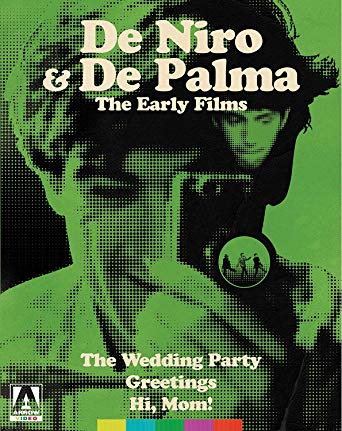
If we think of Robert De Niro and Brian De Palma, we likely think of The Untouchables from 1987 with the great actor in his career pomp, chewing up the scenery in a memorable cameo as Al Capone. However, the pair had history. They made three films together in the 1960s – Greetings, The Wedding Party and Hi, Mom! – which are now gathered together in 2K restorations from the original negatives. The short of it is that two of them are now little more than historical curios for archivists, but the other is revelatory on a number of counts and well worth exploring.
The Wedding Party began production in 1963, a project derived from the Sarah Lawrence Arts College in New York and led by drama tutor Wilford Leach and his students De Palma and Cynthia Munroe (all three are credited as its directors). It’s notable as Robert De Niro’s first film appearance but wasn’t actually released until 1969, due to the rising reputation of those involved. It’s a laboured black-and-white farce based around the goings on at a Long Island country house packed with a bride’s omnipresent relatives while a groom slowly freaks out about his upcoming nuptials.
 De Niro (credited as Robert Denero) plays Cecil, one of the two best men and is notable mainly for his incongruously preppy un-De Niro-ish dress sense (the bride is played by another Sarah Lawrence student who’d go on to stardom, Jill Clayburgh, also in her first film role). With Keystone Cops-style sped-up sequences and dated lame dialogue (groom attempting to seduce bride pre-wedding: “You’ve got to get used to this some time – it might as well be now”), its anti-marriage slant comes off as vaguely sexist rather than rebellious and, by the end, the whole thing has rambled on far too long.
Greetings, from 1968, established De Palma as a rising star of Greenwich Village’s alternative film scene and is known for its anti-Vietnam draft stance. Viewed cold in 2019, its lo-fi, sub-Jean-Luc Godard narrative jumble soon becomes tiresome as we follow three pals chatting about Vietnam avoidance techniques, wandering around New York, and “computer dating”. It’s a dated mash-up of counterculture and titillation, half arthouse, half grindhouse, summed up by a sequence where one of the protagonists, obsessed with Kennedy assassination conspiracies, uses a nude woman to illustrate where the bullets hit.
What Greetings did give us, however, is De Niro’s creepy character, Jon Rubin, a peeping Tom who’s the only one to end up in Vietnam (where he’s given the film’s best lines). Rubin was resurrected for 1970’s Hi, Mom!, a fascinating film in a different class from the other two. It’s still very much in thrall to Godard but with a dynamic energy and originality all De Palma’s own.
Jon Rubin is essentially Travis Bickle from 'Taxi Driver', right down to the way he dresses
Rubin is now a filmmaker who touts to a porn producer the idea of voyeuristic footage shot through apartment windows. The first half of the film is concerned with that and De Niro’s wooing Jennifer Salt’s Judy to comic effect, but the second half expands dramatically on a sub-plot, shot in black and white with a raw funky soundtrack, wherein an Afro-American theatre troupe offers an encompassing theatrical experience for white people called Be Black Baby. These sequences are superbly conceived, gripping, visceral and shocking, and alone worth watching the film for; brilliant satirical film-making.
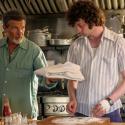
The other aspect that makes Hi, Mom! vital viewing is that Jon Rubin is essentially Travis Bickle from Taxi Driver, right down to the way he dresses, a disturbed Vietnam vet with a porn habit who’s psychologically/psychotically confused by the counterculture’s values. There are Be Black Baby sequences in which De Niro plays a cop that are a direct dry run for some of Taxi Driver’s most famous scenes (“You talkin’ to me?”). Martin Scorcese simply took Rubin from Hi, Mom!, distilled him, and wiped away all the satirical comedy.
The version of the collection watched has extras that include an audio commentary by Glenn Kenny, author of Robert De Niro: Anatomy of an Actor, and insightful short interviews with the critic Howard S Berger and Greetings and Hi, Mom! producer Charles Hirsh, but there is a Special Edition available with a host more material, including interviews with some of the actors involved and a booklet.
Below: watch the trailer for De Niro & De Palma: The Early Films