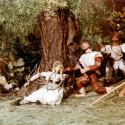
Island of Lost Souls might be from 1932, but its release on DVD verifies that it’s one of the freakiest, most disturbing films made. This adaptation of H. G. Wells’s Island of Dr Moreau is dominated by Charles Laughton as the eponymous Doctor. Creepy and monomaniacal, he puts in a towering performance. Convinced he can turn animals into humans via surgery, he’s undermining evolution and playing – as he declares – God. The film arrived in cinemas the same year as the equally transgressive Freaks and also went on to become a cult, inspiring new-wave weirdos Devo to co-opt the half-human, half-animal chant of “are we not men?”
It pays heed to Wells’s book; the story and concerns remain common. But the film eschews subtlety or development in favour of a powerfully nightmarish and charged atmosphere. Wells hated the film. Bela Lugosi appears as the transformed’s Sayer of the Law. The fantastic Kathleen Burke is Lota the Panther Woman. Cinematography is by Karl Struss, who worked on Murnau's Sunrise. Director Erle C Kenton did nothing else this notable.
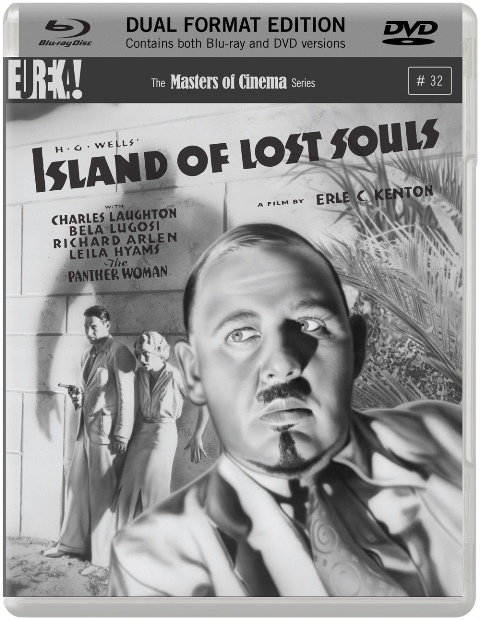 The British history of Island of Lost Souls suggests the passing of time has lessened its impact, tempered its bizarreness. A UK release was prevented in 1933, 1951 and 1957. In 1958, it was passed for cinemas with an X certificate after a minute was cut. In 1996, just over couple of minutes were shorn and a 12 certificate awarded for its VHS release. This issue, its first UK appearance on DVD, bears a PG certification. It’s uncut. Times change and, with that, what is tolerated varies. But Island of Lost Souls still packs its punch. Forget the subsequent film adaptations.
The extras in the package include actor Simon Callow – also Laughton’s biographer – talking about Laughton in the context of the film. Jonathan Rigby’s informative and insightful dissection of the film is hugely entertaining. He debunks the story that British censors declared the film “against nature”. It was Laughton’s wife who said that. The print and sound are amazing. An exemplary presentation of a landmark film.
Watch the trailer for Island of Lost Souls