

Get Carter’s imitators tried to recapture the laconic violence of a very local gangster film. Get Carter’s makers swapped Newcastle for Malta, and a sunny, absurdist farce which is among British cinema’s unclassifiable one-offs.
Writer-director Mike Hodges' intermittently brilliant career has taken several head-scratching turns (see also Flash Gordon). It’s to Michael Caine’s vanity-free credit that, having had the nerve to be unsympathetic hard man Jack Carter, he happily followed Hodges’ muse to become Pulp’s cynical hack writer Mickey King in the director's 1972 film.
Righteous anger sours a story which had seemed inconsequential
Nothing quite beats the bravura opening scene of a typing pool’s wide-eyed, lip-biting secretaries thunderously pounding out King’s lurid sex and violence. This bad writer’s film noir-style voiceover is also deliberately inept, but it’s a matter of taste if it was meant to be funnier. Pulp’s first third is in fact a disappointing curate’s egg, as Caine ambles through Malta (standing in for an Italy too full of real mobsters), after being offered riches to ghost-write the autobiography of a secret subject waiting at the end of a picaresque trail. George Martin’s score sets the gently bittersweet mood.
Mickey Rooney (pictured below) then hijacks the film’s heart as King’s employer Preston Gilbert, an ageing gangster star now in gilded exile on a private island. Hodges found Rooney “exhausting”, but his firecracker energy is the dynamo which gives a wandering film centrifugal force. You can see why Ava Gardner and the rest were drawn to, and dumped, such hustling, needy charisma.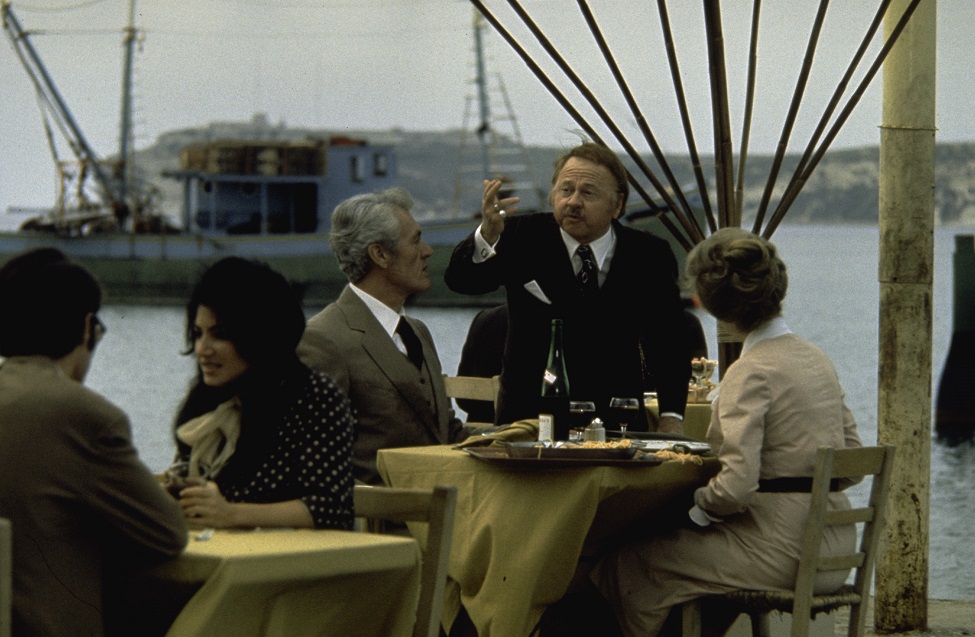 Caine’s own comic touch is lightly understated, as he’s bemused and amused by events, speaking in softly refined counterpoint as Rooney roars himself hoarse, and so relaxed the part seems like a side of him. With a Lewis Carroll-quoting Dennis Price – Kind Hearts and Coronets’ silky comic lead by now a camply amusing ruin – film noir star Lizabeth Scott as a fascist’s wife, McCarthy blacklist victim Lionel Stander en route to his sinecure playing Hart to Hart’s Max as Rooney’s gravel-voiced gunsel, and Godfather heavy Al Lettieri as an academic assassin, the supporting cast is ripe. John Osborne was the villain in Get Carter, after all.
Extras include new interviews with editor John Glen (who recalls working between three-day-week power cuts), cinematographer Ousama Rawi, who supervised this release’s 2K digital restoration, and Hodges, who explains the film’s roots in his dismay at resurgent Italian fascism. As King is finally left fighting an Establishment conspiracy, such righteous anger sours a story which had seemed inconsequential. Like the film, it becomes curiouser and curiouser


