All the accolades heaped onto this documentary in the near 50 years since it was made are wholly deserved. Over 251 minutes, Marcel Ophuls weaves together an extraordinary collection of interviews and archive to tell the story of France during the German occupation from 1940-1944. The resulting film calmly eviscerated the legend that the French had resisted the Nazi regime and presents a far more complex history of collaboration, compromise and collusion.
Initially conceived for French television, the documentary was withheld from broadcast in France in 1969 and caused a storm when it opened in a tiny cinema in Paris in 1971. It was another 10 years before it was shown on French television with a lengthy post-broadcast debate (included here as an extra). This immaculate new Arrow Academy edition should win the film new audiences from anyone with an interest in World War Two history, film-making and European politics.
Ophuls’ caustic wit punctuates the film throughout
Ophüls and his co-authors spent two years filming over 50 hours of interviews and cutting them together with archive, newsreels and propaganda. There are devastating testimonies from occupying German officers, French politicians on the left (former prime minister Pierre Mendès France, who was imprisoned in the war by the Vichy government) and the right (René de Chambrun, loyal defender of Laval and Petain). Ophuls' technique is to allow his interviewees all the time they need to justify their decisions, effectively allowing them to hang themselves or save themselves. The charismatic Christian de la Mazière has plenty of screen time to explain why he signed up for the Waffen SS in reaction to the Bolshevik threat; small-town bourgeoisie explain why collaboration made more sense for them than the peasants who had less to lose; teachers barely disguise their delight that their Jewish colleagues were forced out of work and grow vague about their memories of whether they supported their students who had joined the Resistance.
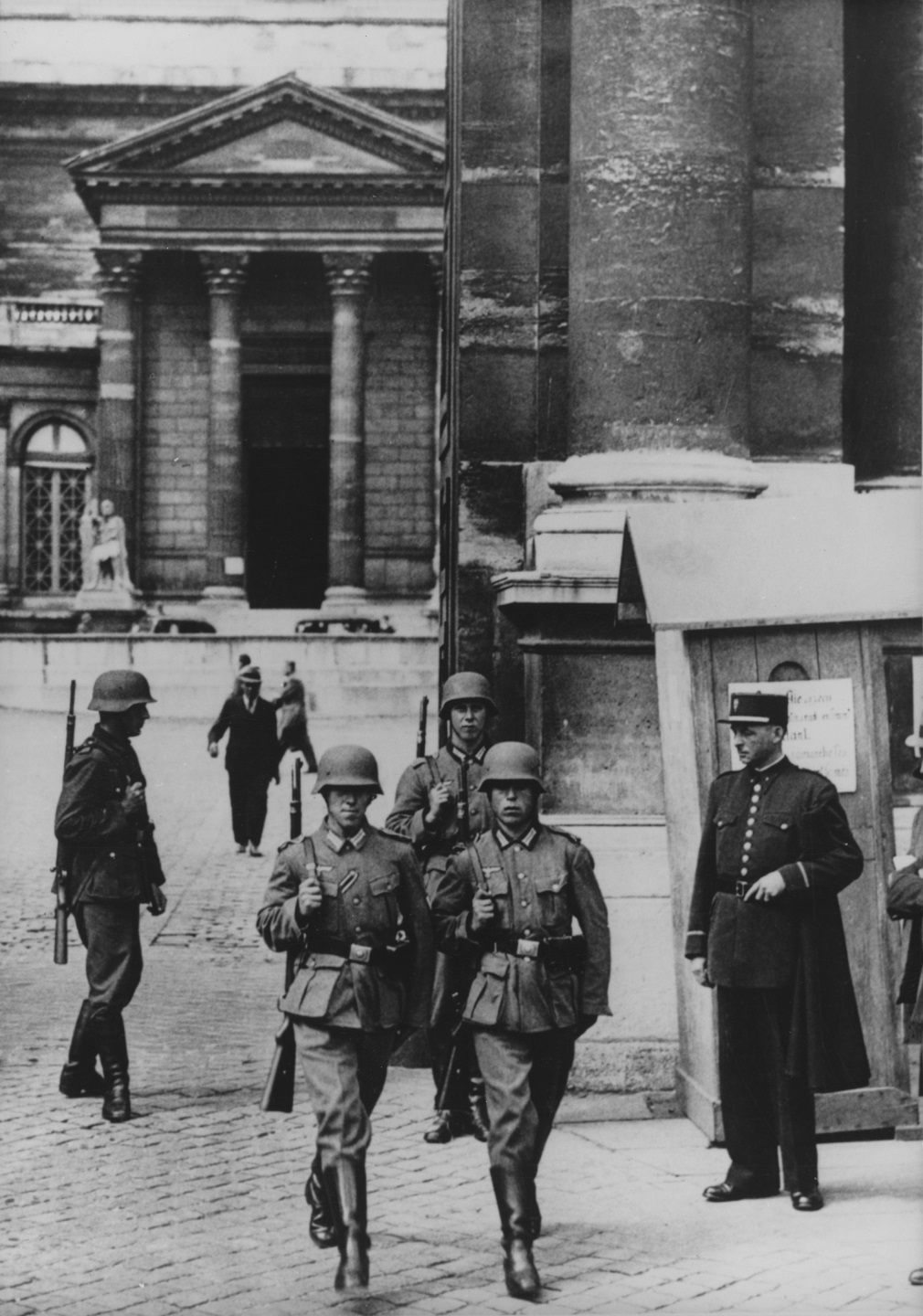 The documentary is bookended by Maurice Chevalier, that slippery entertainer crooning his cheery chanson "France sent si bon" which he sung in a Nazi revue in 1941. Near the film's end, Chevalier in a direct-to-camera address (recorded in 1946) insists in English that he never toured Germany during the war. There’s a magnificent, generous interview with Anthony Eden on the love-hate nature of Anglo-French relations and its effect on both de Gaulle in exile in Britain and Pétain in France. For those of us taught Second World War history from an Anglo perspective, it’s fascinating to learn how the British naval bombardment of Mers-el-Kébir in Tunisia in July 1940, when 1,300 French servicemen were killed, played into the hands of anti-British, pro-German sentiment in France. Eden is superbly diffident in his regret about the incident and philosophical about history: "One who has not suffered the horrors of an occupying power has no right to judge a nation that has". Scattered ingeniously among the famous interviewees are obscure figures with fascinating tales to tell, such as Denis Rake, a gay British cabaret artiste who worked as a spy for the Special Operations Executive while sleeping with a German officer.
As you would expect from the son of Max Ophüls, the great romantic filmmaker who was forced to flee first his native Germany and then France because he was Jewish, Marcel Ophuls not only takes aim at the French movie stars who collaborated with the Nazis and dubbed Jew Suss into French, but also confronts French anti-semitism head on. He challenges René de Chambrun's claim that French Jews were not persecuted as much as their counterparts and gives Dr Claude Levy's moving testimony centre stage. It is all done with an extraordinary deftness of touch, drawing on contemporary newsreels and propaganda films discovered during the editing process. We are treated to the vile anti-semitic propaganda of Alphonse de Chateaubriant juxtaposed with a jolly short extolling the virtues of using make-up to replace nylon stockings.
Ophuls’ caustic wit punctuates the film throughout. Even when we know he must be furious at the evasions and lies his interviewees are spinning, he uses sly humour to keep his audience onside. He’s never a dour preacher drumming the same message home from the high moral ground (unlike his peer Claude Lanzmann). Instead Ophuls leaves the audience running to keep up with him, challenging us with shifting perspectives from his interviewees and a complex, layered tapestry of source material. If the film disturbed France's political elite struggling with the fallout from the '68 uprisings, its re-release now – while we are in the throes of Brexit – throws new light on Britain and its relationship with Europe and racism. This new edition includes the 2004 interview Ophuls gave film historian Ian Christie at the BFI; the director is as charming, brilliant and fiery as he was when he made The Sorrow and the Pity, all those years ago.