

Despite the title of Matthias Glasner’s award-winning drama, and the death that swirls around its characters, dying isn’t really its subject, but the mess of living.
Dysfunctional family, eccentric love affairs, addiction, depression, creative obsession that teeters towards suicide, and the worst advertisement for dentistry you will ever see – it’s all here, in a German canvass of misery and survival so casually engaging and provocative that its three hours pass far more smoothly than any number of action-packed, plot stuffed franchise pictures.
Writer/director Glasner won the Silver Bear for his screenplay, at the Berlin Film Festival in 2024. And it’s a film driven by nuanced writing and exemplary acting, with an eye on the long game and the profound, discomforting connections many viewers will make with it.
At its heart is the Lunies family, all four members of which experience a shared, if not openly acknowledged estrangement. Mum, Lissy (Corinna Harfouch) and dad Gerd (Hans-Uwe Bauer) are technically together, but with him suffering from dementia and she a multitude of serious physical ailments, and little love between them, it’s a tough, seriously compromised existence. Their son Tom (Lars Eidinger), a conductor in Berlin, speaks to them occasionally, over the phone; daughter Ellen (Lilith Stangenberg, pictured below), a dentist’s assistant in Hamburg, not at all. 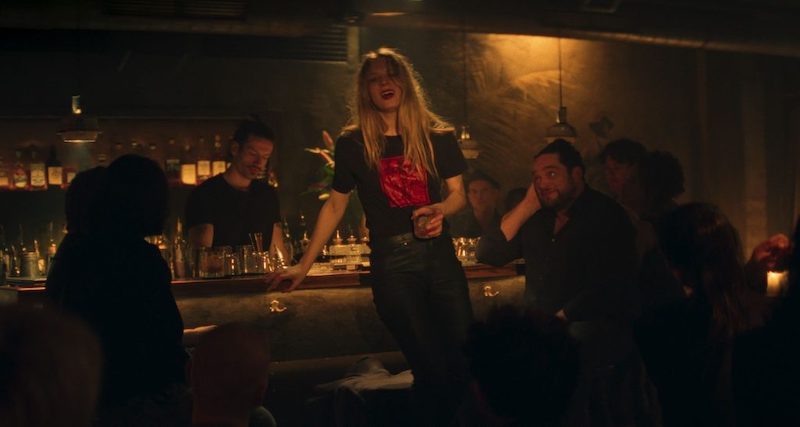 But this is no Tokyo Story, in which ingrate children cast off their ageing parents through simple selfishness: there is a deep sickness here, whose original source appears to be Lissy. And when Gerd dies, the chickens come home to roost.
Glasner divides the story into segments. The opener, on Lissy, includes a spectacularly gloomy episode involving social services, which wouldn’t be out of place in a Ken Loach film; though the brittle black humour throughout is more reminiscent of Mike Leigh. Secrets, lies, and parental harm all feature in the only in-person exchange between Lissy and Tom, a devastating conversation over uneaten funeral cake, which offers some understanding of the individual and familial damage at play.
Tom’s story shows him rehearsing an orchestral work by an old, deeply depressed composer friend, while also supporting an ex-lover (nay, love of his love) through her pregnancy with someone else's child. Juggling these challenges, alongside his parents’ problems, would be enough to bring anyone to his knees, and certainly tests Tom’s innate good nature.
Then we come to Ellen, who is first shown waking up from a bender unaware of what country she’s in, so spontaneous is she about where, with whom and how she finds her kicks. An alcoholic, she’s at turns glamorous (with a rock star nonchalance) and ugly, funny and manipulative, chaotic, self-obsessed and destructive. She shouldn’t be allowed anywhere near a dentist’s chair, so it’s a pity that her latest lover is one of the dentists, with whom Ellen frequently argues over a vulnerable mouth.
While Eidinger lends Tom a well-meaning sweetness that prevents the film from becoming too dark (when he gets the chance, the composer marshals some beautiful moments with his musicians), Stangenberg adds voltage and frisson that counterbalance its leisurely pace. Eventually Glasner will draw the siblings together. Along the way, there’s the question of who will die and when and, in one case, whether a genuine tragedy can be averted.
The final chapter is titled ‘the thin line’. It’s moot whether this is between life and death, peace and chaos, love and hate, or simply the precarious line that holds families together. Either way, the film offers insight into the complicated mess of relationships, how easy it is to abuse those closest to you, and equally how easy it could be, instead, to show a little kindness and understanding.


