In Post Tenebras Lux (light after darkness, in Latin) Mexican writer-director Carlos Reygadas casts a spell which transforms the ordinary into the extraordinary. The human condition is eye-poppingly explored in this ambitious, sometimes puzzling work of visual poetry, buoyed by the innocence of children and mired in the contrasting anxieties of their parents. Whether it's sexual neurosis, the natural world, or kids at play it's all too beautiful. Confounding, intoxicating and hugely rewarding, Post Tenebras Lux won Reygadas Best Director at the 2012 Cannes Film Festival. This is cinema as unabashed art.
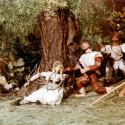
 Juan (Adolfo Jiménez Castro) and Natalia (Nathalia Acevedo, pictured right) are an affluent, formerly urbanite couple living in rural Mexico with their two angelic children Rut (Rut Reygadas) and Eleazar (Eleazar Reygadas). Early on we're made aware of Juan's mental fragility when, from nowhere, he launches into a barbaric attack on one of their dogs. His actions are dealt with sternly by Natalia - but from her lack of real anger or astonishment it's clear something similar has happened before. The family live in luxury in the midst of an impoverished rural community. Their attempts at befriending the locals - and Juan's friendship with his troubled employee Seven (Willebaldo Torres) in particular - are unavoidably undermined by the fact that they're sitting pretty atop the village.
Post Tenebras Lux unfolds as an assortment of disordered memories, dreams and fantasy - it's a visually and tonally various approach that's pointedly playful and occasionally disorientating. Much of what we see is ringed in a dreamy, ghosting haze (achieved by shooting using a custom-built lens which is bevelled at the edges), meaning that even when the content is not explicitly uncanny the film feels warped by an overarching oddness. Reygadas' fourth narrative feature bears comparison to a couple of other recent Cannes favourites: the magical realism recalls Apichatpong Weerasethakul's Uncle Boonmee Who Can Recall His Past Lives and it shares its spirituality and unconventional structure with Terrence Malick's The Tree of Life.
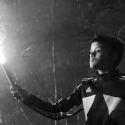
 Post Tenebras Lux might not always be easy to comprehend but it's certainly never dull. We're introduced to characters with a variety of wonderful monikers, including R2D2, Glove and the aforementioned Seven. Juan attends a bizarre local support group whose participants confess to an assortment of addictions. A man arranges for a tree to be chopped down to annoy a sister he's planning to murder anyway. And then there's the truly out-there: a devil stalks the corridors of a family home (pictured above), a man is imbued with supernatural potency in a moment of despair, a mixed-sex massage parlour is revealed as a strange swingers club in a sequence which sees Natalia simultaneously defiled and mothered.
While it's often away with the fairies, perhaps the reason that Post Tenebras Lux succeeds and captivates is that much of it is rooted in Reygadas' reality, so there's sincerity and truth in what we see. The children are so lovingly shot they could only be his, as are the house in Morelos and dogs, and the cow-populated football pitch from the sensational opener is a location near his home, where Rut really does like to play. Likewise, the only thing that feels a touch too random here - the rugby sequences - were filmed in Mount St Mary's College in Derbyshire, where Reygadas went to school. Having said that, it's so explanatorily evasive, the meaning you attach to it will be all your own. Post Tenebras Lux has been described by Reygadas as a study of frustration. Thankfully it's far from a frustrating watch.
Watch the trailer for Post Tenebras Lux