

This is a heartbreaking week for women’s tennis. The death from cancer of Jana Novotna at only 49 evokes memories of one of Wimbledon’s more charming fairytales. Novotna was a lissome athlete who flunked what looked like her best shot at greatness, tossing away a third-set lead in the 1993 women’s final and then crumpling on the shoulder of the Duchess of Kent. Five years later she eventually became the oldest first-time champion. It would make a lovely Hollywood movie.
Instead this year’s second tennis film is Battle of the Sexes. Like Borg/McEnroe, it spirits us back to the 1970s, that implausible decade of wooden rackets, big hair and (ahem) unequal pay. The story is basically true: female champ Billie Jean King (Emma Stone) led a protest walk-out from a tournament circuit which offered much greater rewards to male players, set up a breakaway women’s tour, only to face a phallocratic broadside from left field when fiftysomething former pro Bobby Riggs (Steve Carell) started challenging the top women to a gender-themed play-off.
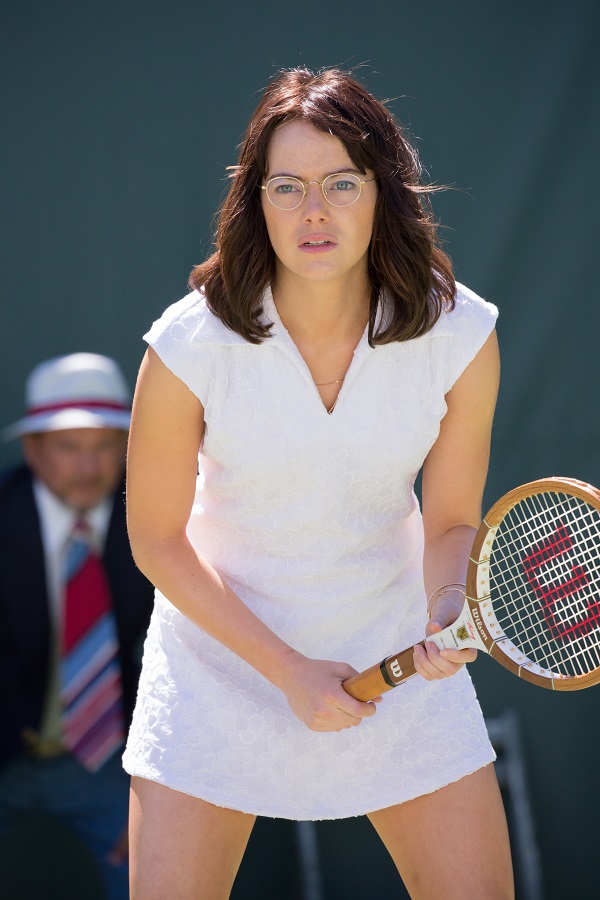 Riggs had a clown's genius for garish marketing and happily cast himself as male chauvinist pig in order to boost ticket sales. His showdown with King in a Texan jumbo-dome became a famous event which, in retrospect, looks like a sideshow with a slight absence of oomph. So to beef up the script Simon Beaufoy (The Full Monty, Slumdog Millionaire) tells the parallel story of King’s discovery of her lesbianism and clandestine affair with Marilyn Barnett (Andrea Riseborough), who travels as the tour hairdresser.
Thus King is fighting a public battle but, because she’s married, she’s also involved in a private one. She's not the only one with marital troubles. Riggs is a compulsive hustler who sacrifices his own family life, and a comfortable marriage to his heiress wife Priscilla (Elisabeth Shue, who gets a tender speech in which she gives him the boot). In this telling what matters to Riggs is the buzz of chasing preposterous bets on court, taking on all-comers while tethered to dogs or goats or wearing flippers.
It’s a role which Carell inhabits with relentless gusto (although his racket play is atrocious). As King, the ever-adorable Emma Stone wears the wire-rimmed glasses and apes the loping walk, and convinces as a steely feminist with a vulnerable core. Her swing’s not bad either (though the big match is CGI’d to the hilt). Riseborough is lovely as a free spirit whose gaydar, in an intimately soft-focus salon scene, tells her Billie Jean is there for the taking.
The facts of the Billie Jean story have been fairly outrageously origamied out of shape, events dragged around, people placed where they weren’t. King’s Australian rival Margaret Court (Jessica McNamee) comes off very badly as a hatchet-faced queer-basher. This being a feelgood fist-pumping version of a complicated narrative, the ugly aftermath of King's love affair doesn’t make it into the what-happened-next blurbs. Instead Marilyn hastens to Billie Jean’s changing room before the big game to fix her hair, the way these things happen only in the movies.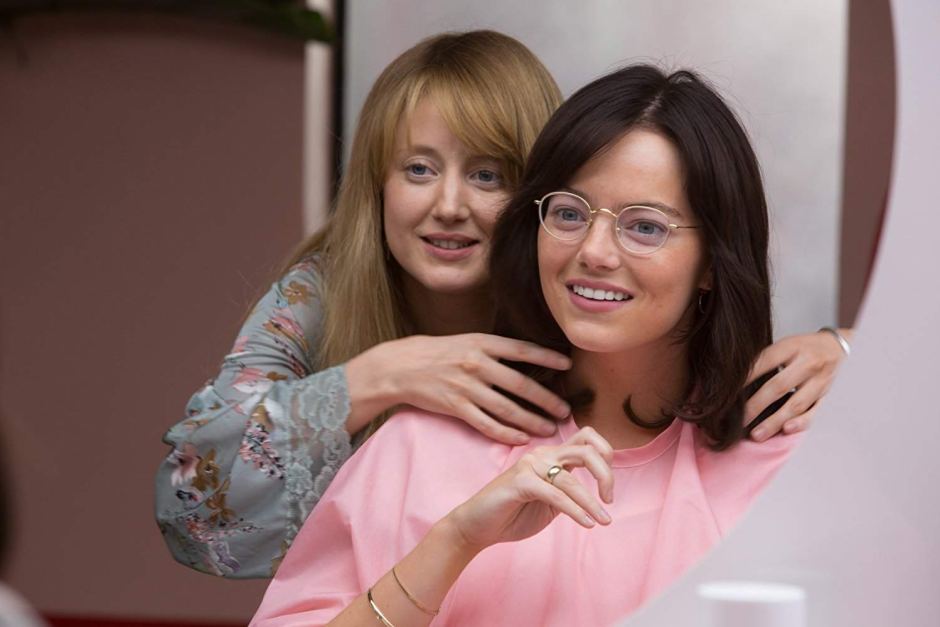 If you accept that you’re being sold a simplified snapshot, Battle of the Sexes is a lot of fun. It has two directors – Valerie Faris and Jonathan Dayton (who made Little Miss Sunshine) – perhaps to prove that, somewhere on this project, the sexes really can collaborate as equals. Of course it's a necessarily rigged story from which no man emerges with much credit. It's hard to give two hoots for Riggs's private anguish. Billie Jean's walk-on husband Larry King (Austin Stowell) is a lantern-jawed dope. Tennis impresario Jack Kramer (Bill Pullman) may as well horns and a curly tail. Even foppish tennis couturier Ted Tinling (Alan Cumming, not quite the full ticket as an English toff) spouts feeble bullet-pointed bromides - “some day we will be free to be who we are” etc.
There’s an awful image of fellow pro Rosie Casals (Natalie Morales, terrific) talking to camera with a tall patronising commentator clamping his hand round the back of her neck as if she’s his chattel. And spot the briefest cameo for that famous Athena poster of the tennis girl hitching up her skirt to reveal nothing underneath. The bare-faced cheek of male chauvinism needed a damn good slap. This fantasy history administers it lightly, with wit and grace.
Overleaf: watch the trailer to Battle of the Sexes

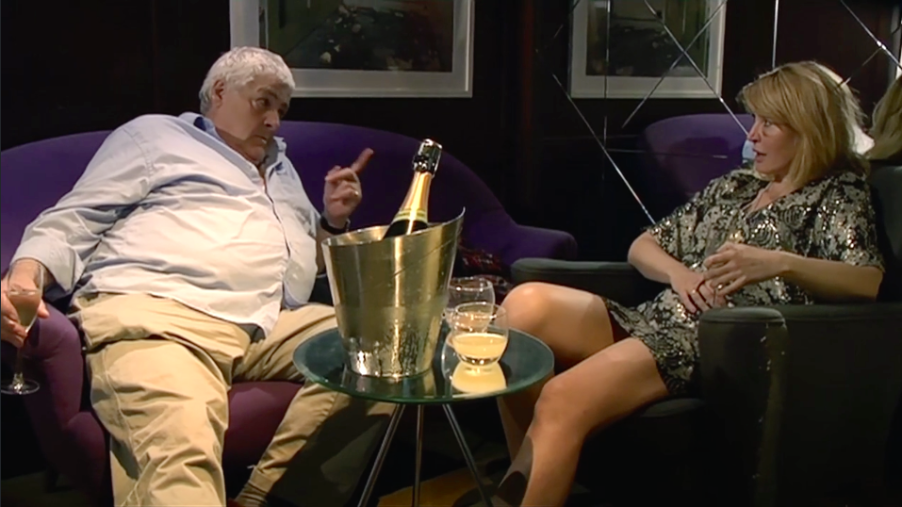 While there's some nice comedy in those episodes, in others there's a dark undertow – such as middle-aged couple (Kerry Fox and Roland Gift), whose marriage won't survive their booze-sodden mutual loathing and resentment; or the break-up between Peter and Susan (Paul McGann and Kate Hardie), who have clearly been at this point in their relationship many times over the years, in that on-off-on-off-again revolving door that so many would recognise.
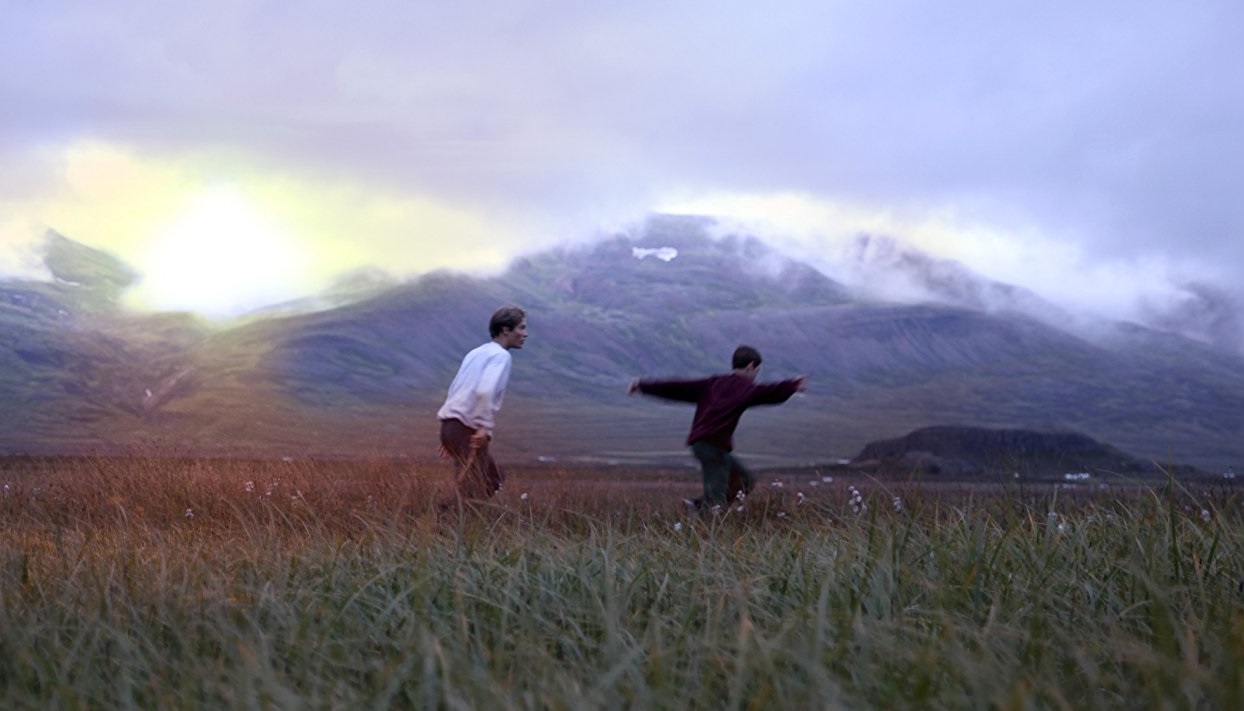 But this is also nature, in the sheer physical sense, at its most impressive (pictured above). The craggy coast around the cluster of houses that makes up the isolated village rises up towards spectacular mountains, which somehow dwarf any human activity with their scale. In summer, as the light stretches around the clock, the beauty is awesome, memorably captured in Norwegian cinematographer Sturla Brandth Grøvlen’s widescreen vistas. But we sense that when winter comes – Heartstone closes as the first dusting of snow falls – the cold isolation of the place will be as complete as the luminous airiness with which it seasonally alternates.
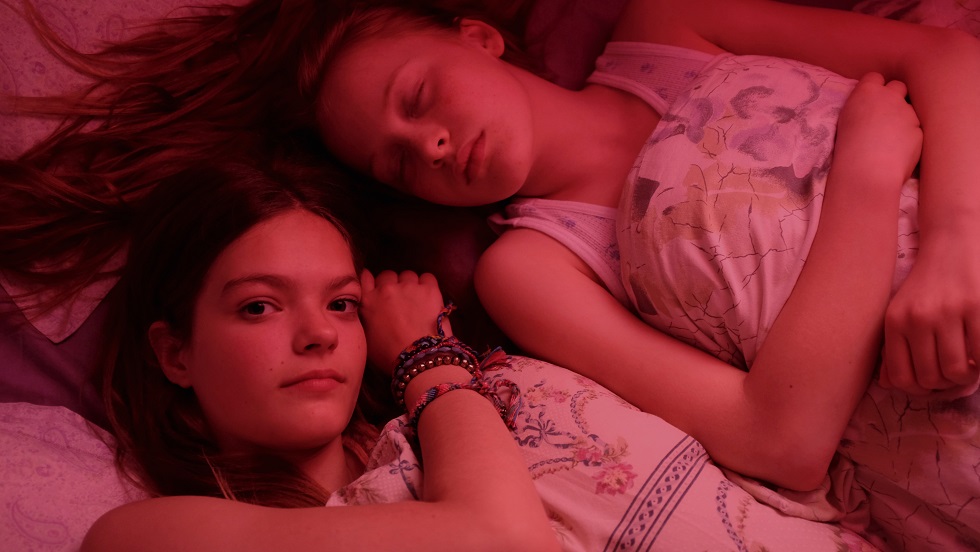 The father has gone off with a younger woman, and any sympathy for their mum's tentative attempts to find someone to date in this backwater is notably lacking. We see what it involves for her when the adults get together for the village-hall dance – a thrash, if ever there was one – and her attention falls on the outsider Sven (Søren Malling, a visitor in every sense: he’s Torben, from Borgen). Nevertheless there’s a sense of tough-love affection in this family unit that is finally reassuring, as well as an element of comedy to the sisters, Hafdis (Ran Ragnarsdottir) particularly; she writes poetry of Plath-like intensity that she reads out at meals.
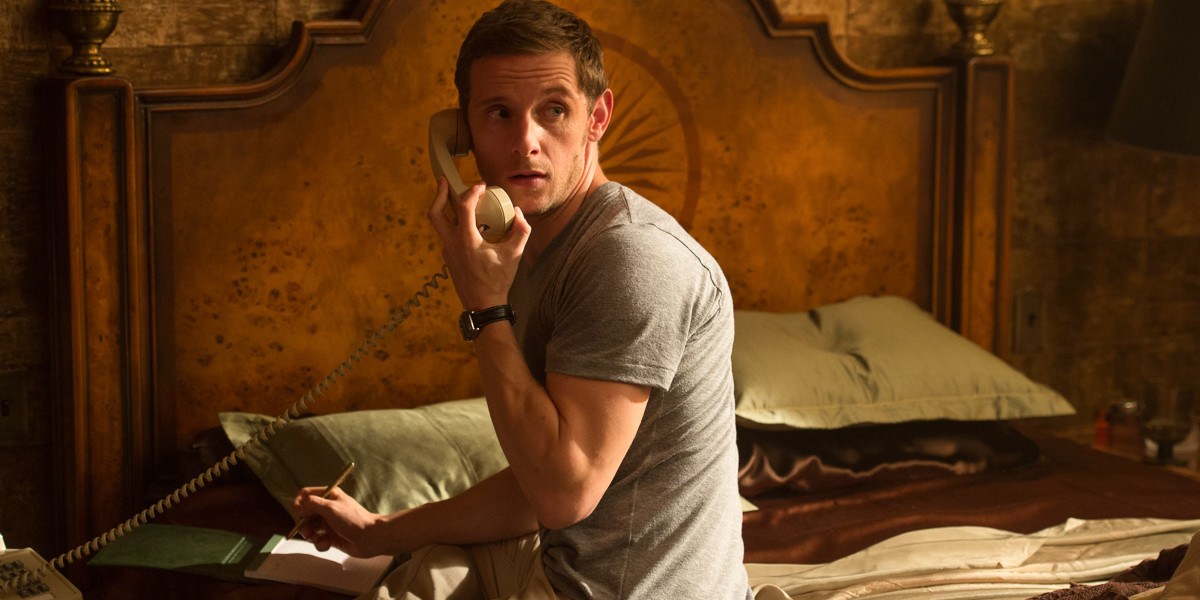 Jamie Bell (pictured above) is charming as the young Turner, a compliant beau with a kind heart, wide shoulders and neat footwork. They meet cute when he channels Tony Manero to help Grahame practise the hustle. It’s fun to see that Billy Elliot still has the moves but it is Bening’s shimmy that breaks your heart. This is her movie and it's aimed at the Academy. She captures Grahame’s breathy voice and sharp wit perfectly; her pleasure in her young lover is clear, as is her wistfulness for the classical stage career she never had. Bening doesn't dodge the lens which highlights her own ageing face and gives a superbly brave performance. I found myself scurrying back to The Grifters, the neo-noir she made in her twenties, where she plays exactly the kind of playful moll that Grahame trademarked in the 1950s.
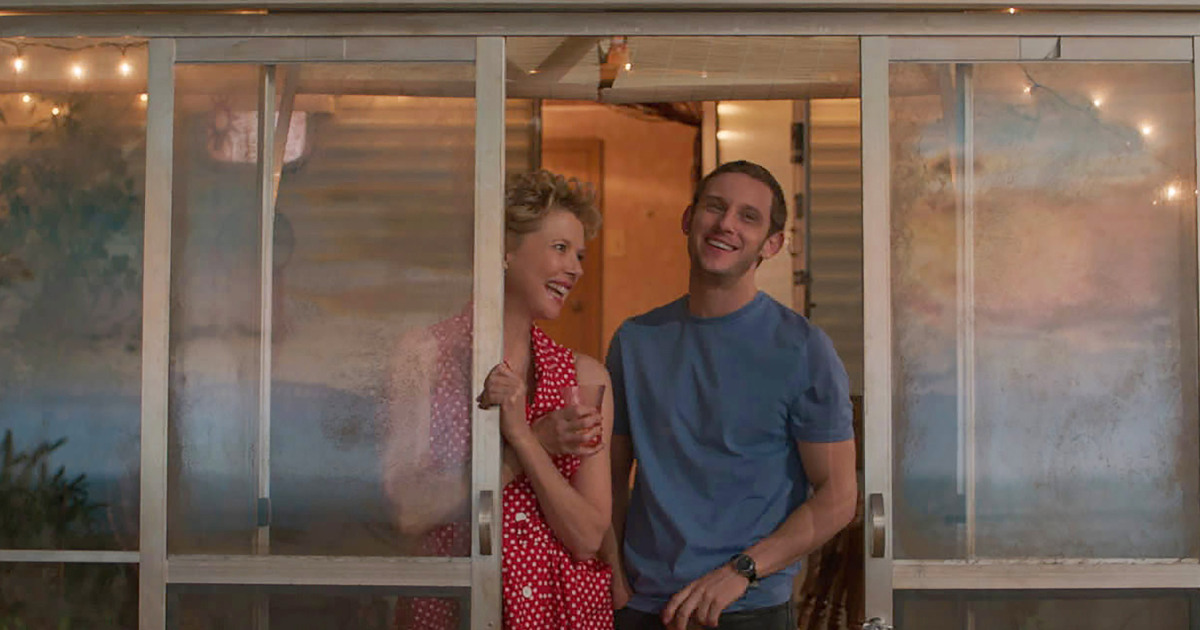 Too many scenes in the kitchen in Liverpool threaten to sink the film into kitchen sink realism; Walters overdoes the loveable tolerant mum act. While I was grateful that there weren’t too many chunks of clunky exposition shoe-horning Grahame’s scandalous marital history into the dialogue, t
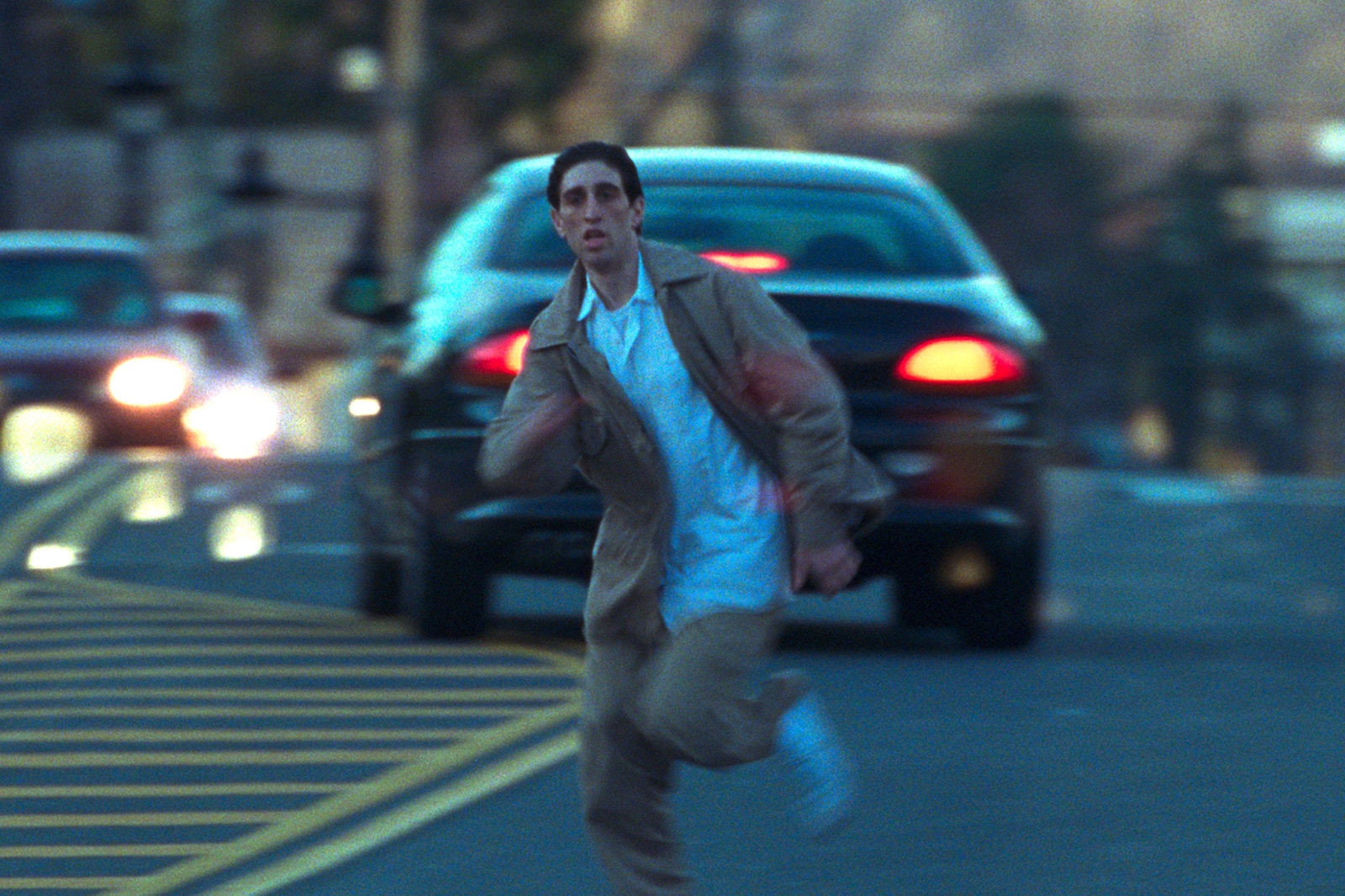 Casting major actors like Robert Pattinson and Jennifer Jason Leigh as his train-wreck girlfriend is a significant step up from the Safdies’ previous film. Heaven Knows What (2014) featured unknown non-professionals as actors playing versions of themselves, homeless heroin addicts trying to get their next fix. Buddy Duress (pictured above) was one of the Safdies' street discoveries and he gets a key role in Good Time.
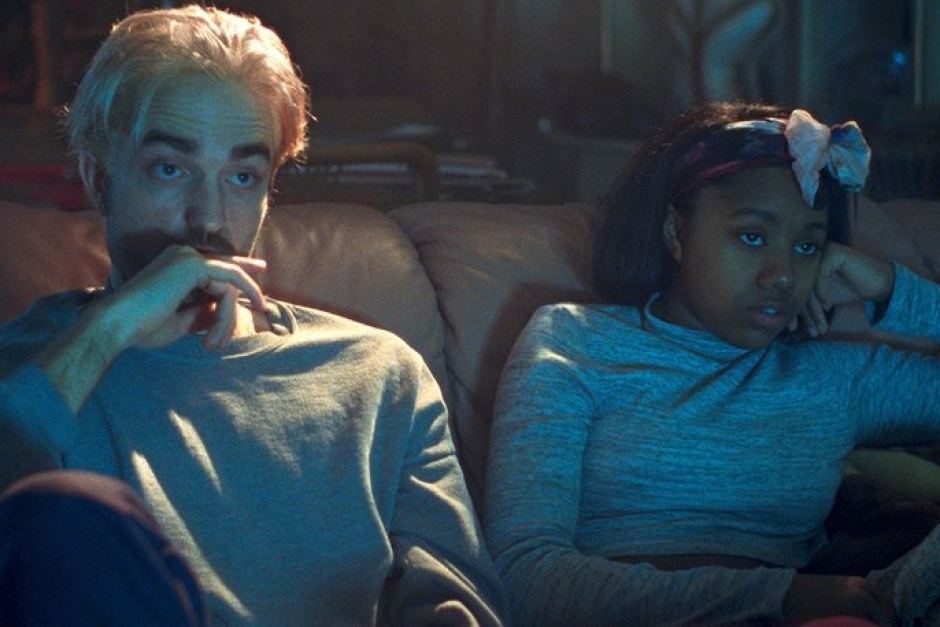 But it’s getting a big star like Robert Pattinson and giving him a dark, meaty role that has amply paid off here. By this point, he's well and truly escaped from the languid vampire of the Twilight films. Connie is a superbly ambiguous character. Is he just an opportunistic thug duping everyone around him, or is he genuinely protective of his disabled brother? Good Time would make an interesting double bill with Rain Man, another tale of brotherly exploitation with a major star choosing to play against type. But unlike Rain Man, there’s very little moral redemption in the Safdies’ nightmarish vision especially in the third act, which includes the ruthless manipulation of an underage girl (Talia Webster, pictured above with Pattinson). All neon and nastiness, Good Time is both exhausting and exhilarating.

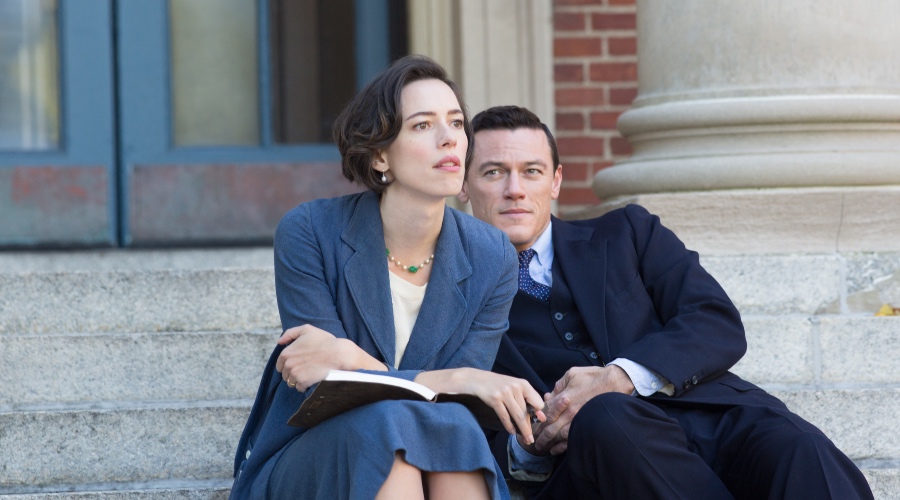 Watching his bravura performance at the lectern throughout is his wife, but Marston's eye is particularly drawn to Olive (Bella Heathcote), a student whose doll-like prettiness (and an aunt and mother who are pioneer feminists) intrigues him. His desire for Olive is briefly thwarted when she demonstrates that she’s more interested in snogging his wife than him, but they soon settle into a scandalous sexy threesome and Marston is forced to leave the university.
 Prettily made with some nifty
