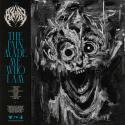
At first, I misread the title of the lead single “Seaforth” from King Krule’s fourth album, Space Heavy, as “Sea Froth”. It felt like a fitting title, combining the watery motif that runs through all of Archy Marshall’s music with a grimy image of frothy, decaying algae. This was after all the same artist whose 2017 album, The Ooz, was named after human gunk.
Whereas King Krule’s past three albums have felt submerged in murky water, “Seaforth”´s jangly riff and the sound of waves on the shore hinted at the nihilistic troubadour from South London coming up for air. On the track, it felt like the clammy anxiety of 2020’s Man Alive! had turned into stoned bliss: “We sat and watched the planet die in urban burn / We sat and smiled with no concern” he sings. As a single it’s a perfect stage setter for Space Heavy – an album about a relationship crumbling set to some of the warmest music Marshall has recorded.
This album feels like Marshall’s most immediately autobiographical. Seaforth, for example, is the name of a seaside town outside of Liverpool, the city where Marshall has been living part time for the past two years, “train to the coast/ 4 hours a week” he deadpans on closing track “Wednesday Overcast”. The album was written on these commutes and orbits around a fractured relationship, opener “Flimsier” begins with an ending: “you called it a day/ and now it’s through”. The word “space” is mulled over in these songs like a sore tooth, almost as if the album was spurred on by a conversation that began with: “I think we need some space”.
With sombre meditations on losing connection, being lost in the vacuum of space and eating a burger by yourself in a park, Space Heavy is King Krule’s least abrasive album. There are still moments of dingy post-punk and wheezing saxophone on “Hamburgerphobia” and “Pink Shell”, but on a majority of these songs Marshall strums his guitar with a new lightness, the warm tone shimmers like a Cocteau Twins song. On “That is my life, That is yours” and “Flimsy” he grazes around a pleasant C major chord.
Archy Marshall is a master of texture and collage, which he has used to paint visceral, grimy portraits with on his previous three albums – On Space Heavy it is fascinating hearing him work with a warmer palette, even though the end result is not quite as richly coloured in.