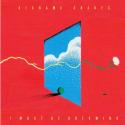
In 2011 the BBC aired Wonders of the Universe, a documentary presented by physicist Brian Cox about the origins of the universe divided into four parts: “Destiny”, “Stardust”, “Falling” and “Messengers”. These episodes could easily have been titles of songs on Sampha’s remarkable new album, Lahai, which is similarly concerned with the cosmos – but in a deeply personal way.
Since emerging from London’s left-field indie electronic scene in the 2010s, Sampha has become a sought-after collaborator. It’s as if his emotionally baring lyrics and bruised falsetto grants access to buried emotions for whoever he works with, whether that’s Drake, Kanye West, Solange or FKA Twigs. In 2017 he decided to step into the spotlight with his debut Process, a cathartic, introspective collection of songs framed by the death of his mother in 2015.
On Lahai, Sampha returns to delve into a similarly complicated topic: the cosmic passing of time and our inability to control it. In the BBC documentary (that Sampha has said was important for the album) Cox discusses entropy, and how this in theory makes time-travel backwards impossible. The concept haunts Sampha and on “Can’t Go Back” the phrase is interjected repeatedly over an agitated beat. He understands that “time will catch you”, as he sings on “Spirit 2.0”. But this knowledge of mortality coexists with something more hopeful: “Maybe there’s no ends, maybe just infinity” he sings on “Satellite Business”, as arpeggios from a retro-synth twinkle like stars.
Just as Process offered music as catharsis for grief, on Lahai, music acts as a respite from these cosmic truths. Here Sampha travels through space and time with ease. Here the skittery snares of Nineties jungle and IDM merge with elegant arrangements evoking the classical minimalism of Steve Reich. There are funky basslines, spoken word interludes in French and Korean, glitchy electronics and textures of West African Wassoulou – all held together by his beloved piano.
While loss lingers on the periphery, there is an intoxicating, wide-eyed, vivaciousness to Lahai. The scope may feel impossibly large, but at only 38 minutes, Sampha bends time and space to fit a lifetime of ideas into 14 songs. It’s nothing short of a miracle.