And so Dylan’s tour of European theatres, opera houses and concert halls ended on Thursday night at the Royal Albert Hall, his first dates here in 46 years. I’ve seen him plenty of times over the past 30 years. This was the best of them. Dylan’s found a way to use his voice again, and his group is so nuanced to its needs, it’s a pure pleasure to hear. Charlie Sexton plays a warm and refined lead, not rock'n'roll at all, and there’s a quiet glow between all the players; it’s as if they’re facing the same way, looking at the same colours.
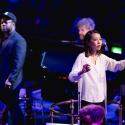
Appropriately, "Things Have Changed" opens it up as the stage lights – relics from a film noir set – glimmer over the six dimly silhouetted figures. It’s theatrical, and the flow of the lyrics – through "She Belongs to Me", with Dylan keening the long vowels, "Beyond Here Lies Nothing" and "What Good Am I?" – bring you up close and personal to the drama of those songs.
It’s the night’s cathartic release, executed simply, cleanly, powerfully
"What Good Am I" has him lead on piano, and he’s expressive, in direct contact with the regret and cool inevitability in that song. "Duquesne Whistle" is cinematic, a cheery, jerky overture to the Iron Age, Steam Age and Golden Age songs from Tempest. There’s a powerful articulation of "Pay in Blood", with an arrangement better than the record. "Tangled Up in Blue" is magnificent, with an interesting new verse, and the first set’s closer, "Love Sick", unwinds its maladies on one striking chord and some fine harmonica, Dylan playing it more expressively than he has in years.
After the interval there’s a compelling "High Water", the mandolin scurrying behind those lines of dread and survival. "Simple Twist of Fate" is gorgeous, Dylan hunched over the piano, the one low stage light at the front pointed to the band like a cannon. There’s a couple of new lines before the instrumental break I can’t quite catch.
"Early Roman Kings", a great Tempest song, as big as a tapestry, scrambles its inexorable mythology with street gang patois and Muddy Waters riffs. It sticks out like an Iron-Age crown between "Simple Twist of Fate" and a gorgeous "Forgetful Heart", one of his great late-night songs. “The door has closed for ever more, if indeed there ever was a door…” You can’t knock lines like that with a stick, and that’s when pretty well everyone in the hall rises up because you really feel it, that Dylan feels it, too, as he’s doing it, rather than just passing it by, as he has done so often. There’s been a transmission.
"Scarlet Town", drawn from "Barbara Allen", a song you would have heard in the London of Pepys, plague and fire, is transfixing. "Soon After Midnight" is played out in almost complete darkness, against a blurred starry projection on the curtain below the Choir. "Long and Wasted Years" is a stand-out track on Tempest, and it’s the night’s cathartic release, executed simply, cleanly, powerfully, and raising the hall to its feet once again.
The encores are a quiet, contained "All Along the Watchtower", and "Blowin' in the Wind" opens with a peeling, curling harmonica, the rind of the tune shedding its skin. And then it’s over, the ovation a roar. Dylan strokes a few outstretched hands at the foot of the stage, bends his knee to his audience and steps back to the band, and they stand there like a gang, no smiles, no bow, no movement. Like stills. It would be great if they started laughing like gangs in spaghetti Westerns do; like a lot of things in life, that’s just not going to happen.