Reviewing The Clash’s 27 October 1976 appearance at Birmingham’s Barbarella’s, UK music weekly Sounds detected a particular, unique, characteristic of the band. Jonh (sic) Ingham identified “a Clash trick of everything dropping out except for Mick Jones' guitar, dropping back in two bars later behind a thundering crack from Terry Chimes' baseball bat sized drumsticks.”
The drop-out was a feature of dub, the form of studio-created reggae which emerged in the early Seventies. Music historian David Katz has pointed to “Ivan Itler the Conqueror,” a 1970 single side credited to Bunny Lee Allstars, as the first record with dub’s distinctive sonic manipulation: where instruments and vocals recorded for the standard version of a track would be manipulated and/or removed, often leaving the barest musical skeleton. Effects like delay, echo, phasing, pitch-shifting and reverb would be added. Frequencies would be altered. The technical hands guiding “Ivan Itler the Conqueror” were King Tubby’s. Whole albums dedicated to dub versions began emerging in 1972.
In summer 1976, when The Clash were getting off the ground, the UK’s big dub album was Super Ape, issued by Island Records in the UK and US that August. Credited to The Upsetters, its arranger, engineer and producer was Lee Perry, who also contributed percussion.
For the early Clash, the dub-style drop-out was most overt in “How Can I Understand the Flies,” ditched from their live set by December 1976 and never recorded in the studio. There were sections where the guitars dropped out, leaving the drums to carry everything.
More evident confirmation of The Clash’s penchant for dub arrived when their first album came out in April 1977. It included a version of Junior Murvin’s “Police and Thieves.” Effects on the vocals and guitar were influenced by dub. The original of “Police and Thieves” was first out as a single in Jamaica in May 1976 as “Police and Thief.” Island released it in the UK with a slightly altered title a month later. Its flip was a dub version of the top side. The single was engineered and produced by the ubiquitous Lee Perry, who co-wrote the song. Perry became the producer of The Clash’s September 1977 “Complete Control” single – what came out toned down what Perry had come up with, yet the dub influence was still in there.
Of the early UK punks, The Clash were not alone in showing their interest in dub. When the then Johnny Rotten was the subject of The Punk and his Music show on London’s Capitol Radio on 16 July 1977, one of his choices was the title track of the 1976 Augustus Pablo/King Tubby album King Tubby Meets Rockers Uptown. As constantly reiterated in punk chronicles, Don Letts was playing reggae – including dub – in his role as DJ as Covent Garden’s prime punk dump The Roxy. Out in the wider world, John Peel’s radio show had already, and often, featured reggae
For Brit-punk, by incorporating aspects of dub into their music, The Clash got there first. They set the agenda. Others hopped on board. The November 1977 Generation X B-side "Wild Dub" was a clunky version of top side “Wild Youth,” and more like David Essex’s “Rock on” than dub. A more interesting punk-dub collision happened in March 1978 with the release of Alternative TV’s “Life After Dub,” a track which had been completed in October 1977.
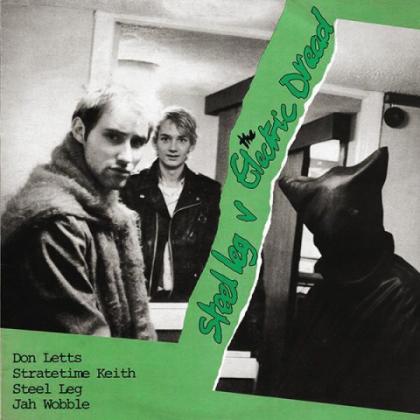
After Sex Pistols fell apart, it was no surprise that long-time reggae fan John Lydon’s new band Public Image Ltd. assimilated a dub element. Their debut single, October 1978’s “Public Image,” kicked off with a dub-styled intro. The band’s members Keith Levene and Jah Wobble went further by swiftly following that up in December 1978 with the “Steel Leg Vs. The Electric Dread” EP (the titular dread was Don Letts), which featured two remarkable, full-on dub workouts. For now, Public Image Ltd. did not go that far.
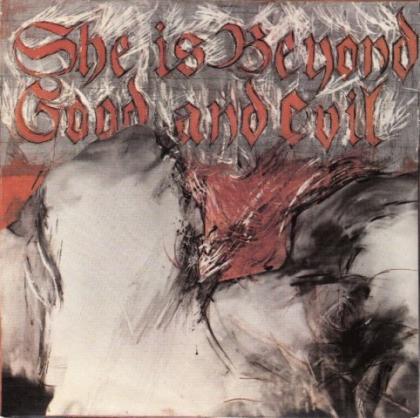
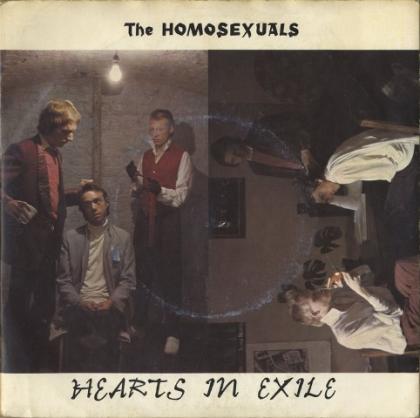
Then, in March 1979, two extraordinary, radical, visionary singles were released. Both seamlessly incorporated the dub experience into the totality of what was recorded. This was new. One was The Pop Group’s “She is Beyond Good and Evil,” produced by UK reggae lynchpin Dennis Bovell. The other was The Homosexuals’ astounding “Hearts in Exile.” Of it, in his Melody Maker review, Jon Savage noted “after a few plays you realise they are messing around with dubbage.” With these records, some of those inspired by British punk – what would be tagged post-punk – had entirely assimilated dub into its essence. Just how much so was confirmed by Section 25’s Ian Curtis-produced July 1980 debut single “Girls Don't Count,” which had dub-style bass-guitar patterns.
Such is a story of UK punk, post-punk and dub.
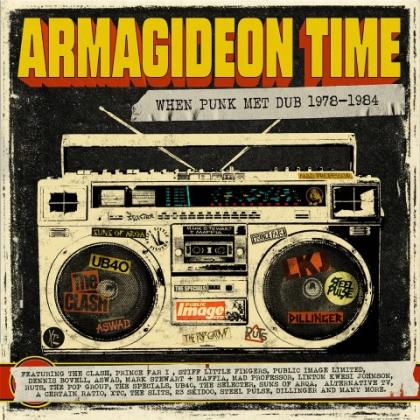
Armagideon Time - When Punk Met Dub 1978-1984 is a three-CD clamshell box set which takes a different tack. It has to, as it is the follow-up set to 2024's similarly packaged Roots Rock Rebels - When Punk Met Reggae 1975-1982. That set included The Clash’s “Police and Thieves,” Generation X ‘s “Wild Dub,” along with a post-fact alternate mix version of The Pop Group’s “She is Beyond Good and Evil,” so they cannot (quite – there is a sleight of hand with “She is Beyond Good and Evil”) crop up on Armagideon Time, which is given its title by including The Clash's version of the Willie Williams’ track.
Alternative TV’s “Life After Dub” is on the new release though, as is the originally released version of “She is Beyond Good and Evil.” What’s not here includes The Homosexuals’ ”Hearts in Exile” and something from the important “Steel Leg Vs. The Electric Dread” EP, which featured the UK’s first punk-related dub-as-such tracks. The latter omission is curious as Jah Wobble has written the introduction for the package’s booklet.
Armagideon Time, is therefore, unable to tell the story it seeks to tell due to fundamental tracks such as "Wild Dub" and The Clash’s “Police and Thieves” having been included on its predecessor set and by missing other central tracks. Also, does anyone want to hear stabs at dub credited to Bad Manners, The Boomtown Rats, Electric Chairs, Max Splodge or Thompson Twins (the latter hardly, as per the set’s title, punk)? The point would be made by collecting one such bandwagon-jumping curio.
Nonetheless, there is a lot of great, relevant stuff collected on Armagideon Time. Such as The Flying Lizards’ “Crab Claw,” The Jam’s “Pop Art Poem,” Red Beat’s “Machines in Motion,” The Ruts’ “Love in Vain,” The Slits’ “Newtown” and XTC’s “Super Tuff.” It is mildly intriguing to hear – just-once, that is – ill-conceived nonsense such as The Boomtown Rats' horrible dub version of “House on Fire.”
Still, despite its nice packaging and presentation, it is impossible to escape the impression that Armagideon Time - When Punk Met Dub 1978-1984 does not achieve its self-defined objective. Give it a go. But there is more to the story.
- Next week: the return of minimalist drone-maestro Eleh's debut album Floating Frequencies / Intuitive Synthesis I
- More reissue reviews on theartsdesk
- Kieron Tyler’s website