The Bull And The Lion was originally released in 1976 by Jo'burg, a South African label which opened-up for business in 1973 with a couple of singles and the first album by black singer Margaret Singana. Her debut LP was titled Lady Africa. The same year, the imprint issued the second single by Rabbitt, a white pop-rock band whose guitarist Trevor Rabin became internationally known when he played with Manfred Mann and then joined Yes.
Jo'burg, it seems, was not bound by genre limitations and the strictures of working within Apartheid-era South Africa. After 1973, Singana and Rabbitt remained the label’s mainstays but, in 1975, the imprint released Mike Makhalemele’s The Peacemaker album. Makhalemele (1938–2000) was a tenor sax player who had been active from the mid Sixties. In 1986, he was heard on Paul Simon’s Graceland album. The Boyoyo Boys, his Seventies and Eighties band, issued a single titled "Puleng" in 1975. Eight years later, Malcolm McLaren reconfigured it – under his own name – as “Double Dutch.”
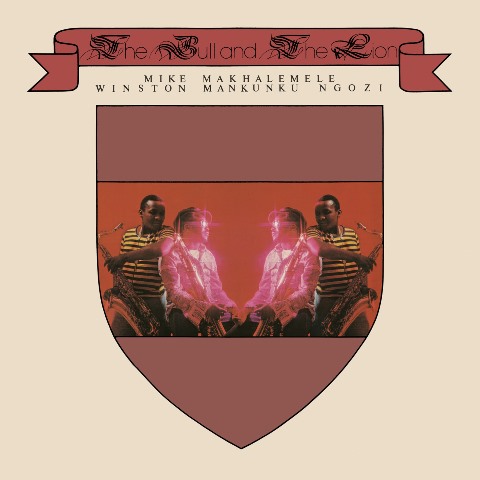 For Jo'burg, Makhalemele’s next album was The Bull And The Lion. On the three-track LP (two on Side One, one on Side Two), he was billed with Winston “Mankunku” Ngozi (1943–2009), a tenor player who emerged a little later and was then in soul-inclined jazzers The Cliffs, whose Alex Express album was released by Jo’Burg in 1975.
On The Bull And The Lion, Makhalemele and Ngozi were backed by three-quarters of Rabbitt. While it was an inter-generational partnership, it was also – in Jo'burg style – a finger in eye to Apartheid: black musicians were in the studio with members of a white band. The Bull And The Lion was recorded at the Satbel Music Recording Studios, a state-of-the-art facility which opened in Johannesburg in 1975.
From a commercial perspective, teaming-up two known jazz players with members of a successful pop-rock band in a top-notch studio meant The Bull And The Lion was designed to be noticed. Nonetheless, original 1976 pressings do not often come up for sale and fetch around £150. Now, it is reissued.
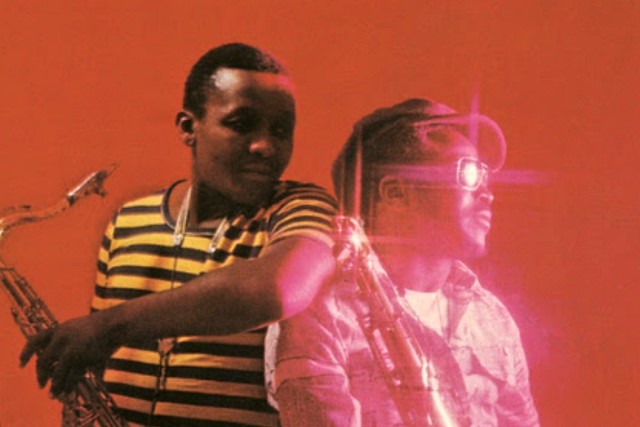 Side One is taken up by two tracks: the 8 minutes, 35 seconds “Togetherness” and “Snowfall” (05.35). On Side Two, it’s “Rainyday” (14:18). Side One’s pair of tracks are credited to Makhalemele. “Rainyday” is credited to Ngozi (as Mankunku). As Makhalemele is heard on Side One only and Ngozi is on Side Two only, The Bull And The Lion is not a collaboration between them. Instead, it is collaboration between each sax player and the members of Rabbitt.
The Bull And The Lion is – as its backstory confirms – a crossover album. Rabin’s guitar leans throughout towards the funky, and he uses a wah-wah pedal. Tete Mbambisa – a South African jazz lynchpin since the early Sixties – guests on piano, which is more about adding feel and mood than taking the lead even when he contributes a lengthy passage to “Togetherness” (the player of the organ heard on Side Two receives no credit). Mostly, the other musicians are there to provide a bed for Makhalemele and Ngozi. The latter’s lengthy solo on “Rainyday” edges into John Coltrane territory but the flight is restrained: it feels as if the playing consciously aims for a pleasing smoothness. Makhalemele’s two Side One showcases, though, are more percussive and, like his band The Cliffs, lean towards soul – even when he’s letting rip during “Togetherness.” For “Snowfall” he dominates, setting the pace for the groove running through the track.
Makhalemele and Ngozi did not appear on the same record again until they were amongst those heard on 1995’s African Summit album. Presumably, in 1976, they and their label Jo'burg found that The Bull And The Lion did not have the hoped-for impact. If this is the case, it’s a pity as an album which disregarded Apartheid to bridge the barriers between jazz and rock players was significant. After too long, its importance can now be appreciated.
- Next week: The Long Ryders' Native Sons becomes a box set
- More reissue reviews on theartsdesk
- Kieron Tyler’s website