As the Middle East continues to fragment in hate and horror, a tragic unfolding of events with roots reaching back to the middle of the last century, any sign of love and deeply felt collaboration provides a welcome beacon, and signals the possibility of understanding and reconciliation.
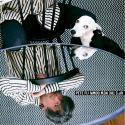
Ana Silvera (pictured below), a British Sephardi Jew with family from Izmir and Aleppo, sings songs from the Ladino tradition, the culture that accompanied the Jews who were expelled from Spain and Portugal at the end of the 15th Century. Saied Silbak (pictured below, right), a Palestinian oud player, draws on Arabic material from Lebanon, Syria and Egypt. The evening they present weaves its way subtly between crossing the apparent divide, finding the common ground that should hold Jews and Palestinians together, and evoking the uniqueness of two regional genres that have grown side-by-side with their own character and feel.
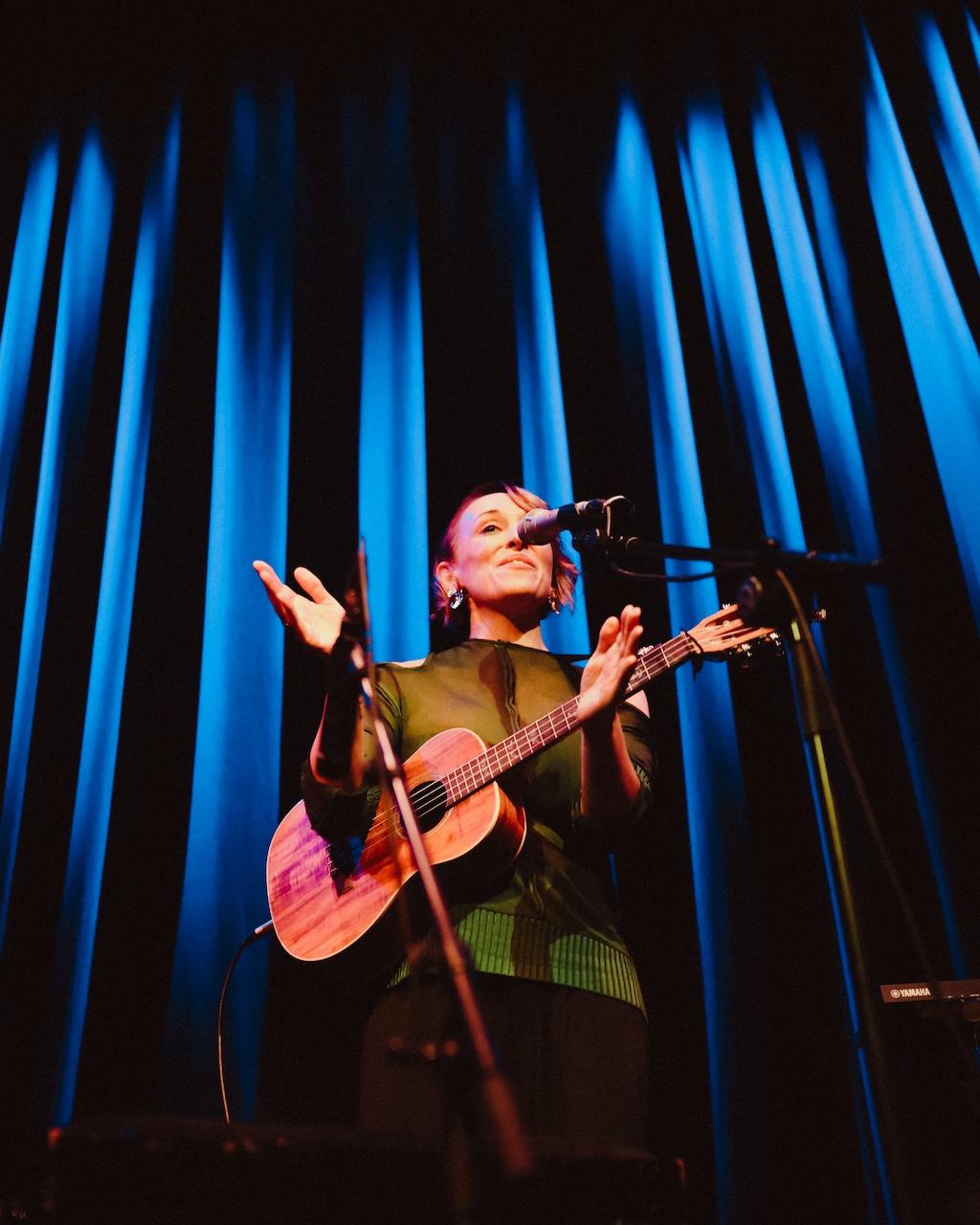 They wisely avoid slogans or agitprop, as this would draw them into the ill-fated territory of division and conflict. Their very presence on stage, and the harmony that binds them, are enough of a statement, a declaration of love and of humanity. They are not naïve, they just manage to be themselves, aspiring to the possibility of sharing rather and fighting.
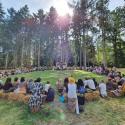
Silvera and Silbak first crossed my path at Jaminaround, the marvellously eclectic twice-yearly day festival in Dorset, curated with a rare nose for talent by Olly Keen. I was struck by Silvera and Silbak then: the delicacy of their interaction; the ability to listen to each other, and to make music that most naturally creates a bridge between two deep souls, as well as between two cultures that are generally perceived as having irreconcilable differences. Their quasi-magical complicity and exemplary complementarity were evident from the start, soon after they found themselves and a taste for playing and singing together.
Now they are Songs We Carry and the same qualities shine as ever. The only difference is that they do it better. A greater confidence and fluency, but without ever resorting to theatrical tropes or crowd-pleasing clichés. It still feels as if they'd invited us into their living room, with sweet hesitation rather than bravado, and all of this still fresh after a tour of Scandinavia.
It never feels too smooth, and yet their voices blend beautifully – Silvera’s crystalline soprano ranging with ease to sensual mezzo, and Silbak a distinctly male counterpart, albeit with a warm sensitivity devoid of the slightness hint of machismo. The Ladino and Arabic songs both trade on note-bending and melisma -that way of stretching a note beyond well-tempered tones, touching the heart with longing and melancholia.
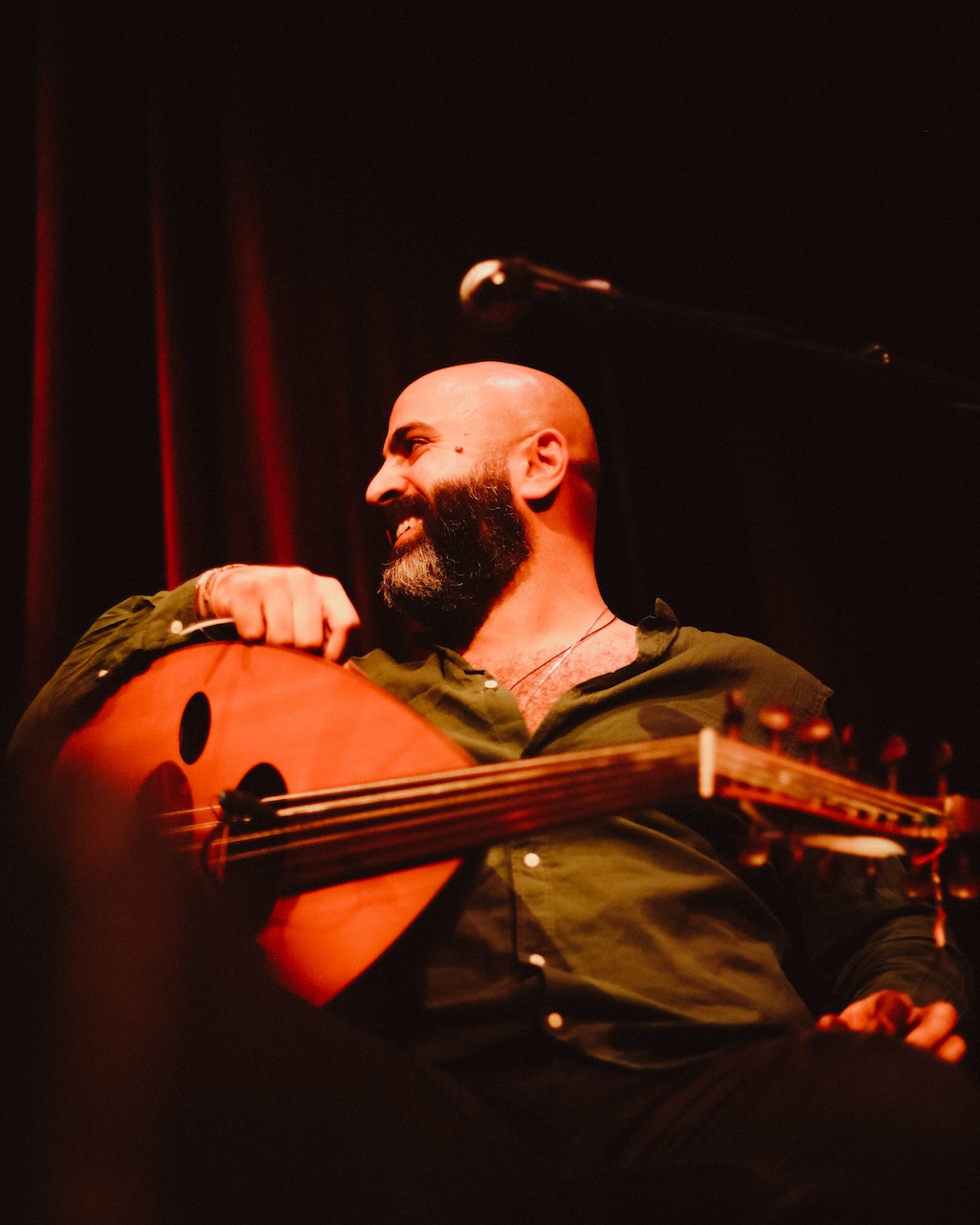 At first, I was sceptical of Silvera’s piano accompaniment for some of the Arabic material, as on the instrumental duo “Arjii”, with Silbak plucking his oud with a passion stripped of virtuosic showing-off. And yet, as Silvera has a versatile musician’s ear – and listens – I found her textural interventions well-judged, the keyboard’s gentle tone providing a foil to the arabesques of the lute.
There were songs of love and songs of rejoicing. Apart from a poignant yet modest composition from Silbak, “Voices of Gaza”, a muted and yet heart-rending plea from the deep, the show was distinguished by evocations of amorous longing, the enjoyment of beauty and the grace of sunshine. What better way, it seemed, to celebrate the joyful illumination that miraculously co-exists with – and survives – the greatest human tragedy.