

“Take your pick. Who shall we talk to first?” DI Alec Hardy (David Tennant) and DS Miller (Olivia Colman) had their three prime suspects waiting for them in custody. The fact that none of them proved to be the guilty party was what was wrong not only with their investigation but with the construction of the third and final series of the dramatically serious, but seriously uneven, Broadchurch (ITV).
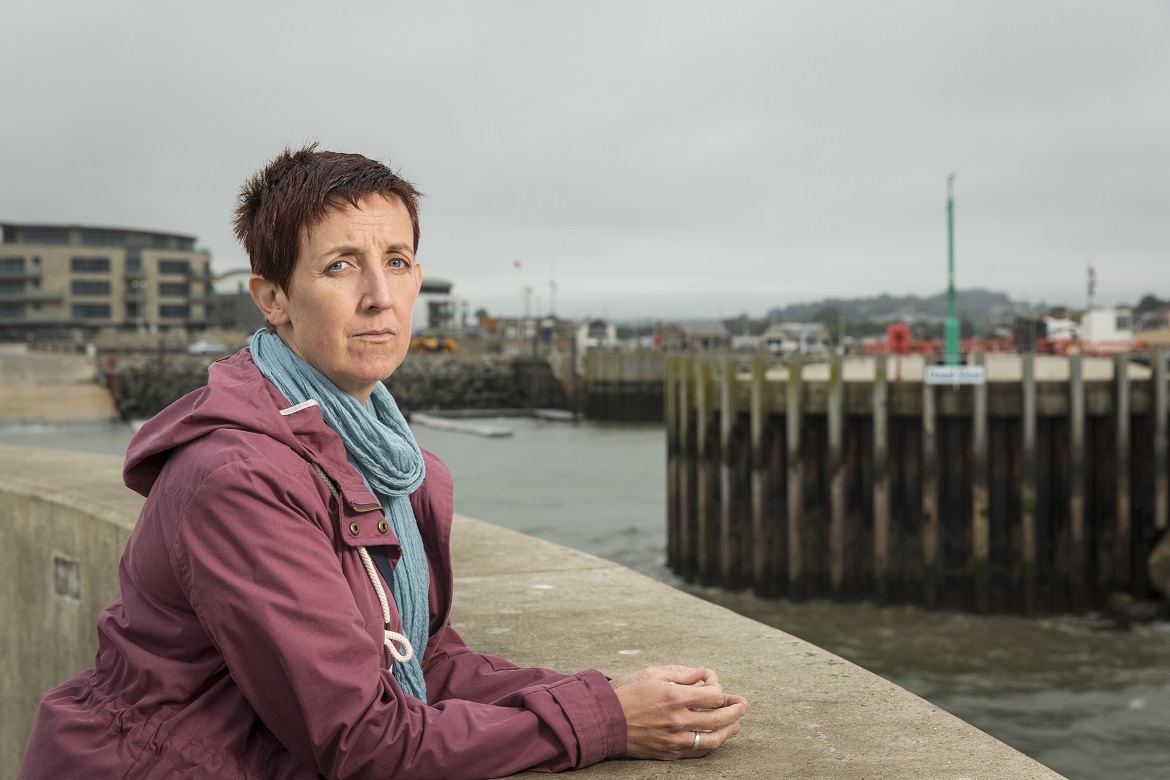
On the absolute plus side was the handling of the subject matter. Following extensive consultation and research with women’s organisations and other bodies working in the area of rape, the production carefully and responsibly depicted “best practice” in terms of what happens when a woman reports rape to the police. Furthermore, in stark contradiction to much contemporary drama (The Fall, anyone?) the result was the depiction of an upsetting scenario that achieved power by the decision not to show and dwell upon the violence and violation, but by focusing instead on the effect on the victim via the superbly calibrated performance of Julie Hesmondhalgh as wounded and baffled Trish Winterman (pictured below).
 Tennant and Colman continued displaying their considerable acting chops, too. Their amusingly brusque double-act swiftly darkened into cold rage, vocalised with savage, bitter clarity by Tennant and shown in astonishingly expressive reaction shots from Colman as she faced the helpfully lucid and conveniently explanatory self-justifications of the psychopath finally revealed to be the ringleader.
Leaving aside the multiple implausibilities of series two, not least the shoehorning in of Hardy’s crucial backstory that had previously never been referred to, we knew writer/creator Chris Chibnall had the potential to deliver the goods overall. After all, he had done such a memorable job of holding viewers through the intense slow burn in the surprise hit that was series one. From the toneless melancholy of Ólafur Arnalds’ sub-The Bridge theme tune onwards, it was clear that he was aiming for “scandi-noir in Dorset”. That, and the steady progression from one suspect to the next in the manner created and perfected by The Killing.
Whodunnits work via the withholding of information. Series one worked so well because its drip-drip reveal of secrets and lies unearthed more and more about links between characters. That simultaneously took us ever closer to the killer while constantly deepening our understanding of an entire community. This time out, the more even-handed handing out of suitably suspicious behaviour and lies only served to isolate characters with whom we had little connection. The nadir was the sequence near the close of the penultimate episode where all the key suspects were shown in a shameless summary montage.
 Worse, having been teased by our witnessing of each of the suspects being grilled, having the perpetrator revealed as the one person who had never been a suspect was irritatingly dissatisfying. If you cannot work out whodunnit from the evidence before you, it feels like cheating. At moments like that it was hard not to recall theartdesk review four years ago which observed after the closing caption announcing the show’s return: “Surely they’re not teeing it up as Midsomer Murders-on-Sea?” Yet would Midsomer stretch credulity to the point where a woman at the rank of Detective Constable, ie no rookie, would potentially wreck a case by not thinking to mention that (nicely subdued) Lenny Henry's character was her father?
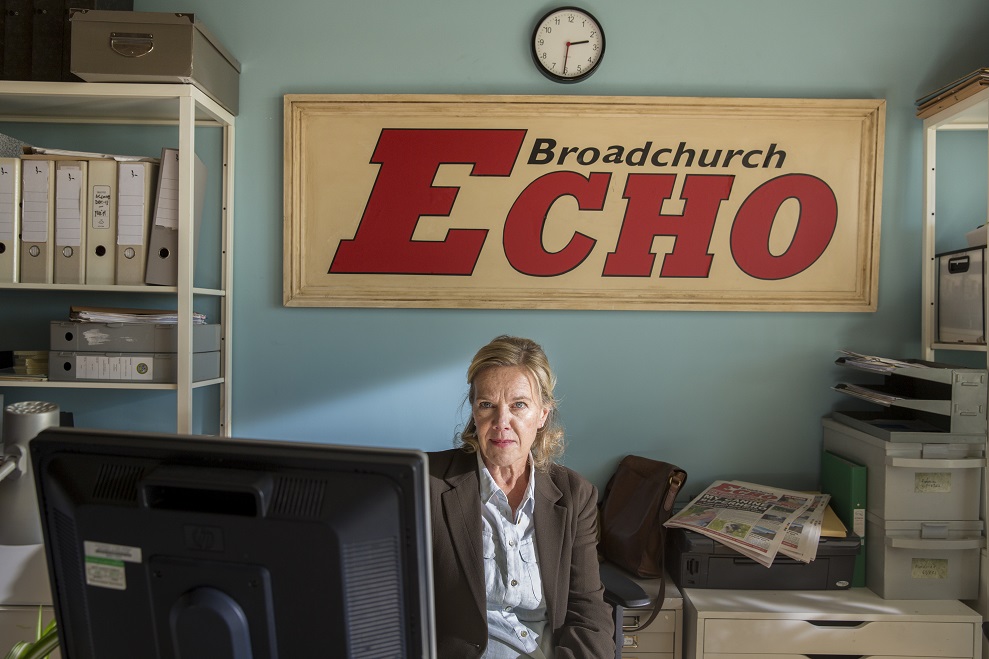
Moreover, this was Midsomer with more on its mind, mostly the tying-up of loose ends of every other character. Jodie Whittaker and Andrew Buchan continued to impress as parents struggling with the aftermath of the death of their son. But even Carolyn Pickles (pictured above) and Mariah Gale couldn’t humanise horribly flat exposition in wholly unnecessary scenes between local editor Maggie Radcliffe and her heartless young boss Caroline. The writing for them was so schematic Chibnall could sell their scenes off separately as “An Introduction to the Dreadful State of Journalism”.
Fans sorry to see the series go will have lapped up the sentimental succession of false endings where we effectively waved goodbye to each and every character. With Chibnall heading off to be showrunner of Doctor Who, Broadchurch is definitely no more. It’s a shame the grand finale failed to match the strength of this last series’ affecting opening episodes.






Add comment