

It’s at times like this that I give thanks for the Proms. Who else would (or could) have put together a programme pairing Berlioz’s Symphonie Fantastique with an 18th-century sonic fantasy, or topped it off with a substantial UK premiere? A bit bonkers on the page, it remained so in performance. But the dramatic logic was absolutely sound; forget a stroll in the Swiss Alps or on Italian hillsides, these were musical journeys of a more primal kind, tugging at the thread of the human psyche and following it down to its darkest depths.
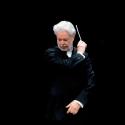
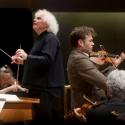
Hell, according to a certain French authority, may be “other people”, but chaos according to Jean-Féry Rebel is a musical fist-fight refereed by shrill-voiced flutes. The astonishing opening movement to his Les élémens still arrests and assaults nearly 300 years after its composition, but perhaps more the latter in this performance by the contemporary instruments of the BBCSO.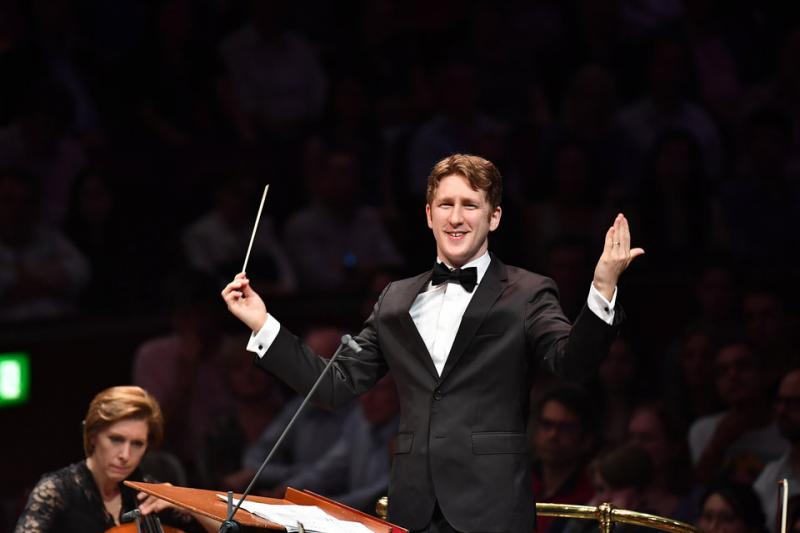 To bookend a concert with this and Berlioz’s own hellish vision of a Witches’ Sabbath is neat, but to borrow the colours of the latter and introduce a piccolo, ringing siren-like (and not the Odysseus kind) out over the band, rather than Rebel’s own flutes seems an updating too far, especially when intonation was less than unanimous. The effect, under the precise direction of Joshua Weilerstein (pictured above), was certainly disorienting, but I couldn’t help wishing he’d gone the full Leppard and used the entire orchestra to swell this provocative statement, rather than a period-sized band, slightly apologetic in such a space.
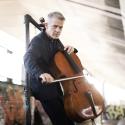
But such small forces made for a striking contrast to Pascal Dusapin’s Outscape – a single-movement concerto for cello and orchestra, composed for Proms soloist Alisa Weilerstein (pictured below). Unfolding in measured, ruminative episodes, the work sets aside any notion of opposition between soloist and orchestra, taking them both instead on an exploratory wander through some craggy sonic landscapes.
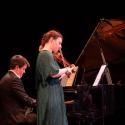
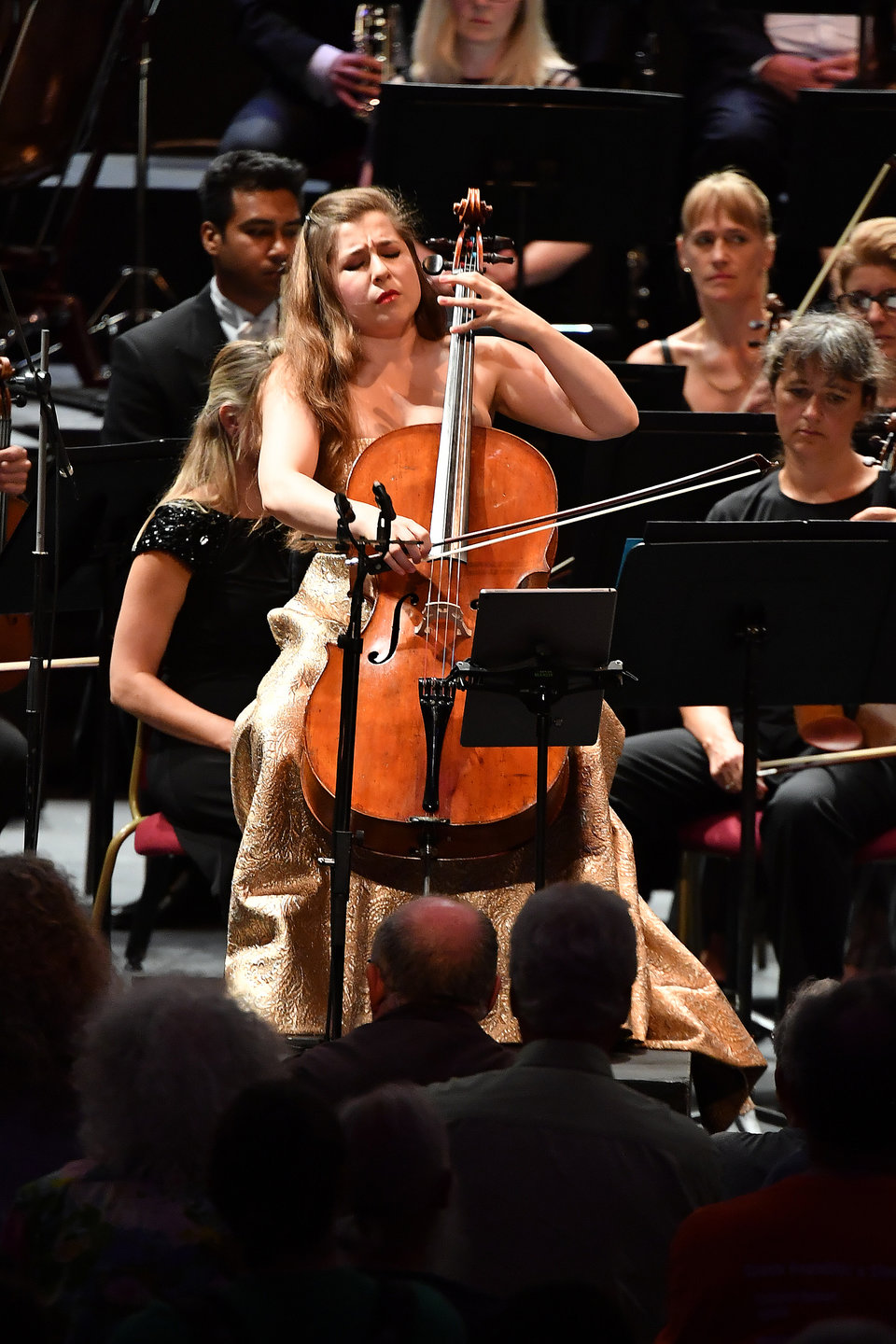 Weilerstein’s solo cello opens as a sorcerer, summoning a ghostly bass clarinet with a low-voiced incantation, drawing the bass drum in too as accompaniment to their ritual. This spare texture sets the tone for orchestration that is consistently precise, picking a series of chamber ensembles out from within the body of the orchestra. Such austere beauty and control plays a building like the Royal Albert Hall perfectly, drawing listeners in to pick out the sounds that shift and grumble – dark, coagulated woodwind and brass flecked bright with flutes – underneath the sustained cantilena of the cello. Playing with rhetorical clarity, content to ride the gentler waves of this concerto rather than fight it for glory, Weilerstein held us in thrall to Dusapin’s story. His is a tale I’d be keen to hear again. That it was followed by a switch from baton to bow for Joshua Weilerstein and a glimpse into the Weilerstein family living-room for a brother-sister bit of Bartok was a bonus.
If Rebel’s Les élémens moves from chaos to gilded order, then Berlioz’s Symphonie Fantastique reverses the journey. Playing the long game, Joshua Weilerstein gave us another controlled performance, deferring release, refusing to lose its grip on sanity and order for almost impossibly long. His ballroom was stylish, his bucolic shepherds (separated spatially, transforming the hall into hillsides) ardent, but neither his March to the Scaffold nor his Witches’ Sabbath ever fully left Paris behind and surrendered to Berlioz’s opium-infused fantasies.
The effect was lithe, taut, but never exactly terrifying. Weilerstein’s musicality is clear, but it would be nice to hear what happens when he allows just a little more abandon into his carefully crafted musical world – to set the musical map aside and just stride out, as Dusapin’s exciting new concerto does so compellingly.





Add comment