Emanuel Ax here celebrated his 70th birthday with an all-Schumann recital. In fact, it was an all-Schumann marathon, a three-hour concert at Wigmore Hall featuring solo works, Dichterliebe with Simon Keenlyside, and, with the Dover Quartet, the Piano Quartet and the Piano Quintet. Ax has an unassuming stage presence, and blends easily into chamber ensembles. Even so, he remained the centre of attention here, with the other performers softening their tone and applying an extra level of grace in order to match the supple flow of Ax’s Schumann.
The Arabeske, op. 18, began the concert, and demonstrated the pianist’s natural ease with the composer. Ax remains nimble and has an elegantly light touch. He revels in the brief snatches of melody that often blossom in the upper reaches of the piano, but he is just has happy intoning the smooth, rounded harmonies that form the basis of most of Schumann’s piano textures. Phrases were generously shaped, and cadences lingered, but there was never any sense that Ax was trying to make a point: These were personal and inward-looking accounts. The Fantasiestücke, op. 12, that opened the second part (of three) went further still. There was drama here, and plenty of colours and moods, but Ax seemed to be playing to himself, the results all the more singular and poignant for the pianist simply following his muse.
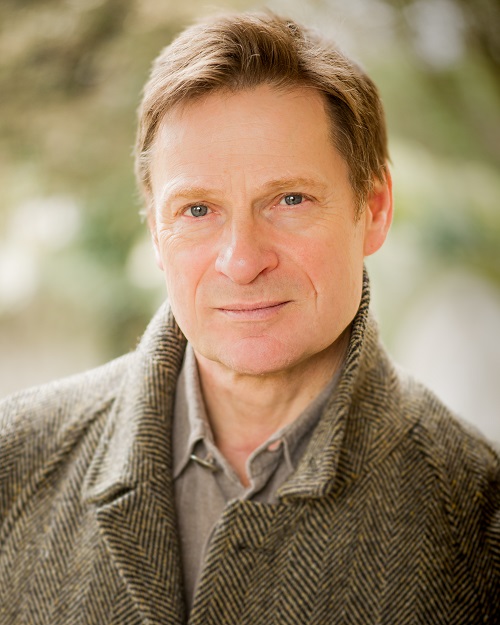 Keenlyside’s Dichterliebe was a more torrid affair. The singer (pictured right, by Robert Workman) is never less than passionate, and delivered Heine’s pained texts with a rare intensity. His voice is maturing elegantly, losing some purity of tone, and evenness across the registers, but gaining character and burnish, ideal for Schumann’s lingering lines. Ax seemed reluctant to follow Keenlyside to his emotional extremes, choosing instead to contribute elegance and finesse to all those middle-register piano sonorities. But he couldn’t help be drawn in, following Keenlyside’s lead in gradually raising the emotional intensity. Even so, his most satisfying contribution was the work’s meditative coda, another reflective moment from which he could draw so much from the piano’s subdued textures.
The Dover Quartet is a young ensemble, but the players found as easy affinity with Ax’s autumnal Schumann. In the Piano Quartet, the pianist is integrated into the string ensemble, while in the Quintet it is more independent. But the interpretations of both works seemed to flow from Ax’s lyrical and energetic, but always unassuming, approach. The results were subdued, with only occasional dramatic outbursts, and even the Finale of the Quintet felt relaxed and unhurried. Ax rarely seemed to increase his dynamics to match the quartet, but the transparency of their textures always allowed him to shine through. For such an imposing work, this was a surprisingly lyrical and breezy account, highly lyrical, celebratory and, above all, fun. Happy birthday Emanuel Ax!