In the Netherlands, Mark Wigglesworth is already a musical legend for his work with Dutch youth orchestras. Hopefully, in addition to the year and a bit when he wrought miracles at English National Opera, he will become so in the UK after his training of the National Youth Orchestra of Great Britain. That culminated in last night's Prom, with more than a little help from co-inspirer Nicola Benedetti. It's worth beginning at the very end to note how, 12 years on from the (then) Simón Bolívar National Youth Orchestra of Venezuela's game-changing Prom with Gustavo Dudamel, the NYOGB not only reminded us of the Venezuelans' performance-piece approach to Bernstein's "Dance at the Gym" sequence from West Side Story, but equalled it in sheer electric charge.
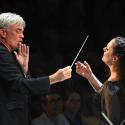
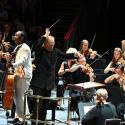
By then, the adrenalin and concentration had been flowing through three remarkable interpretations. The start was as visceral as the unofficial finish, wood snapping on strings as Chelyabinsk-born Lera Auerbach’s Icarus flapped wildly in mid-air before biting the dust (“Humum mundere”, as the NYO’s programme but not the Proms’ tells us, is the title of the opening sequence). What refreshment to hear original melodic lines from a contemporary composer; and what a connection to the tragic end of Prokofiev's second-half Shakespearean narrative with the mesmerising final ritual of “Requiem for Icarus”. 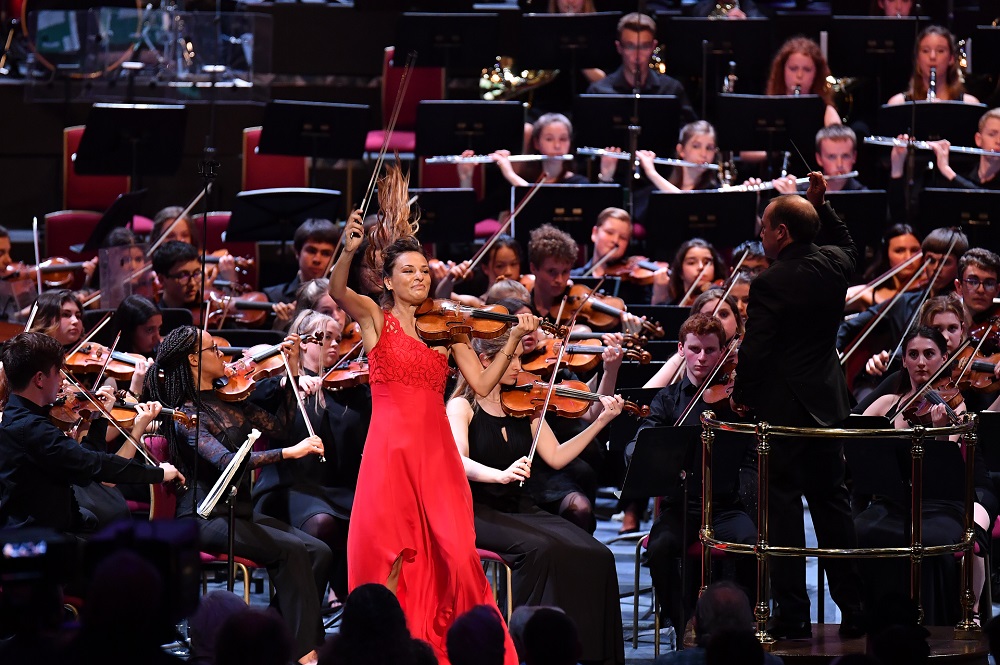 Spring rebirth came with Benedetti’s bewitching engagement in the Tchaikovsky Violin Concerto (pictured above), matched for forward-moving mobility by Wigglesworth (were those full-orchestral Polonaises a bit too fast? Not in context). From the back of the hall, her upper-register sweetness sounded ravishing, and it wasn’t necessary to hear every note in the fast passage-work given the level of heady communication. Benedetti had already shown us what a Mensch she is as an ambassador for musical youth in last year’s BBC Young Musician Prom, and she did so again in a candid and typically generous speech before her encore, forestalling my own lines here by pointing out as a mark of teamwork the way the wind soloists handed lines to one another in the first movement’s second group of themes.
She then gave them and us a treat with the wayward folksy wistfulness of "As the Wind Goes", second movement of the Fiddle Dance Suite written for her by Wynton Marsalis, walking off the platform to infinity at the end (the last time I witnessed that was in the premiere of Matt Kaner’s Stranded at the 2017 Europe Day Concert in St John's Smith Square, when violinist Benjamin Baker's breaking away was a symbolic gesture of the self-harm the UK may still do itself). 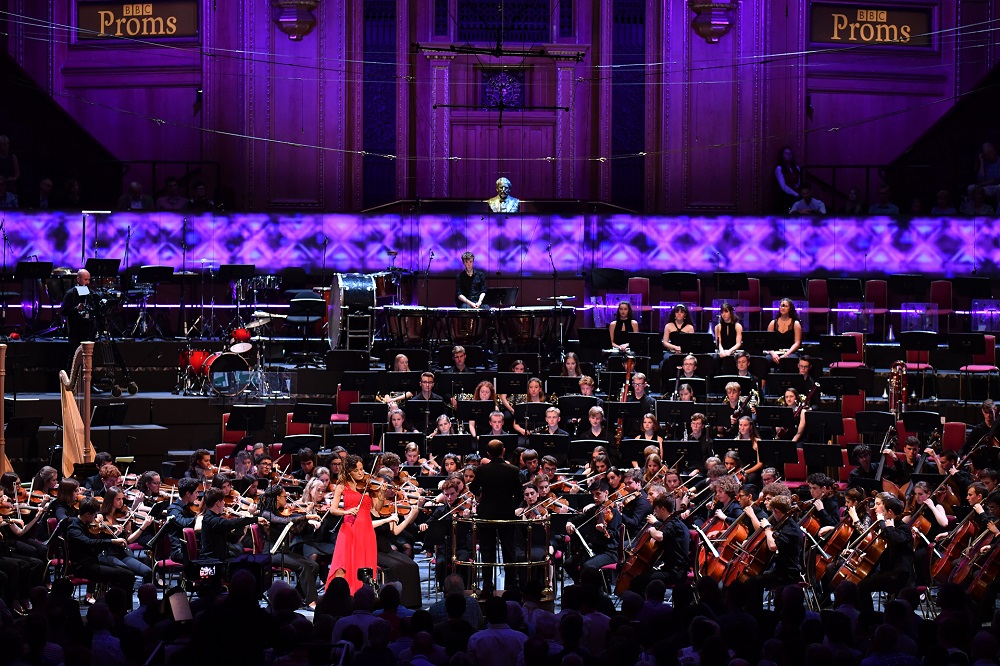 Wigglesworth had fashioned his own dramatic-symphonic sequence from Prokofiev’s Romeo and Juliet. The whole ballet score can be a magnificent Wagner-without-words experience in the concert hall, as Valery Gergiev used to show us, and any selection is bound to make you miss something: while it was acceptable, if regrettable, to shed the Nurse, the Capulet ball music and Friar Laurence, there was one omission which could have given us a fuller picture here – the suite-fusion of “Romeo and Juliet before parting”, which also gives us a bit of the crucial death-simulting-potion music at the end; “Juliet’s Bedroom” was less powerful.
No doubt, though, about the urgency and continuity of the performance. We plunged into the violence of Montagues and Capulets in another suite synthesis before Wigglesworth reverted entirely to the full ballet score, giving us the dance-into-fight sequence from Act One, violins hell-for-leather in combat as if they were the section of the Berlin Philharmonic. 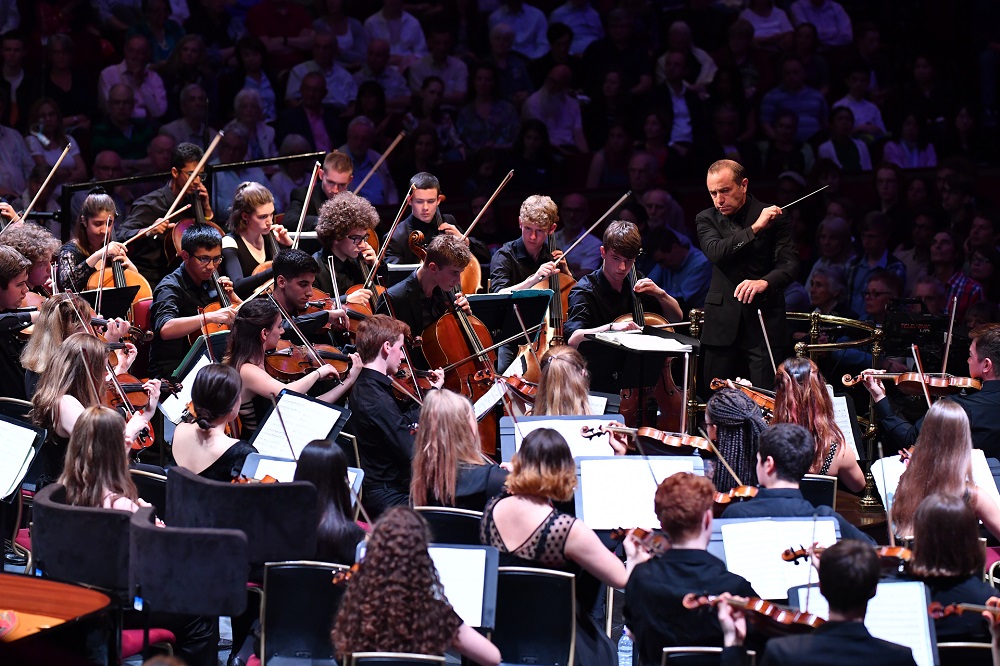 Their delicacy in the portrait of Juliet was equally sophisticated, the muscle of the lines in the Balcony Scene' Love Dance worthy of the very best orchestras. Never, surely, has work on the NYO string playing reached this level of adaptability and depth. Brass drove their searing lines to hair-raising effect in “The Death of Tybalt”, preceded by equally terrifying – and accelerating, odd but exciting - timpani thwacks, and the winds coasted “Juliet’s Death” towards an enigmatic ending. Wigglesworth's shaping was at the highest level of creative conducting throughout; much as I like Edward Gardner, this should have been the London Philharmonic Orchestra's choice for Jurowski's successor (announced this week). What a treat for the young participants of NYO’s “Inspire” scheme in the audience as well as for the rest of us. I heard one of them say afterwards, “I’m going to have to do a run now, I’m too excited”. I knew how he felt. There may be more surprising Proms to come, but there won't be a more thrilling one.