

"The poem is real," intones entertainer-turned-courtier Ellen solemnly as a prologue and epilogue to Rona Munro’s vivid, vibrant new James IV: Queen of the Fight, presented by Scottish producers Raw Material and Edinburgh’s Capital Theatres in association with the National Theatre of Scotland, and getting its premiere at the city’s Festival Theatre before a Scotland-wide tour.
It’s the follow-up – and latest in a projected series of no fewer than seven historical plays (the sixth, Mary, opens soon at London’s Hampstead Theatre) – to Munro’s James Plays trilogy unveiled at the Edinburgh International Festival and London’s National Theatre in 2014.
And in many ways, that poem is what the play’s all about (spoiler on its way), a piece of scurrilous, racist invective by court makar William Dunbar aimed at belittling and humiliating two Black women brought against their will into the King’s court. The resonances to our own times are clear: Scotland might appear – and in many ways is – a welcoming, tolerant, outward-looking place, but scratch the surface, especially where power and reputations are at stake, and it can be just as bigoted and intolerant as anywhere else.
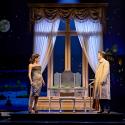
And, yes, the poem is real: Dunbar’s "Of Ane Blak-Moir" makes for decidedly uncomfortable listening in the 21st century. And, despite inevitable fictionalisations and bits of creative speculation, Munro’s tale is indeed rooted in historical fact – which, of course only makes it all the more surprising (if not downright shaming) that we’re so clueless about the two Black figures it describes in 16th century Scotland. Named Ellen and Anne by Munro, they’re first hijacked by pirates on the high seas, then delivered to the King as novelty performers, though they quickly prove canny in their dealings with court intrigues, ending up in the Queen’s service and the King’s bedchamber, with Ellen later serving as omnipotent judge (the play title’s Queen of the Fight) at one of the King’s showpiece brawls demonstrating his all-conquering might to English and French visitors. When the Queen senses a threat to her power, however, it’s clear those dangerous interlopers have to go. Indeed, there’s quite a profusion of themes jostling for our attention in James IV. Kingly power is high on the list, though Daniel Cahill as the monarch does a fine job of balancing strutting muscularity (quite literally at times) with a boyish neediness and perpetual worries about his reputation and lineage. Keith Fleming’s needling but nonetheless sympathetic Dunbar (pictured above with Thierry Mabonga as Peter and Ewan Black as Turnbull) holds forth on the perils of being a freelance writer (something Munro no doubt knows about better than many), and working to the whims of patrons. There’s an overarching friction, too, between performance and reality, in the roles that Ellen (a quietly commanding Danielle Jam) and Anne (a regal Laura Lovemore) are forced to assume at court to conceal their real relationship, and in the King’s ceaseless endeavours to play the role that others expect of him.
That last idea is nicely reflected in Jon Bausor’s impressive, arena-like set, all exposed wood and vertiginous steps, providing a strong focus for the production’s set pieces, not least the extravagant fight scene that ends part one. Director Laurie Sansom – who was also behind the earlier James Plays trilogy – captures Munro’s shifts between the epic and the intimate seamlessly in his passionate, eloquent staging, not least in playing up her unapologetically 21st century dialogue, which freely riffs between languages/dialects/accents, with some killer put-downs that wouldn’t be out of place on a Saturday night in Glasgow today.
James IV is hilarious and shocking, grand and even (occasionally) daringly mundane, and if it’s got a fault, it’s one of over-ambition. That said, Munro skips so nimbly between tones and ideas that you barely notice the expansive ground she’s managing to cover. In shining a bright new light – albeit a speculative one – on diversity in late medieval Scotland, it’s a revelation. More than that, though, it reminds us of some profound questions about tolerance and power that are very much still with us today.
- James IV: Queen of the Fight continues at Edinburgh’s Festival Theatre until Saturday 8 October, before a tour of Scotland that runs until 12 November
- More theatre reviews on theartsdesk











Add comment